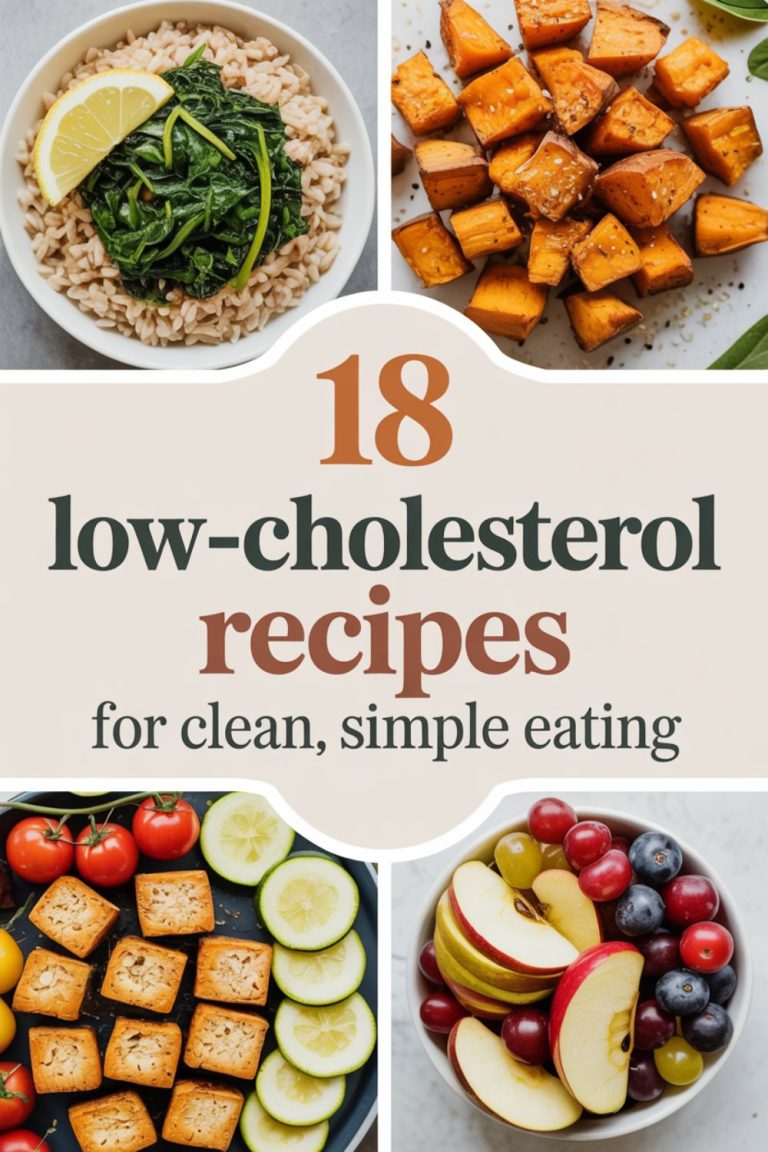
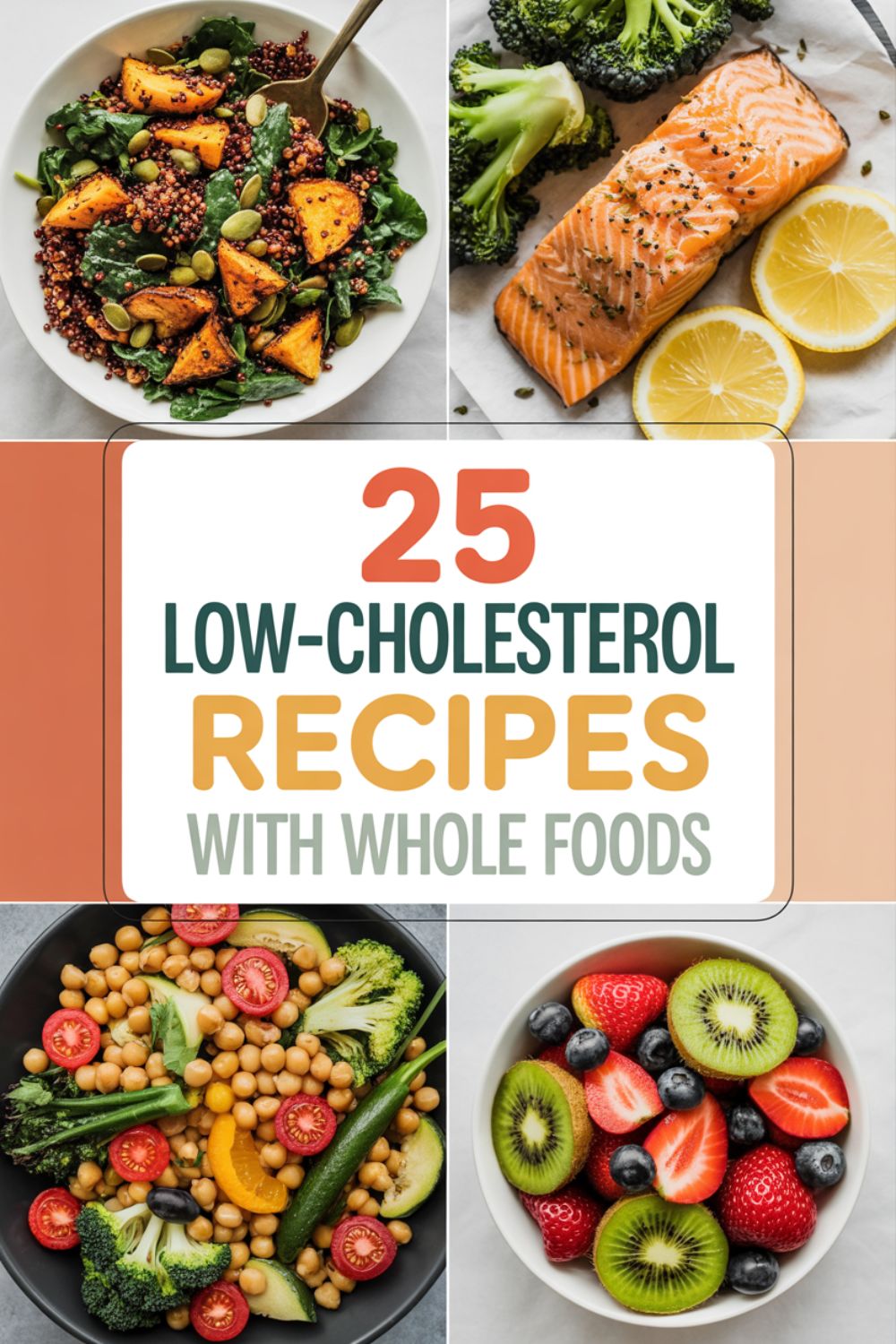
25 Low-Cholesterol Recipes with Whole Foods
The whole “low-cholesterol lifestyle” used to intimidate me. I’d walk into the grocery store thinking I needed special ingredients or expensive superfoods. Spoiler alert: you don’t. What you really need are whole foods—the kind your great-grandmother would recognize—and a few solid recipes that don’t feel like punishment.
Here’s what I’ve learned: lowering cholesterol through diet isn’t about restriction, it’s about replacement. Swap the right foods, keep things interesting, and your taste buds won’t even know they’re being heart-healthy. According to research from Mayo Clinic, focusing on whole grains, fruits, and vegetables while limiting saturated fats can make a significant difference in your cholesterol levels.
Why Whole Foods Matter for Your Cholesterol
Whole foods aren’t just a trendy buzzword—they’re legitimately your best defense against high cholesterol. When you eat foods in their natural state (or as close as possible), you’re getting all the fiber, nutrients, and plant compounds that help manage cholesterol levels without the added junk that makes things worse.
Think about it this way: an apple is a whole food. Apple juice? Not so much. You lose the fiber, gain concentrated sugars, and miss out on all those phytonutrients hiding in the skin. The American Heart Association emphasizes that maintaining a diet rich in fruits, vegetables, and whole grains while limiting saturated and trans fats is key to managing cholesterol.
Here’s what whole foods do for your cholesterol game: they’re packed with soluble fiber that literally binds to cholesterol in your digestive system and escorts it out before it hits your bloodstream. Plus, they’re naturally low in saturated fat—the stuff that tells your liver to crank out more cholesterol than you need.
Keep a bowl of washed, ready-to-eat fruit on your counter. When you can grab an apple as easily as a bag of chips, you’ll make better choices without even thinking about it.
The Cholesterol-Lowering Power Players
Oats and Whole Grains
Oats deserve their own fan club, IMO. They contain beta-glucan, a type of soluble fiber that’s basically a cholesterol magnet. Starting your day with oatmeal isn’t just nostalgic breakfast comfort—it’s one of the easiest ways to chip away at your LDL numbers. If you’re looking for creative ways to incorporate oats beyond basic oatmeal, check out these low-cholesterol breakfast ideas for heart health.
I used to think whole grains were this complicated category I’d never figure out, but it’s actually simple: if the grain still looks like it came from a plant, you’re golden. Brown rice, quinoa, barley, farro—they all count. White bread and white rice? Those have been stripped of most of their beneficial fiber and nutrients.
Beans and Legumes
Beans are criminally underrated. They’re cheap, versatile, and loaded with both soluble fiber and plant protein. Research has shown that eating beans regularly can lower LDL cholesterol by up to 5%, which might not sound like much until you realize that’s without medication or major lifestyle overhauls.
The best part? You can toss them into basically anything. Chickpeas in salads, black beans in tacos, lentils in soups. I keep canned beans stocked because—let’s be honest—soaking dried beans overnight requires a level of meal planning I don’t always have. For more protein-rich, cholesterol-friendly meals, these high-protein low-cholesterol meals are absolute game-changers.
Nuts and Seeds
Here’s where things get interesting. Nuts are high in fat, but it’s the good kind—monounsaturated and polyunsaturated fats that actually help lower bad cholesterol while boosting the good stuff (HDL). Walnuts, almonds, and flaxseeds are particularly stellar.
The catch? Portion control matters. A small handful (about an ounce) is perfect. Any more and you’re racking up calories faster than you’d think. I measure mine into small containers at the beginning of the week so I’m not mindlessly eating half a bag while watching TV.
Speaking of nuts, if you’re meal prepping for the week, having airtight glass containers makes storing pre-portioned nuts and seeds so much easier. I use these stackable containers and they’ve completely transformed my snack game.
Fruits and Vegetables
Okay, this one’s obvious, but hear me out—not all produce is created equal when it comes to cholesterol. You want to focus on varieties high in soluble fiber: apples, pears, citrus fruits, carrots, and Brussels sprouts are all superstars. Berries pack an extra punch with their antioxidants and polyphenols.
I aim for variety because different plants offer different benefits. My rule of thumb is to eat something from every color of the rainbow each week. Sounds cheesy, but it actually works to keep things interesting. If you need inspiration on vegetable-forward meals, these low-cholesterol vegetarian meals prove that plant-based eating doesn’t have to be boring.
“I started adding more whole foods to my diet three months ago, focusing on oats, beans, and tons of vegetables. My LDL dropped 28 points without medication. My doctor was shocked, and honestly, so was I. The food tastes better than what I was eating before, which is the craziest part.” — Rachel M., community member
Building Your Low-Cholesterol Meal Foundation
Start with Breakfast
Breakfast sets the tone for your entire day, and fortunately, it’s one of the easiest meals to make cholesterol-friendly. Overnight oats are my default. Toss oats, chia seeds, almond milk, and some berries in a jar the night before, and you wake up to breakfast that’s already done. Get Full Recipe.
If you’re not an oats person, smoothie bowls work just as well. Blend frozen fruit with a splash of plant-based milk, top with nuts and seeds, and you’ve got something that feels like dessert but works for your heart. I swear by this high-speed blender for getting that perfectly smooth texture without chunks.
For more creative morning options, explore these low-cholesterol breakfasts under 300 calories that don’t skimp on flavor or satisfaction.
Lunch That Actually Keeps You Full
The biggest lunch mistake I see people make? Not enough protein or fiber, which leaves you starving by 3 PM and reaching for whatever’s convenient (usually not heart-healthy). Your lunch needs substance—think grain bowls, hearty salads with chickpeas or grilled chicken, or veggie-packed wraps.
One of my favorite tricks is batch-cooking grains and proteins on Sunday. Cook a big pot of quinoa and roast a sheet pan of vegetables, and suddenly you can throw together lunch in five minutes all week. Mason jar salads work well too if you layer them right—dressing on the bottom, sturdy vegetables next, then grains and proteins, with delicate greens on top. Get Full Recipe.
Check out these low-cholesterol lunches that keep you full for more midday inspiration that won’t leave you hangry before dinner.
Double your dinner recipe and pack the leftovers for lunch. Future you will be grateful, and your wallet will thank you too.
Dinner Without the Drama
Dinner doesn’t have to be complicated. Some of my best low-cholesterol meals come together in one pan. Sheet pan dinners are clutch—throw some fish or chicken on a pan with vegetables, drizzle with olive oil and herbs, roast for 25 minutes, and you’re done. Get Full Recipe.
Soups and stews are another dinner MVP. Make a huge batch on the weekend and you’ve got meals for days. Lentil soup, minestrone, white bean and kale—all of them freeze beautifully and taste even better the next day. For easy weeknight solutions, these one-pan dinners are absolute lifesavers.
I use a cast iron skillet for almost everything. It heats evenly, goes from stovetop to oven, and once it’s properly seasoned, nothing sticks. Plus you get a tiny bit of iron in your food, which is a nice bonus.
For more dinner inspiration that won’t stress you out, browse through these low-cholesterol dinners you’ll actually want to make again because they taste that good.
Smart Swaps That Make All the Difference
You don’t have to overhaul your entire kitchen to make a difference. Sometimes it’s just about swapping one ingredient for another. Here are the switches that worked for me:
Instead of butter: Use olive oil or avocado oil for cooking. Mashed avocado or nut butters work great for spreading on toast. The flavor profile is different, sure, but it’s not worse—just different.
Instead of red meat: Try fish, chicken, or plant-based proteins most days. I’m not saying you can never have a burger, but making it your default protein isn’t doing your cholesterol any favors. Salmon, in particular, brings omega-3 fatty acids to the party, which actively fight inflammation. These low-cholesterol chicken recipes prove poultry can be anything but boring.
Instead of refined grains: Choose brown rice, quinoa, or whole wheat pasta. The texture takes maybe one meal to get used to, and then you won’t even notice. The fiber content makes a huge difference in how satisfied you feel.
Instead of full-fat dairy: Opt for low-fat or plant-based alternatives. Unsweetened almond milk, oat milk, and cashew milk all work well in cooking and don’t taste like sadness (which is more than I can say for skim milk, honestly).
Kitchen Tools That Make Low-Cholesterol Cooking Easier
Having the right tools isn’t about being fancy—it’s about making healthy cooking less of a hassle. Here are the essentials that live on my counter:
Physical Products
High-Speed Blender — Essential for smoothies, soups, and nut-based sauces. Makes everything silky smooth.
Cast Iron Skillet — Goes from stovetop to oven, lasts forever, and needs minimal oil for cooking.
Glass Meal Prep Containers — BPA-free, microwave-safe, and they don’t stain like plastic ones do.
Digital Resources
Meal Planning App — Track your meals and make grocery lists. Takes the guesswork out of “what’s for dinner?”
Heart Health Recipe Database — Searchable collection of cholesterol-friendly recipes with nutritional breakdowns.
Portion Control Guide — Digital handbook showing proper serving sizes for different food groups (because eyeballing rarely works).
You don’t need all of this stuff to start, but having a few solid tools makes the whole process way less frustrating.
Snacking Without Sabotaging Your Progress
Snacks are where a lot of people trip up. You’re doing great all day, then 4 PM hits and suddenly you’re elbow-deep in a bag of chips. The trick is having good options ready to go.
Raw vegetables with hummus, apple slices with almond butter, a handful of nuts, or whole grain crackers with avocado—these all work. The key is accessibility. If the healthy snack requires effort and the unhealthy snack is sitting on the counter, guess which one you’re grabbing?
I prep snack bags every Sunday. Portion out nuts, chop vegetables, make a big batch of hummus. It takes maybe 30 minutes and saves me all week. For more smart snacking ideas, check out these low-cholesterol snacks that actually support heart health instead of derailing it.
FYI, those small silicone snack bags are a game-changer for portioning. They’re reusable, washable, and I don’t feel guilty about generating a ton of plastic waste.
Keep emergency snacks in your car, desk, and bag. Hunger makes bad decisions for you. Having backup options prevents desperation eating.
The Truth About “Cheat Meals” and Balance
Let’s address the elephant in the room: you’re going to eat foods that aren’t “optimal” for cholesterol sometimes, and that’s fine. Perfect is the enemy of good, and trying to be perfect with your diet is a fast track to burnout and resentment.
The goal isn’t perfection—it’s consistency. If you eat well 80-90% of the time, the occasional burger or slice of cake isn’t going to wreck your progress. Your body responds to patterns, not individual meals. What matters is what you do most of the time, not what you do sometimes.
That said, there’s a difference between occasional indulgence and daily habits. If “cheat meals” happen multiple times a week, that’s not cheating—that’s just your regular diet with some salads thrown in.
When you’re ready to get back on track, these low-cholesterol meals that are actually delicious make it easy to enjoy food without feeling deprived.
Meal Prep Strategies That Actually Work
Meal prep gets a lot of hype, and honestly, it deserves it. But you don’t need to spend your entire Sunday cooking 21 meals in matching containers. That’s overwhelming and unnecessary.
Here’s what actually works: prep components, not complete meals. Cook a big batch of grains, roast several types of vegetables, prepare a protein or two, and make a couple of sauces or dressings. Then throughout the week, you mix and match based on what sounds good.
Monday might be quinoa with roasted vegetables and grilled chicken. Wednesday could be the same quinoa in a Buddha bowl with different vegetables and tahini sauce. Same components, totally different meals. This approach prevents food boredom, which is the real enemy of healthy eating.
I use sheet pans for roasting vegetables—you can do multiple types at once if you keep similar sizes together. And an Instant Pot is clutch for cooking grains and beans quickly without babysitting them. For comprehensive meal prep guidance, these meal prep ideas for the week break down the whole process step by step.
“I thought meal prep meant eating the same thing every day, which sounded terrible. Once I started prepping components instead of full meals, everything changed. I actually look forward to lunch now because I can make it different every day with stuff I already cooked.” — Marcus T., community member
Eating Out and Social Situations
Restaurant menus can feel like a minefield when you’re watching your cholesterol, but it’s manageable with a few strategies. Most places have grilled fish or chicken options. Ask for sauces on the side, swap fries for vegetables or a side salad, and don’t be afraid to customize.
Here’s the thing: servers have heard weirder requests than “can I get that grilled instead of fried?” Nobody cares. They just want to get your order right. If you’re polite about it, they’re usually happy to accommodate.
At social gatherings, eat something small before you go so you’re not ravenous. Scope out the healthier options first. And if there’s nothing great? Have a small portion of what’s there and don’t stress about it. One meal at a party isn’t going to undo weeks of good habits.
Budget-Friendly Whole Foods Shopping
The “eating healthy is expensive” excuse needs to die because it’s genuinely not true if you shop smart. Whole foods—especially when you buy them in season or frozen—are some of the cheapest things in the grocery store.
Frozen vegetables are nutritionally identical to fresh (sometimes better, actually, since they’re frozen at peak ripeness) and they’re way cheaper. Canned beans cost like a dollar per can. Rice, oats, and lentils are dirt cheap when you buy them in bulk.
Where people blow their budgets is buying fancy packaged “health foods” and pre-made meals. An avocado costs $1.50. “Artisanal avocado toast” at a cafe costs $12. See the difference? The markup on convenience is wild.
Shop the perimeter of the store first—that’s where the whole foods live. The middle aisles are processed food territory. Make a list and stick to it. Meal plan so you’re not throwing away food that goes bad. These basic habits cut costs way more than any coupon strategy.
For quick, budget-conscious meal ideas, check out these lazy low-cholesterol meals for busy people that won’t break the bank or require hours in the kitchen.
Understanding Cholesterol Numbers
Quick crash course: you’ve got different types of cholesterol, and they matter differently. LDL is the “bad” one—it builds up in your arteries and causes problems. HDL is the “good” one—it actually helps clear out the bad stuff. Then there are triglycerides, another type of fat that matters for heart health.
The American Heart Association recommends keeping total cholesterol below 200 mg/dL, LDL below 100 mg/dL, and HDL above 40 mg/dL for men or 50 mg/dL for women. Your doctor might have different targets based on your individual risk factors, so don’t use these as gospel—just a general reference.
What’s wild is how quickly diet can move these numbers. Some people see improvements in as little as two weeks of dietary changes. According to Mayo Clinic research, studies show changing your diet can lower cholesterol in as little as two weeks, though results vary based on individual factors like starting levels and overall health.
Beyond Food: Lifestyle Factors That Matter
Diet is huge, but it’s not the only player in the cholesterol game. Exercise makes a real difference—it helps raise HDL (the good cholesterol) and can lower LDL and triglycerides. You don’t need to become a marathon runner. Regular walking works. Aim for 30 minutes most days.
Stress management matters too. Chronic stress can indirectly affect cholesterol by influencing eating habits and potentially impacting how your body processes fats. Finding ways to decompress—whether that’s yoga, meditation, reading, or just taking a walk—supports your overall heart health.
Sleep is another piece people overlook. Poor sleep is linked to higher cholesterol levels. If you’re doing everything right with your diet but getting 5 hours of sleep a night, you’re fighting an uphill battle. Aim for 7-9 hours consistently.
And obviously, smoking is terrible for cholesterol and heart health in general. If you smoke, quitting is probably the single biggest thing you can do for your cardiovascular system—even bigger than diet changes.
Making It Stick Long-Term
The real challenge isn’t starting—it’s maintaining. Motivation fades. Life gets busy. You get sick of eating the same things. Here’s how to make low-cholesterol eating sustainable:
Focus on addition, not subtraction. Instead of thinking “I can’t eat that,” think “I’m adding more vegetables, whole grains, and healthy fats.” It’s a mental reframe that makes everything feel less restrictive.
Build flexibility into the system. Have go-to meals but don’t make rigid rules. If you decide you can only eat X, Y, and Z, you’ll burn out fast. Keep exploring new recipes and ingredients to maintain interest.
Connect with others doing the same thing. Whether that’s online communities, a local cooking class, or just a friend who’s also trying to eat better—having support makes a huge difference. You can swap recipes, vent about challenges, and celebrate wins together.
Track progress but don’t obsess. Get your cholesterol checked every few months to see if what you’re doing is working, but don’t make it your entire identity. The goal is health, not perfection.
When you need fresh inspiration to keep things interesting, these low-cholesterol soups and stews for any season offer comfort food that doesn’t compromise your health goals.
Quick Recipe Ideas to Get You Started
Sometimes you just need simple ideas, not a whole philosophical discussion about food. Here are five easy recipes that take 30 minutes or less and use whole foods:
Chickpea and Spinach Curry: Sauté onions and garlic, add curry powder, canned chickpeas, canned tomatoes, and fresh spinach. Serve over brown rice. Get Full Recipe.
Sheet Pan Salmon and Vegetables: Put salmon fillets and chopped vegetables on a sheet pan, drizzle with olive oil and lemon, roast at 400°F for 18-20 minutes. Done. Get Full Recipe.
Black Bean Tacos: Warm black beans with cumin and lime juice, load into corn tortillas with avocado, salsa, and shredded cabbage. Get Full Recipe.
Lentil Soup: Sauté carrots, celery, and onions, add vegetable broth, dried lentils, and herbs. Simmer 30 minutes until lentils are tender. Get Full Recipe.
Quinoa Buddha Bowl: Cook quinoa, top with roasted vegetables, chickpeas, avocado, and tahini dressing. Mix and match whatever vegetables you have. Get Full Recipe.
Looking for even more variety? Check out these quick low-cholesterol lunches under 10 minutes for those days when you need food fast but still want to keep things heart-healthy.
If you’re all about efficiency, these Instant Pot and air fryer recipes use modern appliances to make healthy cooking ridiculously easy. And when you want something that feels indulgent without the guilt, these low-cholesterol comfort foods made healthy hit the spot every time.
Frequently Asked Questions
How long does it take to see cholesterol improvements from dietary changes?
Most people start seeing changes within 2-4 weeks of consistent dietary modifications, though significant improvements typically take 2-3 months. The timeline varies based on your starting numbers, how strictly you follow the diet, and individual factors like genetics and activity level. Regular blood work every 3 months helps track progress and adjust your approach if needed.
Can I still eat eggs if I’m watching my cholesterol?
Yes, moderate egg consumption is generally fine for most people. Current research suggests that dietary cholesterol from eggs has less impact on blood cholesterol than previously thought, especially compared to saturated and trans fats. Most experts recommend limiting eggs to one per day or up to seven per week if you’re otherwise eating a heart-healthy diet. If you have diabetes or existing heart disease, talk to your doctor about your specific limits.
Are all plant-based oils equally good for lowering cholesterol?
Not quite. While all plant oils are better than animal fats, some are more beneficial than others. Olive oil, avocado oil, and oils rich in omega-3s (like flaxseed and walnut oil) are top choices. Coconut and palm oils, despite being plant-based, are high in saturated fats and should be limited. For cooking, stick with olive, avocado, or canola oil, and save specialty oils like walnut or flaxseed for drizzling and dressings.
Is it possible to lower cholesterol without medication through diet alone?
For some people, yes—diet and lifestyle changes can significantly lower cholesterol without medication. However, this depends on your starting levels, genetic factors, and overall health. Some people have familial hypercholesterolemia, a genetic condition that usually requires medication regardless of diet. Work with your doctor to determine the best approach for your situation. Even if you do need medication, dietary changes still play a crucial supporting role.
What’s the best cooking method for maintaining heart-healthy meals?
Grilling, baking, roasting, steaming, and sautéing with minimal oil are your best bets. These methods don’t require excessive added fats and often bring out the natural flavors of ingredients. Avoid deep frying, which adds unnecessary calories and often involves unhealthy oils. When you do use oil for cooking, measure it rather than pouring freely—a tablespoon goes further than you think when you’re spreading it across a pan.
The Bottom Line
Lowering your cholesterol with whole foods doesn’t require you to become a health food zealot or give up enjoying meals. It’s about making smarter choices most of the time, finding recipes you actually like, and building habits that fit into your real life—not some idealized version of it.
Start with one or two changes. Maybe that’s adding oatmeal for breakfast, or swapping your usual snack for something with more fiber. Small changes compound over time, and before you know it, eating this way becomes second nature rather than a constant battle.
Your cholesterol numbers are important, but they’re not the whole story. How you feel, your energy levels, your relationship with food—all of that matters too. The goal is sustainable health, not temporary restriction that leaves you miserable and eventually right back where you started.
And remember: perfection is not required. Progress is the goal. Keep moving forward, even if it’s messy and imperfect. That’s how real change happens.