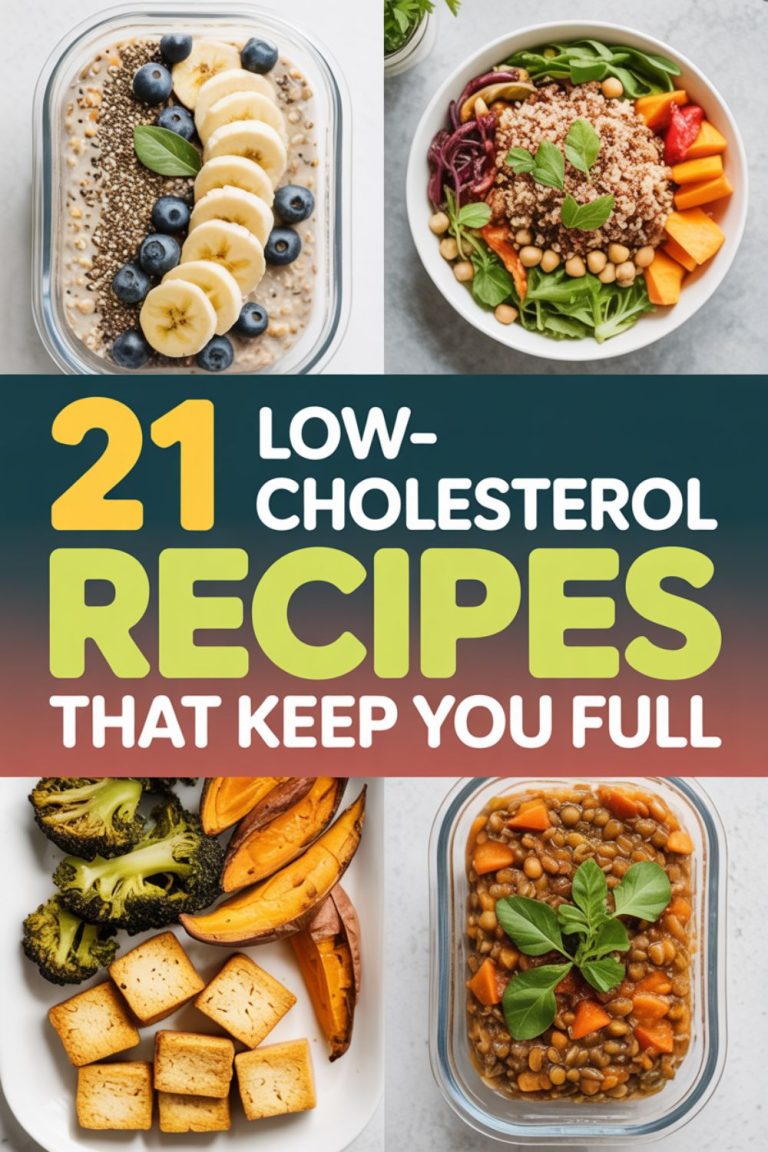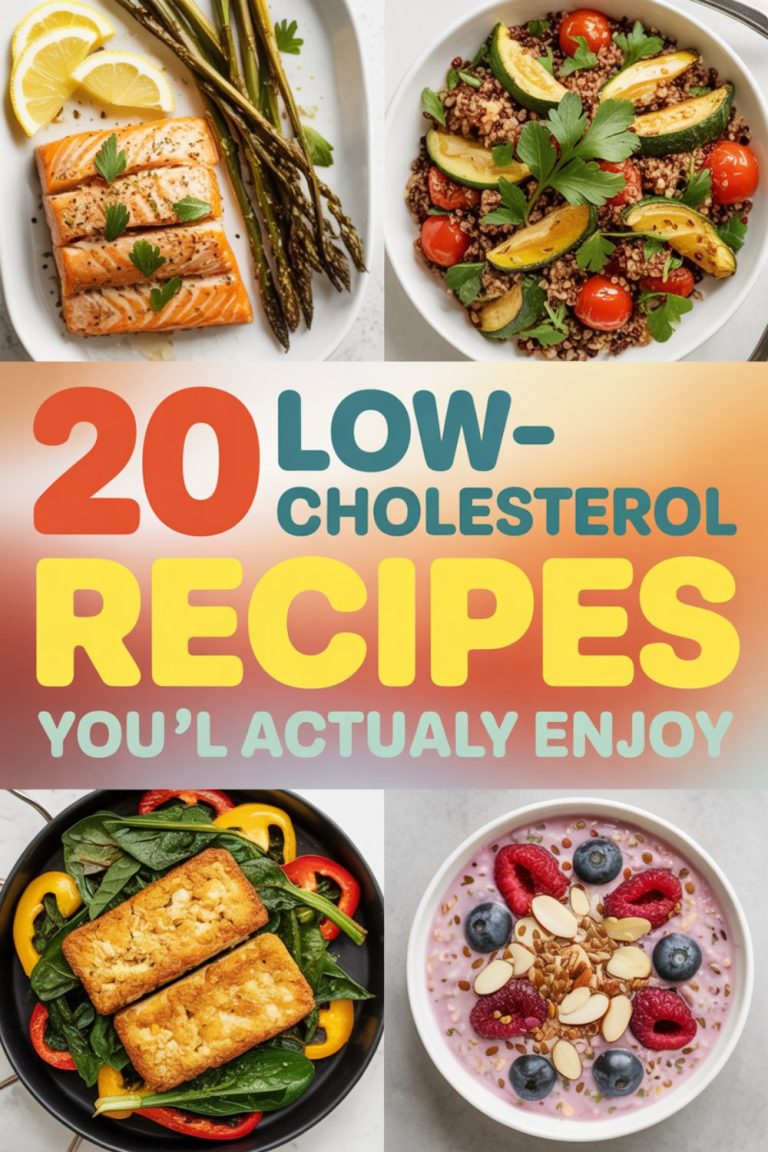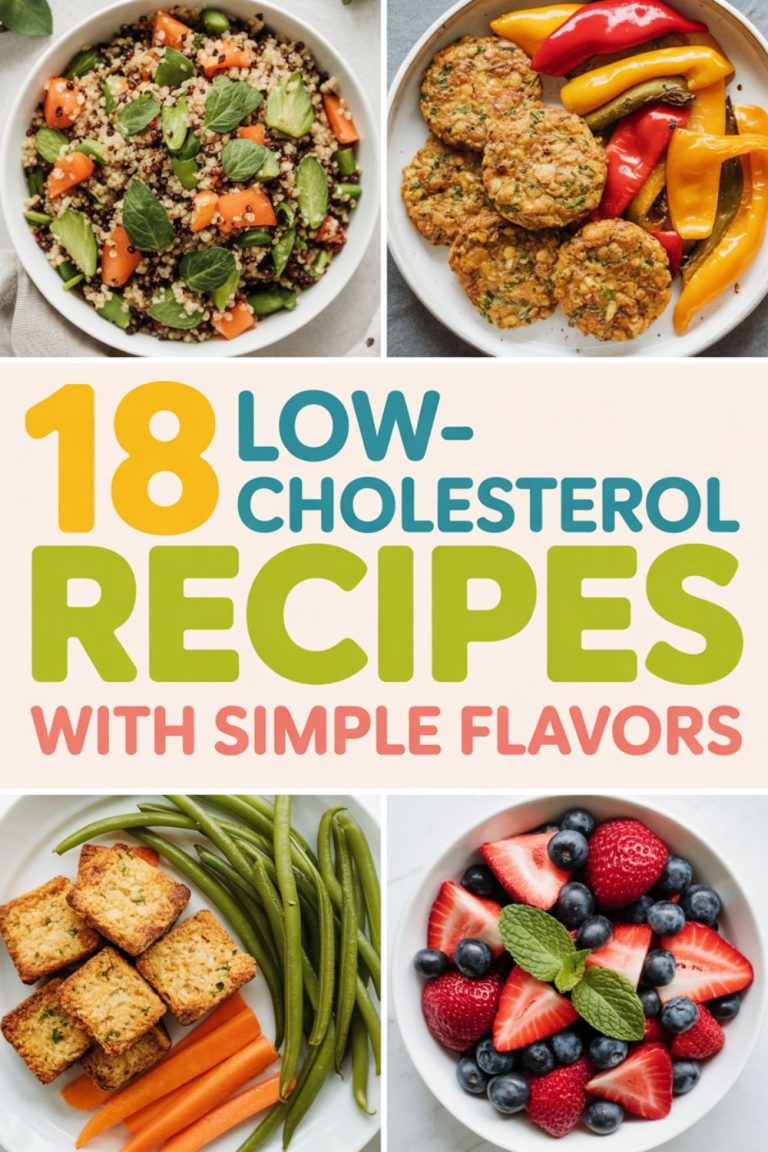

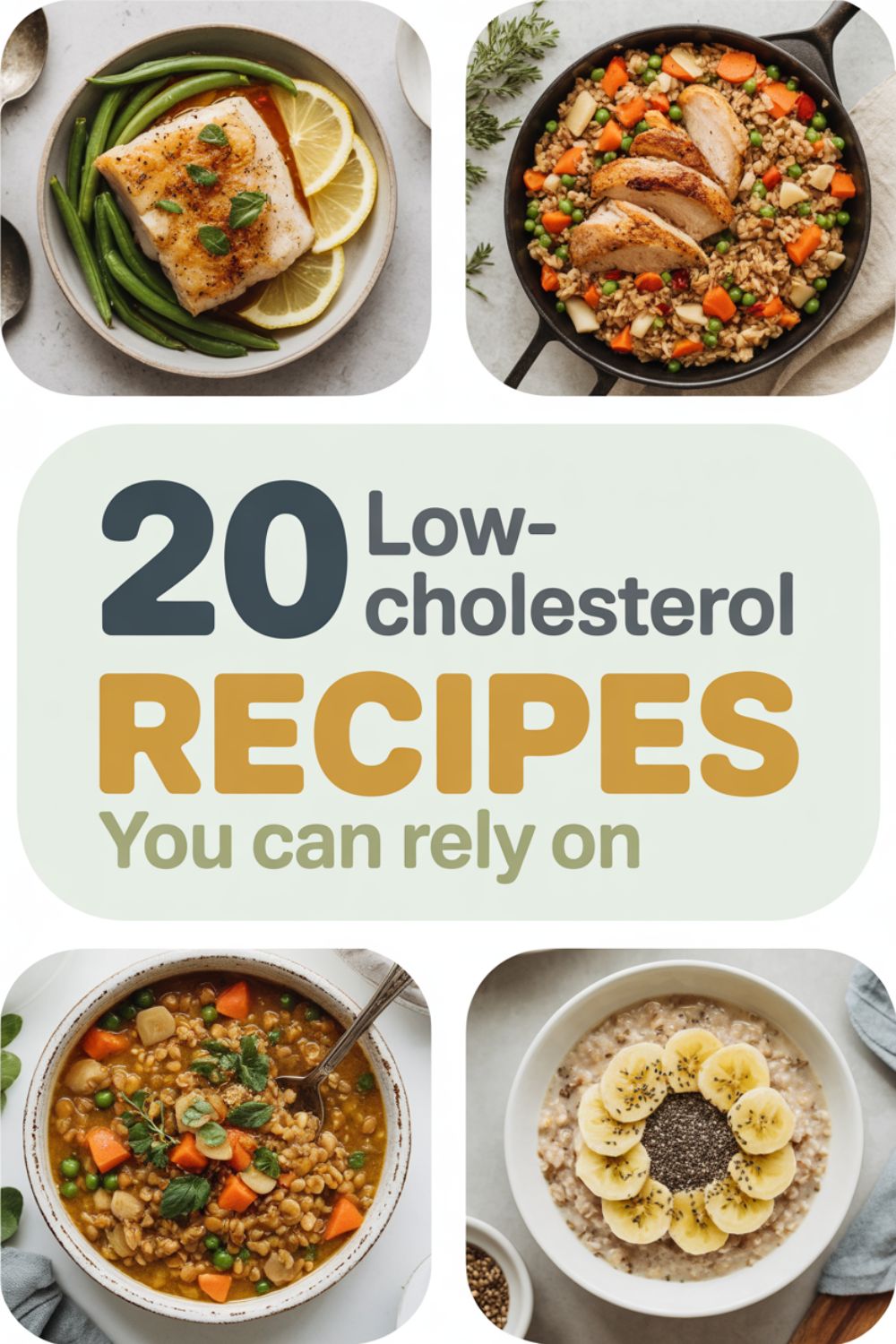
20 Low-Cholesterol Recipes You Can Rely On
Let me guess: your doctor mentioned something about cholesterol at your last checkup, and now you’re staring at your kitchen wondering if everything delicious is suddenly off-limits. I’ve been there, and honestly? It’s not as dramatic as it sounds.
Here’s the thing about low-cholesterol cooking—it’s less about restriction and more about smart swaps. You don’t need to eat bland chicken breast and steamed broccoli for the rest of your life. You just need recipes that work with your body instead of against it.
These 20 recipes aren’t some impossible health-food fantasy. They’re the dishes I actually make when I need something quick, satisfying, and heart-friendly. No weird ingredients. No three-hour prep times. Just real food that happens to be good for your cholesterol levels.
Why Your Cholesterol Actually Matters
Before we jump into recipes, let’s talk about why you’re even bothering with this. According to the American Heart Association, managing your cholesterol isn’t just about numbers on a lab report—it’s about keeping your arteries clear so your heart can do its job without working overtime.
30-Day Cholesterol Reset System
A simple done-for-you plan to help you eat heart-healthy every day without confusion.
Over 1,000 people downloaded this guide
✔ 100 Easy Recipes
✔ Grocery Lists + Meal Prep Guide
🎁 FREE BONUSES:
✔ 7-Day Quick Start Plan
✔ Printable Grocery List
$29 $9
Get Instant AccessThink of cholesterol like traffic in your bloodstream. The good kind (HDL) helps clear the roads. The bad kind (LDL) creates blockages. When you eat foods high in saturated fats and trans fats, you’re basically adding more traffic cones to an already congested highway.
The beauty of cooking at home is control. You decide what oil goes in the pan, what protein hits the plate, and how much salt seasons your food. Restaurant kitchens don’t care about your LDL levels—but you do.
1. Mediterranean Chickpea Salad
This salad is my go-to when I need something fast but don’t want to feel like I’m eating “health food.” Chickpeas are packed with soluble fiber, which helps your body flush out excess cholesterol before it even gets a chance to stick around.
I toss a can of rinsed chickpeas with diced cucumber, cherry tomatoes, red onion, and a hefty handful of parsley. The dressing is just olive oil, lemon juice, minced garlic, and a pinch of cumin. That’s it. Takes maybe ten minutes, and I usually make enough for lunch the next day. Get Full Recipe.
If you’re meal prepping, this glass meal prep container set keeps everything fresh without any weird plastic taste. I’ve had mine for two years and they still look brand new.
2. Baked Salmon with Garlic and Herbs
Fatty fish like salmon are loaded with omega-3 fatty acids—the kind that actually lower your triglycerides and boost HDL cholesterol. Harvard Health Publishing notes that eating fish two or three times a week can meaningfully improve your cholesterol profile.
I keep things simple: line a baking sheet with parchment paper, lay down salmon fillets, drizzle with olive oil, add minced garlic, fresh dill, and a squeeze of lemon. Bake at 400°F for about 15 minutes. Done. Get Full Recipe.
The key is not overcooking it. When the fish flakes easily with a fork but still has a bit of translucency in the center, pull it out. Dry salmon is sad salmon.
For more omega-3 rich options, check out these heart-healthy smoothies and juices that pair beautifully with any fish dinner.
3. Oatmeal with Berries and Walnuts
I know oatmeal sounds boring. But hear me out—oats contain beta-glucan, a type of soluble fiber that literally binds to cholesterol in your digestive system and escorts it out of your body.
I make mine with steel-cut oats (they have more texture than the instant stuff), cook them in almond milk instead of water for extra creaminess, then top with fresh blueberries and chopped walnuts. A drizzle of honey if I’m feeling fancy.
If you don’t have time to babysit a pot of oats in the morning, this programmable rice cooker has an oatmeal setting. I load it the night before, set the timer, and wake up to breakfast already done. Life-changing, honestly.
4. Lentil and Vegetable Stew
Lentils are criminally underrated. They’re cheap, they cook fast, and they’re absolutely packed with fiber and plant-based protein. Plus, they have this earthy, almost meaty flavor that makes them feel substantial.
My version is simple: sauté onions, carrots, and celery in olive oil, add dried lentils, vegetable broth, canned tomatoes, and whatever spices you’re feeling (I usually go with cumin, paprika, and a bay leaf). Simmer for 30 minutes until everything is tender. Get Full Recipe.
This is the kind of meal that tastes even better the next day. I make a big batch on Sunday and eat it all week. Pair it with a slice of whole-grain bread and you’ve got a complete meal.
Speaking of soups, you might also love these low-cholesterol soups and stews that work for any season.
5. Grilled Chicken with Quinoa and Roasted Vegetables
Chicken breast is lean protein without the saturated fat you’d get from fattier cuts of meat. And before you roll your eyes thinking about dry, flavorless chicken—I get it. The trick is in the marinade.
I marinate chicken breasts in olive oil, lemon juice, garlic, oregano, and a pinch of red pepper flakes for at least an hour. Then I grill them until they hit 165°F internally (use a thermometer, don’t guess). Serve over quinoa with whatever vegetables I have on hand—usually zucchini, bell peppers, and cherry tomatoes roasted with olive oil and salt.
The quinoa adds another layer of fiber and protein, and it’s got this slightly nutty flavor that works with pretty much anything. Get Full Recipe.
For more chicken inspiration that won’t bore you to tears, browse these flavor-packed chicken recipes.
6. Avocado Toast with Poached Egg
Yes, avocado toast is trendy. It’s also legitimately good for your cholesterol. Avocados are loaded with monounsaturated fats—the kind that raise your good cholesterol and lower the bad stuff.
I use whole-grain bread (real whole grain, not the kind that’s just brown-colored white bread), mash half an avocado with a squeeze of lime and a pinch of salt, spread it thick, and top with a perfectly poached egg. The runny yolk mixing with the avocado is chef’s kiss.
If poaching eggs stresses you out, these silicone egg poaching cups make it foolproof. Just crack an egg into the cup, float it in simmering water for about 4 minutes, and you’re done.
7. Black Bean and Sweet Potato Tacos
Tacos don’t have to be a dietary disaster. When you build them around black beans (hello, fiber!) and sweet potatoes (hello, vitamins!), you’re looking at a meal that’s both satisfying and heart-healthy.
I roast diced sweet potatoes with cumin and chili powder until they’re caramelized. Heat up some black beans with garlic and lime. Pile everything into corn tortillas with shredded cabbage, cilantro, and a squeeze of lime. Boom. Dinner in 30 minutes. Get Full Recipe.
The corn tortillas are key—they’re naturally lower in fat than flour tortillas, and they have this nice toasty flavor when you warm them up in a dry skillet.
8. Spinach and White Bean Soup
This soup is what I make when I’m feeling lazy but still want to eat something decent. It’s basically impossible to mess up.
Sauté garlic in olive oil, add vegetable broth, canned white beans, and a huge pile of spinach. The spinach wilts down to nothing, so don’t be shy about adding way more than you think you need. Season with salt, pepper, and a squeeze of lemon at the end. Get Full Recipe.
The white beans give you that creamy texture without any actual cream, and the spinach adds iron and fiber. It’s the kind of meal that feels virtuous without tasting like punishment.
If you’re into batch cooking, these freezer-friendly meals are game-changers for busy weeks.
9. Almond-Crusted Baked Cod
White fish like cod is naturally low in fat and cholesterol, but it can be boring if you don’t add some texture. That’s where the almond crust comes in.
I blend almonds into a coarse meal (or just buy almond meal because who has time), mix it with a little olive oil, lemon zest, and herbs, then press it onto cod fillets and bake at 375°F for about 20 minutes. The almonds toast up and add this nutty crunch that makes the whole dish feel elevated. Get Full Recipe.
A food processor makes quick work of turning whole almonds into meal, and you can use it for a million other things—pesto, hummus, energy balls, you name it.
10. Roasted Brussels Sprouts with Balsamic Glaze
Brussels sprouts get a bad rap because people boil them into oblivion. Don’t do that. Roast them.
Cut them in half, toss with olive oil and salt, spread them on a baking sheet cut-side down, and roast at 425°F until they’re caramelized and crispy. Drizzle with balsamic glaze (or just reduce balsamic vinegar in a pan until it’s syrupy). Get Full Recipe.
The caramelization brings out their natural sweetness, and the balsamic adds this tangy depth. Even Brussels sprouts haters tend to change their minds after trying them this way.
Kitchen Tools That Make Low-Cholesterol Cooking Easier
Look, you don’t need a kitchen full of fancy gadgets. But these few things genuinely make heart-healthy cooking less of a hassle:
Physical Tools
Digital Resources
11. Whole Wheat Pasta with Tomato and Basil
Pasta isn’t the enemy—refined white pasta in gigantic portions might be, but whole wheat pasta gives you fiber and nutrients that regular pasta just doesn’t have.
I make a quick sauce by sautéing garlic in olive oil, adding canned crushed tomatoes, a handful of fresh basil, and letting it simmer for about 15 minutes. Toss with whole wheat pasta and finish with a little parmesan (yes, you can have some cheese—moderation, people). Get Full Recipe.
The whole wheat pasta has more bite to it, which I actually prefer now. It holds the sauce better and keeps you full longer.
12. Apple and Walnut Salad
This salad walks the line between side dish and dessert. Walnuts are one of the best nuts for heart health, packed with omega-3s and antioxidants.
I use mixed greens, thin apple slices, toasted walnuts, and a simple dressing of olive oil, apple cider vinegar, a tiny bit of maple syrup, and Dijon mustard. It’s sweet, tangy, crunchy, and somehow feels fancy despite taking five minutes to throw together. Get Full Recipe.
Toast your walnuts in a dry pan for a couple minutes—it brings out so much more flavor. Just don’t walk away from the stove because they go from toasted to burnt in about three seconds.
13. Vegetable Stir-Fry with Tofu
Stir-fries are my weeknight savior. You can use literally whatever vegetables are in your fridge, and tofu is a great plant-based protein that’s naturally cholesterol-free.
Press your tofu to get the water out (or buy the pre-pressed kind), cube it, toss it with a little cornstarch for crispiness, then stir-fry in a hot pan with a bit of oil. Add whatever vegetables you have—broccoli, bell peppers, snap peas, carrots. Make a simple sauce with soy sauce, rice vinegar, garlic, ginger, and a tiny bit of honey. Get Full Recipe.
A carbon steel wok gets way hotter than a regular pan, which means better caramelization and more flavor. Plus, they’re basically indestructible.
For more plant-based options, these vegetarian meals prove you don’t need meat to make something satisfying.
14. Overnight Oats with Chia Seeds
If you’re not a morning person, overnight oats are your friend. Chia seeds are tiny fiber bombs that also happen to be packed with omega-3s.
Mix oats, chia seeds, almond milk, and a mashed banana in a jar the night before. In the morning, it’s already soft and ready to eat. Top with berries and a sprinkle of cinnamon. No cooking required. Get Full Recipe.
I make three or four jars at once and have breakfast sorted for half the week. Future you will be very grateful.
15. Grilled Vegetable Skewers
These are great for summer, but I make them year-round using my oven’s broiler. Vegetables are naturally cholesterol-free and packed with fiber, plus they’re basically impossible to mess up.
I thread zucchini, bell peppers, red onion, and cherry tomatoes onto skewers, brush them with olive oil and herbs, then grill or broil until they’re charred and tender. Serve with quinoa or brown rice. Get Full Recipe.
If you’re using wooden skewers, soak them in water for 30 minutes first so they don’t catch fire. Or just buy metal skewers and never worry about it again.
16. Turkey and Vegetable Chili
Ground turkey is way leaner than beef, but it can be dry if you’re not careful. The key is adding enough vegetables and tomatoes to keep everything moist.
Brown ground turkey with onions and garlic, add diced tomatoes, kidney beans, bell peppers, chili powder, cumin, and a bit of broth. Simmer for 30 minutes. Done. Get Full Recipe.
This freezes beautifully, so I usually double the batch and stash half in the freezer for those nights when I just can’t be bothered to cook.
17. Baked Sweet Potato with Black Beans and Salsa
This is so simple it almost feels like cheating. Sweet potatoes are loaded with fiber and beta-carotene, and they have this natural sweetness that pairs perfectly with savory toppings.
Bake a sweet potato until it’s soft, split it open, and pile on black beans, salsa, a little Greek yogurt (or skip the dairy and use avocado), cilantro, and lime juice. That’s dinner. Takes five minutes of active work. Get Full Recipe.
For more quick options that don’t require much effort, check out these lazy meals for busy people.
18. Green Smoothie with Spinach and Mango
I’m not usually a smoothie-for-a-meal person, but this one actually keeps me full. The trick is adding enough protein and fat so it’s not just sugar.
Blend spinach, frozen mango, a banana, almond milk, a scoop of protein powder, and a tablespoon of almond butter. The spinach makes it green but you can’t taste it—the mango takes over. Get Full Recipe.
A high-powered blender is worth the investment if you make smoothies regularly. Cheap blenders leave chunks, and nobody wants to chew their smoothie.
19. Mushroom and Barley Risotto
Barley is another whole grain packed with soluble fiber—it works similarly to oats in helping lower cholesterol. And mushrooms add this deep, umami flavor that makes the dish feel rich without any cream.
Sauté mushrooms and onions in olive oil, add barley and vegetable broth gradually (like you would for regular risotto), and stir until it’s creamy. Finish with fresh parsley and a squeeze of lemon. Get Full Recipe.
It takes a bit of stirring, but it’s worth it. Put on a podcast and zone out at the stove for 30 minutes.
20. Herb-Roasted Chicken with Root Vegetables
This is my Sunday dinner when I want something that feels special but doesn’t require much effort. Roasting chicken with the skin on keeps it moist, and you can remove the skin before eating to cut down on saturated fat.
Season a whole chicken (or chicken pieces if you prefer) with olive oil, lemon, garlic, and fresh herbs. Surround it with chunks of carrots, parsnips, and potatoes. Roast at 425°F until the chicken hits 165°F internally. Get Full Recipe.
The vegetables cook in the chicken juices and get all caramelized and delicious. Plus, you’ll have leftovers for days.
Looking for more meal ideas that work for the whole family? These family dinners have been tested on picky eaters and passed.
FAQ: Low-Cholesterol Cooking Questions
Can I still eat eggs if I’m watching my cholesterol?
Yes, but in moderation. Current research shows that for most people, dietary cholesterol from eggs has less impact on blood cholesterol than saturated fat does. Most health experts agree that eating an egg a day is fine for healthy individuals, though you might want to focus on the egg whites if your doctor has specific concerns.
What’s the best cooking oil for lowering cholesterol?
Olive oil is your best bet—it’s high in monounsaturated fats that can help raise your HDL (good) cholesterol. Other good options include avocado oil and canola oil. Just avoid coconut oil and palm oil, which are high in saturated fats despite their health food reputation.
How long does it take to see cholesterol improvements from diet changes?
Most people see changes within three to six months of consistently eating a heart-healthy diet. However, the timeline varies based on your starting numbers, genetics, and how strict you are with dietary changes. Don’t get discouraged if it takes a bit longer—any progress is good progress.
Do I need to give up all meat to lower my cholesterol?
Not at all. You just need to be smart about which meats you choose and how much you eat. Lean proteins like chicken breast, turkey, and fish are great options. Even lean cuts of red meat are fine in moderation—just trim visible fat and watch your portion sizes (think palm-sized portions, not steakhouse portions).
What’s the deal with plant-based meat alternatives?
They’re cholesterol-free since they’re plant-based, but check the sodium and saturated fat content—some brands are surprisingly high in both. They can be a good option occasionally, but whole food sources of plant protein (beans, lentils, tofu) are generally a better choice nutritionally and are way cheaper too.
Final Thoughts on Low-Cholesterol Eating
Here’s what I’ve learned after years of cooking with cholesterol in mind: it’s not about perfection. It’s about making better choices most of the time and not beating yourself up when you don’t.
Some nights, you’ll make a beautiful grilled salmon with roasted vegetables. Other nights, you’ll order pizza because that’s what your brain needs. Both are fine. Life is too short to stress about every single meal.
The recipes I shared aren’t magic bullets. They’re just solid, tasty meals that happen to be good for your heart. Make them often enough, and you’ll probably notice your numbers improving. More importantly, you’ll probably feel better—more energy, less sluggish, maybe sleeping better.
Start with one or two recipes that sound doable. Don’t try to overhaul your entire diet overnight. That’s how you end up ordering takeout by day three because you’re overwhelmed and tired of eating things you’re not excited about.
Your cholesterol journey is yours. Move at your own pace. Cook what works for your schedule and your taste buds. And remember—every meal is just one meal. Tomorrow is always a fresh start.
30-Day Cholesterol-Lowering Meal Plan
A simple step-by-step system to help you eat heart-healthy every day without stress.
Over 1,000 people downloaded this guide
$29$9
Get Instant Access