

21 Easy Heart Healthy Meals for Everyday Cooking
Look, I get it. You’re trying to eat better for your heart, but the thought of bland chicken breast and steamed broccoli every night makes you want to order takeout instead. The good news? Heart-healthy eating doesn’t have to taste like cardboard or require a culinary degree.
I’ve spent the past few years figuring out how to make meals that actually support cardiovascular health without sacrificing flavor or spending hours in the kitchen. These 21 recipes have become my go-to rotation—the kind of meals you’ll actually look forward to eating, not the ones you choke down out of obligation.
We’re talking real food here. Nothing overly complicated, nothing that requires ingredients you’ve never heard of. Just straightforward, delicious meals that happen to be good for your heart too.

Why Heart Health Actually Matters (And Why Most Advice Misses the Mark)
Here’s something most articles won’t tell you: eating for heart health isn’t just about avoiding saturated fat or loading up on oatmeal. It’s about creating eating patterns that naturally support your cardiovascular system without making you feel deprived.
Research from the American Heart Association shows that overall dietary patterns matter more than obsessing over individual nutrients. Think Mediterranean-style eating, not low-fat prison food.
The meals I’m sharing here follow those principles without the preachy tone. They’re built around whole foods, healthy fats, lean proteins, and plenty of vegetables—but they actually taste good enough that you won’t need willpower to stick with them.
The Foundation: What Makes a Meal Heart-Healthy?
Before we jump into specific recipes, let’s clear up what “heart-healthy” actually means. I’m not talking about those processed low-fat products that replaced fat with sugar and called it health food.
30-Day Cholesterol Reset System
A simple done-for-you plan to help you eat heart-healthy every day without confusion.
Over 1,000 people downloaded this guide
✔ 100 Easy Recipes
✔ Grocery Lists + Meal Prep Guide
🎁 FREE BONUSES:
✔ 7-Day Quick Start Plan
✔ Printable Grocery List
$29 $9
Get Instant AccessReal heart-healthy meals have a few things in common. They include plenty of fiber from vegetables, whole grains, and legumes. They use healthy fats from sources like olive oil, avocados, nuts, and fatty fish. They keep sodium reasonable without being paranoid about it. And they skip the ultra-processed stuff whenever possible.
The DASH eating plan, which consistently ranks as one of the best approaches for heart health, emphasizes exactly these things. No magic, no gimmicks—just real food prepared well.
Most of these recipes naturally incorporate omega-3 fatty acids, which research suggests support cardiovascular function. Whether that’s from salmon, walnuts, or flaxseeds, you’re getting those beneficial fats without having to think too hard about it.
Let’s Talk About Protein Sources
Not all protein is created equal when it comes to heart health. I’ve learned to lean heavily on fish, especially fatty varieties like salmon and mackerel. Chicken and turkey show up regularly, but I keep them interesting with different prep methods and seasonings.
Plant proteins deserve way more credit than they get. Black beans, chickpeas, and lentils aren’t just for vegetarians—they’re fiber powerhouses that keep you full and support healthy cholesterol levels. Plus, they’re ridiculously cheap and easy to cook in bulk.
For more protein-packed options that won’t break your cholesterol budget, check out these high-protein meals designed for weight loss or these chicken recipes that actually have flavor.
Breakfast Options That Don’t Suck
Breakfast is where most people either nail it or completely derail their day. Skip the sugary cereals and pastries—those spike your blood sugar faster than you can say “heart disease risk factor.”
1. Mediterranean Veggie Scramble
This is my weekday workhorse. Scramble some eggs (or egg whites if you’re watching cholesterol closely) with spinach, tomatoes, and a bit of feta. Use olive oil instead of butter. The whole thing takes maybe 10 minutes, and you’ve got protein, vegetables, and healthy fats all in one plate.
I use this nonstick skillet that makes cleanup stupid easy. No oil pooling, no stuck-on egg disasters, just a quick wipe and you’re done.
2. Overnight Oats with Berries and Walnuts
If you’re not making overnight oats yet, you’re making mornings harder than they need to be. Mix rolled oats with unsweetened almond milk, throw in some chia seeds, top with berries and chopped walnuts. That’s it. Make five jars on Sunday and grab one each morning.
The oats provide soluble fiber that helps manage cholesterol. The walnuts add omega-3s and crunch. The berries bring antioxidants and natural sweetness without added sugar. Get Full Recipe.
3. Avocado Toast with Tomato and Hemp Hearts
Yeah, I know, avocado toast became a meme. But hear me out—whole grain bread, mashed avocado with a squeeze of lemon, sliced tomatoes, and a sprinkle of hemp hearts. It’s actually a solid breakfast that keeps you full until lunch.
The key is using real whole grain bread, not the stuff that’s just white bread dyed brown. I look for bread where whole wheat flour is the first ingredient and there’s at least 3 grams of fiber per slice.
Need more morning inspiration? These breakfast ideas cover everything from quick grab-and-go options to leisurely weekend cooking, and these low-calorie breakfast recipes prove you can eat well without overdoing it.
Lunch Ideas That Beat the Drive-Through
Lunch is where good intentions go to die, usually somewhere between a boring desk salad and whatever’s fastest to grab. These options actually travel well and reheat without turning into mush.
4. Mason Jar Greek Salad with Grilled Chicken
Layer dressing on the bottom, then cucumbers, tomatoes, chickpeas, red onion, grilled chicken, and mixed greens on top. When you’re ready to eat, shake it up. The layering trick keeps everything fresh, and you’re getting protein, fiber, and those Mediterranean vibes that cardiologists love.
5. Turkey and Hummus Wrap
Spread hummus on a whole wheat tortilla, add sliced turkey, spinach, shredded carrots, and cucumbers. Roll it up. Done. It’s not revolutionary, but it’s reliable and actually satisfying.
I make my own hummus in this small food processor—way cheaper than store-bought and you control the sodium. Plus it only takes like three minutes.
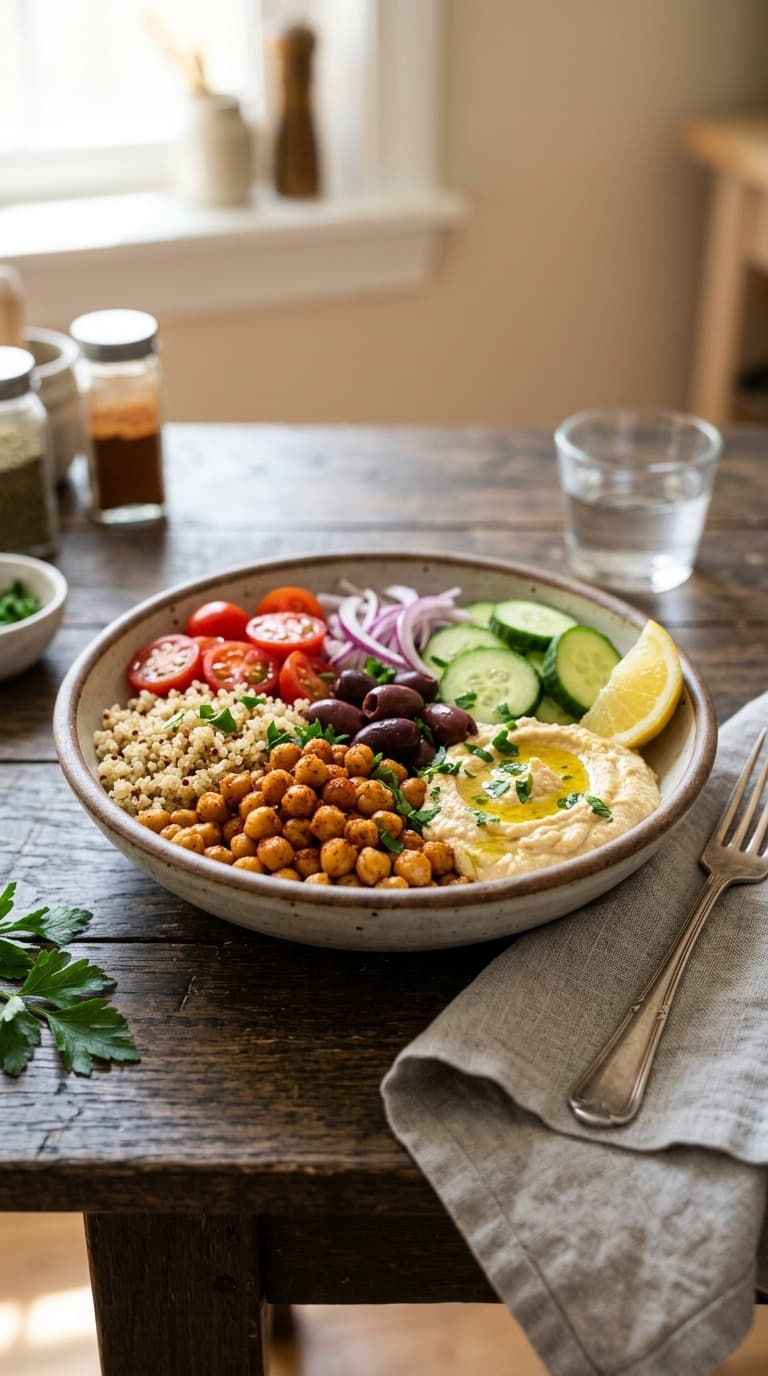
6. Quinoa Buddha Bowl
Cook a big batch of quinoa on meal prep day. For lunch, combine it with roasted sweet potato, steamed broccoli, some sliced avocado, and a tahini-lemon dressing. The combinations are endless, and quinoa actually has all nine essential amino acids, making it a complete protein.
These components pack well separately and come together in minutes. Get Full Recipe.
Looking for more portable lunch options? Check out these lunches that actually keep you full or these super quick lunch ideas when you’re pressed for time.
Dinner Recipes You’ll Actually Make
This is where most heart-healthy meal plans fall apart—dinner needs to be good enough that your family doesn’t stage a revolt. These recipes pass that test.
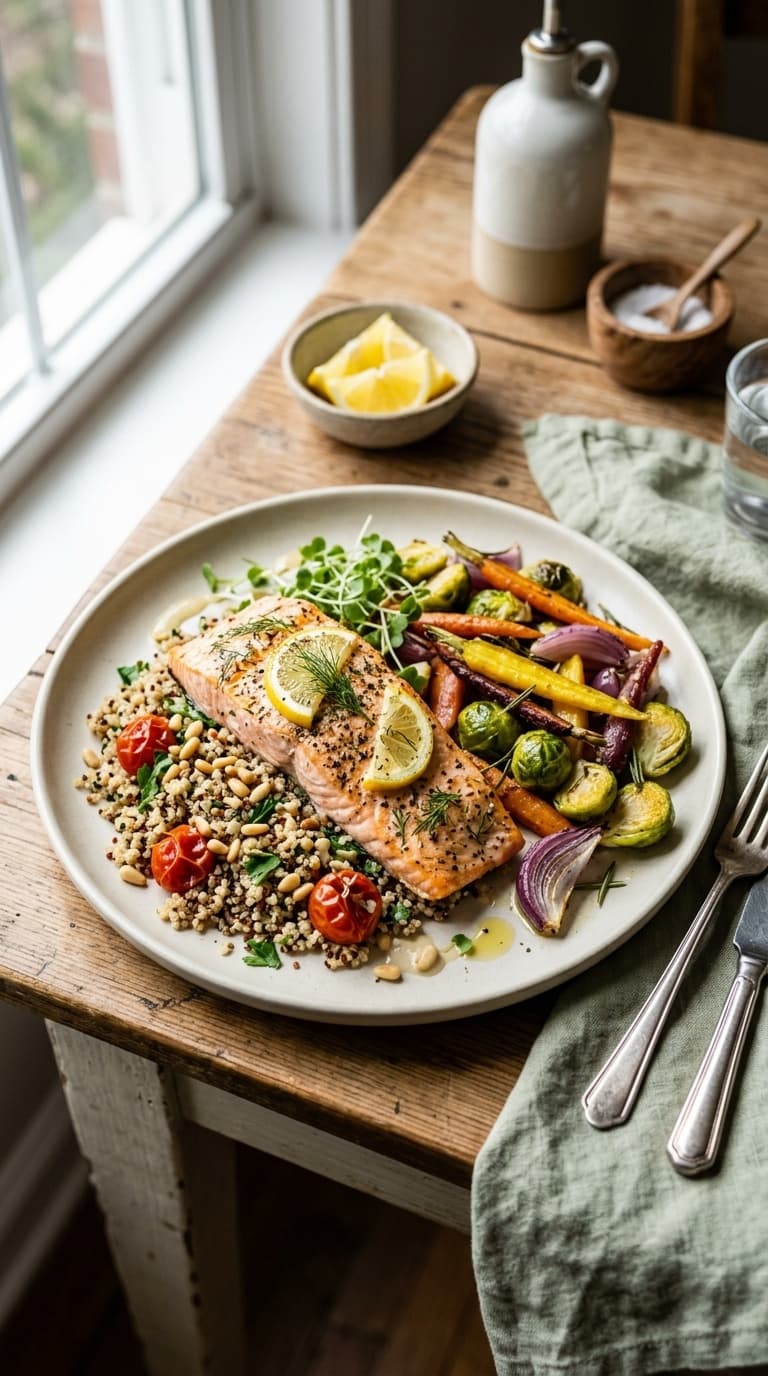
7. Sheet Pan Salmon with Roasted Vegetables
Put salmon fillets and chopped vegetables (I like asparagus, cherry tomatoes, and bell peppers) on a sheet pan. Drizzle with olive oil, season with lemon, garlic, and herbs. Roast at 400°F for about 15 minutes. Everything cooks together, minimal dishes, maximum flavor.
Salmon is loaded with omega-3 fatty acids that support heart health. The vegetables provide fiber and nutrients. The olive oil is a healthy fat that helps your body absorb those nutrients. It’s basically the poster child for heart-healthy eating.
8. Slow Cooker White Bean and Vegetable Soup
Throw cannellini beans, diced tomatoes, vegetable broth, carrots, celery, onion, and Italian seasoning in your slow cooker before work. Come home to soup that smells amazing and costs maybe three bucks to make.
The beans provide plant protein and soluble fiber. The vegetables add vitamins and minerals. And soup is one of those foods that actually tastes better the next day, so make extra. Get Full Recipe.
If soup’s your thing, these soups and stews work year-round, and these heart-healthy soup recipes specifically target cholesterol management.
9. Grilled Chicken with Chimichurri
Chimichurri is one of those sauces that makes everything better. Blend parsley, cilantro, garlic, olive oil, red wine vinegar, and red pepper flakes. Grill chicken breasts and slather them with this sauce. Serve with roasted sweet potatoes and a side salad.
The herbs in chimichurri add flavor without sodium, and olive oil provides those monounsaturated fats that support healthy cholesterol levels. Plus it’s fancy enough for company but easy enough for Tuesday.
10. Baked Cod with Lemon and Herbs
Cod is mild, affordable, and cooks fast. Place fillets in a baking dish, squeeze lemon juice over them, sprinkle with fresh dill or thyme, add a bit of olive oil, and bake at 375°F for about 12 minutes. Pair with brown rice and steamed green beans.
I like using this glass baking dish for fish—it doesn’t hold odors like some materials do, and cleanup is dead simple.
11. Turkey Chili
Brown ground turkey with onions and garlic. Add canned tomatoes, kidney beans, black beans, bell peppers, and chili spices. Simmer for 30 minutes. Top with a small amount of Greek yogurt instead of sour cream.
This freezes beautifully, so make a double batch. Turkey is leaner than beef but still satisfying when you season it properly. The beans add fiber and plant protein. And it’s comfort food that won’t wreck your cholesterol numbers.
12. Shrimp Stir-Fry with Brown Rice
Stir-fries are the ultimate “clean out the fridge” meal. Sauté shrimp with whatever vegetables need using up—snap peas, broccoli, carrots, bell peppers. Use a sauce of low-sodium soy sauce, ginger, garlic, and a tiny bit of honey. Serve over brown rice.
Shrimp cooks in minutes and provides lean protein without saturated fat. The vegetables add fiber and nutrients. And brown rice has more fiber than white rice, which helps with cholesterol management.
A good carbon steel wok makes stir-frying way easier. They get crazy hot and cook everything fast, which keeps vegetables crisp instead of soggy.
One-Pan Wonders for Lazy Days
Some days you just can’t deal with cooking elaborate meals. These recipes get dinner on the table with minimal effort and even less cleanup.
13. Chicken and Vegetable Skillet
Cut chicken thighs into pieces (yes, thighs—they stay juicier than breasts). Sauté with olive oil, then add sliced zucchini, yellow squash, cherry tomatoes, and Italian seasoning. Everything cooks in one pan in about 20 minutes.
While chicken thighs have slightly more fat than breasts, the difference is minimal when you remove the skin. And they’re way harder to overcook, which means you’re more likely to actually enjoy eating them. Get Full Recipe.
14. Lentil and Spinach Curry
Sauté onion and garlic, add curry powder, pour in a can of diced tomatoes and some vegetable broth, throw in dried lentils and a bag of frozen spinach. Simmer until lentils are tender, about 25 minutes. Serve with brown rice or whole wheat naan.
Lentils are stupid cheap and packed with fiber and plant protein. This entire meal probably costs less than five bucks and makes enough for leftovers. Plus it’s vegan if that matters to you.
15. Tilapia Tacos with Cabbage Slaw
Season tilapia fillets and cook them in a skillet (they take maybe 4 minutes per side). Break them into chunks. Serve in corn tortillas with a simple slaw of shredded cabbage, lime juice, and cilantro. Top with avocado slices.
These are lighter than traditional tacos but still satisfying. The cabbage provides crunch and fiber. The fish gives you protein without saturated fat. And they’re way more interesting than another boring piece of grilled chicken.
If you’re into quick, no-fuss dinners, these one-pan dinner ideas will become your best friends, and these lazy meal options are perfect for when you can barely function.
Kitchen Tools That Make Heart-Healthy Cooking Actually Easy
You don’t need a kitchen full of fancy gadgets, but a few good tools make everything smoother. Here’s what I actually use regularly:
Quality Chef’s Knife
A sharp knife makes chopping vegetables so much faster. I fought this for years, thinking any knife would do. I was wrong. One good knife changed how I feel about meal prep.
Glass Meal Prep Containers
These are non-negotiable. Glass doesn’t hold odors or stain, and you can reheat directly in them. I have about 15 and use them constantly for lunches and portioned dinners.
Instant-Read Thermometer
Stop guessing if chicken is done and ending up with dry, overcooked protein. This thing costs like fifteen bucks and eliminates the guesswork entirely.
Meal Planning Template (Digital)
Having a system for planning meals each week cuts down on the “what’s for dinner?” panic. This simple template helps you rotate recipes and keeps your grocery list organized.
Heart-Healthy Recipe Collection (PDF)
A curated collection of tested recipes with nutritional info already calculated. Saves time and takes the guesswork out of whether something actually supports your goals.
Grocery Shopping Guide for Heart Health
A printable guide that breaks down which foods to prioritize, which to limit, and how to read labels effectively. Makes shopping way less overwhelming when you’re starting out.
Comfort Foods That Won’t Wreck Your Progress
Let’s be real—sometimes you need comfort food. The trick is making versions that won’t undo all your hard work.
16. Turkey Meatballs with Marinara
Mix ground turkey with whole wheat breadcrumbs, egg, Italian seasoning, and garlic. Form into meatballs and bake. Simmer in marinara sauce made from crushed tomatoes, garlic, and basil. Serve over whole wheat pasta or zucchini noodles.
These taste like the real deal but use lean turkey instead of beef. The whole wheat breadcrumbs add fiber. And if you make a big batch, they freeze perfectly for future lazy dinners. Get Full Recipe.
17. Veggie-Loaded Lasagna
Layer whole wheat lasagna noodles with ricotta cheese (part-skim), tons of vegetables (spinach, zucchini, mushrooms), marinara sauce, and a bit of mozzarella on top. It’s still lasagna, but with way more vegetables and fiber.
This is perfect for meal prep. Make it on Sunday, portion it out, and you’ve got several lunches or dinners ready to go. Nobody will complain about eating their vegetables when they’re buried in cheese and pasta.
18. Chicken Lettuce Wraps
Ground chicken cooked with water chestnuts, mushrooms, garlic, ginger, and low-sodium soy sauce. Serve in butter lettuce leaves. It’s the PF Chang’s knockoff you didn’t know you needed, but way healthier and cheaper.
Using lettuce instead of carb-heavy wraps cuts calories while adding crunch. The water chestnuts give texture. And it’s fun to eat, which matters more than people admit.
For more comfort food remakes that won’t sabotage your heart health, check out these comfort food recipes and these family-friendly dinners that even picky eaters approve of.
Weekend Cooking Projects Worth the Effort
When you have more time on weekends, these recipes are worth the extra effort. They also usually yield leftovers for the week ahead.
19. Moroccan Chickpea Stew
This involves sautéing onions and garlic, toasting spices (cumin, cinnamon, turmeric), adding chickpeas, diced tomatoes, sweet potatoes, and vegetable broth. Simmer until everything’s tender, finish with a squeeze of lemon and fresh cilantro.
The combination of warming spices and hearty vegetables makes this way more interesting than typical health food. Plus chickpeas are ridiculously good for you—fiber, plant protein, and dirt cheap.
20. Herb-Crusted Pork Tenderloin
Pork tenderloin is actually pretty lean when you trim it properly. Coat it with a mixture of fresh herbs, garlic, and a tiny bit of olive oil. Roast until it hits 145°F internal temperature. Let it rest, then slice.
Serve with roasted Brussels sprouts and quinoa. The whole meal feels fancy but is actually straightforward. And leftovers make great lunch additions throughout the week.
21. Vegetable and Farro Stuffed Peppers
Cut bell peppers in half and remove seeds. Cook farro (it’s like a nuttier, chewier version of rice), mix with sautéed onions, mushrooms, spinach, and a bit of marinara. Stuff peppers and bake. Top with a sprinkle of parmesan.
Farro is an ancient grain packed with fiber and has this great chewy texture. The peppers add vitamins and make it feel like a complete meal. Plus they look impressive if you’re having people over.
I use this covered roasting pan for stuffed peppers—they steam and roast at the same time, which keeps them from drying out.
Making It Actually Stick
Here’s the thing nobody tells you: having great recipes means nothing if you don’t have a system for actually making them happen.
I keep a rotating list of about 10-12 meals that I know I like and can make without thinking too hard. I don’t try to eat something different every single night—that’s exhausting and unrealistic. Instead, I cycle through favorites and throw in something new every week or two.
Meal prep doesn’t have to mean spending all Sunday in the kitchen. Sometimes it’s just washing and chopping vegetables, cooking a big batch of grains, or grilling several chicken breasts. That’s still prep, and it makes weeknight cooking infinitely easier.
The other thing that helps? Having the right ingredients on hand. I keep canned beans, frozen vegetables, canned tomatoes, olive oil, and basic spices stocked. With those staples, you can throw together a decent meal even when you forgot to grocery shop.
Need more ideas for meal planning and prep? These meal prep ideas cover an entire week’s worth of meals, and these freezer meal recipes let you prep way ahead.
What About Eating Out?
You’re not going to cook every single meal forever. That’s fine. Learning to navigate restaurant menus while still prioritizing heart health is part of making this sustainable.
Look for grilled, baked, or roasted options instead of fried. Ask for dressings and sauces on the side. Don’t be afraid to request substitutions—most places will swap fries for a side salad or vegetables without charging extra.
Mediterranean, Japanese, and Vietnamese restaurants tend to have lots of naturally heart-healthy options. Italian can work too if you stick with tomato-based sauces instead of cream sauces and load up on vegetables.
The key is not being weird about it. You can eat out and enjoy yourself without throwing everything out the window. Skip the bread basket if you’re getting pasta. Split a dessert if you want something sweet. Order water or unsweetened tea instead of soda. Small changes add up.
The Nutrition Stuff You Actually Need to Know
I’m not going to bore you with excessive nutrition lectures, but a few things are worth understanding. Soluble fiber, found in oats, beans, and certain fruits, actually helps lower LDL cholesterol. That’s the “bad” kind you want to keep in check.
Omega-3 fatty acids from fatty fish like salmon support heart health in multiple ways—they help with inflammation, blood pressure, and triglyceride levels. You don’t need to eat fish every single day, but a couple times per week makes a difference.
Saturated fat isn’t quite the villain it was made out to be in the 80s, but it’s still smart to keep it moderate. That means choosing lean proteins most of the time, using olive oil instead of butter when it makes sense, and not going overboard with cheese.
According to Mayo Clinic’s heart-healthy diet guidelines, focusing on whole foods and minimizing processed options is more impactful than obsessing over individual nutrients.
Want to dive deeper into specific foods that support heart health? These guides break down the foods that naturally lower cholesterol and the best foods for a stronger heart.
Common Questions About Heart-Healthy Eating
Do I really need to give up all my favorite foods?
Absolutely not. Heart-healthy eating is about balance and patterns, not perfection. The meals I’ve shared here prove you can eat delicious food that supports your cardiovascular health. Save the less healthy stuff for occasional treats rather than daily habits, but you definitely don’t need to live on plain chicken and steamed vegetables forever.
How quickly will I see results in my cholesterol levels?
Most people see measurable improvements in their cholesterol numbers within 4-6 weeks of consistent dietary changes. That said, everyone’s different, and genetics play a role too. Focus on building sustainable eating habits rather than expecting overnight miracles. The benefits compound over time.
Can I still eat eggs if I’m watching my cholesterol?
For most people, yes. Dietary cholesterol doesn’t impact blood cholesterol as much as we once thought—saturated and trans fats are bigger culprits. If your doctor hasn’t specifically told you to avoid eggs, having them a few times per week is typically fine. Just watch what you eat them with (skip the bacon and buttered toast).
Is olive oil really that much better than other cooking oils?
Olive oil, especially extra virgin, contains monounsaturated fats and antioxidants that support heart health. It’s been studied extensively and consistently shows cardiovascular benefits. That doesn’t mean other oils are terrible—avocado oil is great too—but olive oil is backed by the most research. Just use it in reasonable amounts since it’s still calorie-dense.
What if my family won’t eat these recipes?
Start by making one or two of these meals per week alongside your usual rotation. Many of these recipes, like the turkey chili or stuffed peppers, are crowd-pleasers that don’t scream “health food.” You can also make small swaps—use ground turkey instead of beef, add extra vegetables to familiar dishes, or serve brown rice alongside white rice and let people choose. Change doesn’t have to happen all at once.
Final Thoughts
Look, eating for heart health doesn’t have to be this massive, overwhelming transformation. It’s really just about making better choices most of the time while still enjoying your food.
These 21 meals have become my regular rotation because they work in real life. They’re not complicated, they don’t require weird ingredients, and most importantly, they taste good enough that I actually want to eat them.
Start with a few recipes that sound appealing. Make them a couple times until you get comfortable with them. Then add a few more. Before you know it, you’ll have a solid lineup of meals that support your heart health without making you feel deprived.
Your heart will thank you. Your taste buds won’t complain. And honestly, that’s the whole point.
30-Day Cholesterol-Lowering Meal Plan
A simple step-by-step system to help you eat heart-healthy every day without stress.
Over 1,000 people downloaded this guide
$29$9
Get Instant Access