21 Low-Cholesterol Recipes for Weeknight Cooking
Let’s be real—cooking heart-healthy meals after a full workday shouldn’t feel like prepping for a cooking show competition. You’re tired, probably a little hungry, and the last thing you want is to spend an hour chopping vegetables while your stomach stages a protest.
Here’s the thing about low-cholesterol cooking: it’s gotten a bad reputation for being bland, complicated, or requiring ingredients that cost more than your monthly streaming subscriptions. But what if I told you that eating for your heart health can actually be straightforward, delicious, and fit into your chaotic weeknight schedule?
These 21 recipes aren’t about deprivation or eating food that tastes like cardboard. They’re about smart swaps, bold flavors, and getting dinner on the table without sacrificing taste or your sanity. Most take under 30 minutes, use ingredients you can actually pronounce, and taste good enough that your family won’t ask what’s wrong with the food.
Why Weeknight Cooking Needs a Low-Cholesterol Makeover
Before we jump into the recipes, let’s talk about why this matters. High cholesterol affects millions of people, often without any obvious symptoms until it becomes a serious problem. Your body needs some cholesterol to function, but too much of the wrong kind creates plaque buildup in your arteries.
The good news? What you eat has a massive impact on your cholesterol levels. According to the American Heart Association, incorporating soluble fiber and reducing saturated fats can significantly improve your numbers. But you already knew that eating better helps—the challenge is actually doing it on a Tuesday night when takeout is calling your name.
That’s where these recipes come in. They’re designed for real life, not for people who meal prep on Sundays or have perfectly organized spice cabinets. For more heart-healthy inspiration that fits your schedule, check out these lazy low-cholesterol meals for busy people.
The Simple Science of Low-Cholesterol Eating
You don’t need a nutrition degree to understand this. There are two main types of cholesterol: LDL (the bad stuff that clogs arteries) and HDL (the good stuff that helps clean things up). The goal is lowering LDL while keeping HDL stable or even boosting it.
Foods that help accomplish this include anything with soluble fiber—oats, beans, lentils, and certain fruits. Healthy fats from sources like olive oil, avocados, and fatty fish also work wonders. What you want to limit? Saturated fats from red meat and full-fat dairy, plus anything fried or processed.
The beauty of these recipes is that they naturally emphasize ingredients that work in your favor. You’re not following some restrictive diet—you’re just making smarter choices that happen to taste better anyway. Looking for more ways to understand which foods support heart health? These foods that naturally lower cholesterol break it down in detail.
Building Your Low-Cholesterol Pantry (Without Breaking the Bank)
Here’s where I save you from buying seventeen different specialty ingredients that’ll sit in your cabinet until they expire. A solid low-cholesterol pantry is simpler than you think.
Start with these basics: Olive oil (the real MVP), canned beans, whole grain pasta, brown rice or quinoa, canned tomatoes, low-sodium broth, and a variety of dried herbs and spices. Fresh? Keep onions, garlic, lemons, and whatever vegetables are in season.
For protein, lean chicken breast, fish fillets, and plant-based options like tofu work well. I buy chicken in bulk and freeze individual portions in these reusable freezer bags—saves money and prevents that “what’s for dinner?” panic.
One tool that’s genuinely useful? A good non-stick skillet that lets you cook with minimal oil. It’s not essential, but it makes weeknight cooking significantly easier when you’re trying to reduce fat without food sticking to everything.
21 Recipes That’ll Change Your Weeknight Routine
Quick Chicken Wins
Chicken breast gets a bad reputation for being boring, but that’s only if you’re cooking it wrong. The secret is high heat, bold seasonings, and not overcooking it into rubber.
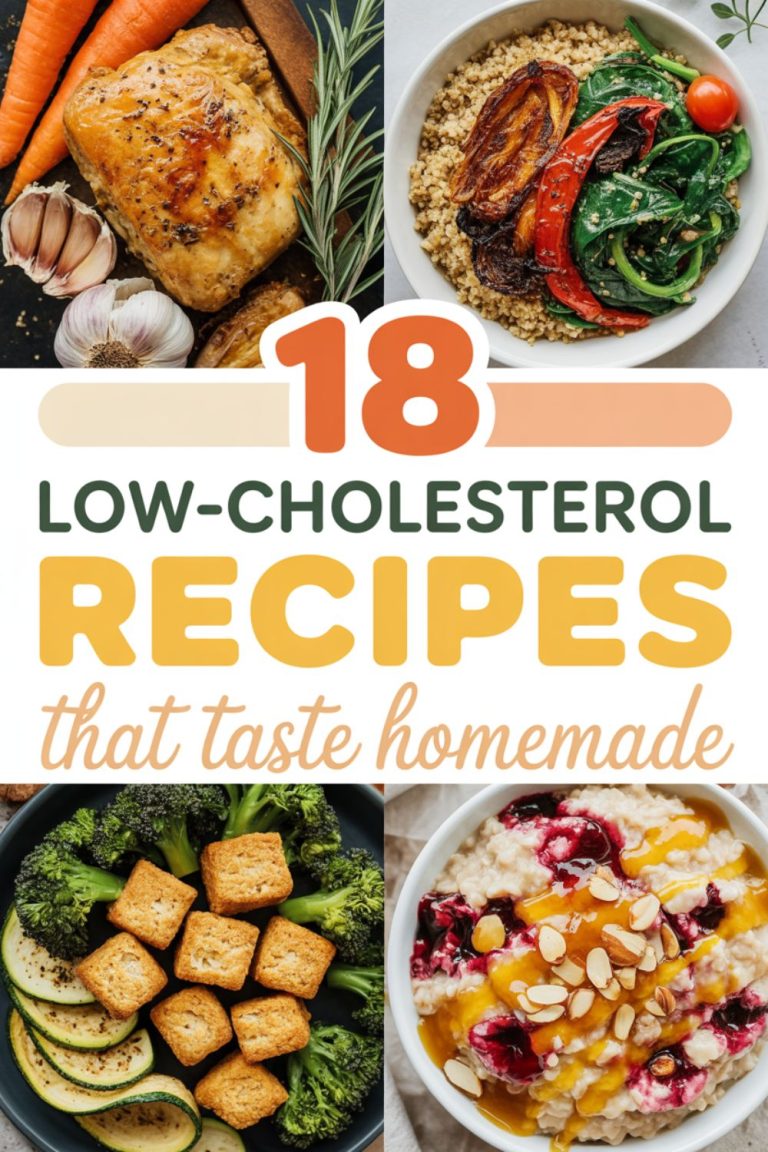
Lemon Herb Chicken with Roasted Vegetables is my go-to when I need something foolproof. Toss chicken with lemon juice, garlic, and whatever herbs you have around. Get Full Recipe. Throw it on a sheet pan with vegetables, and you’re done in 25 minutes. No multiple pans to wash, no complicated steps—just good food that happens to be heart-healthy.
For something with more flavor punch, try Mediterranean Chicken Bowls. Seasoned chicken over quinoa with cucumbers, tomatoes, and a tahini drizzle. It tastes like you tried harder than you did, and the leftovers are excellent for lunch. Get Full Recipe.
The Ginger Sesame Chicken Stir-Fry comes together faster than delivery would arrive. Use pre-cut stir-fry vegetables if you’re short on time—nobody’s judging. Serve over brown rice and you’ve got a complete meal in twenty minutes. Get Full Recipe.
When you’re craving comfort food, these low-cholesterol chicken recipes packed with flavor deliver without the guilt.
Fish That Doesn’t Intimidate
Fish is one of those ingredients people say they should cook more often, then don’t. Usually because they’re worried about it smelling up the house or not knowing when it’s done.
Here’s the truth: fish is actually easier to cook than chicken. It takes less time, requires minimal seasoning, and you can barely mess it up. Plus, fatty fish like salmon are loaded with omega-3s that actively improve your cholesterol profile.
Sheet Pan Salmon with Asparagus is criminally simple. Season the fish, throw it on a pan with vegetables, bake for 12 minutes. That’s it. Get Full Recipe. I use parchment paper for zero cleanup—just crumple and toss.
Cod with Tomato Olive Sauce feels fancy but requires zero actual cooking skills. The fish cooks gently in a flavorful tomato sauce while you set the table. Get Full Recipe. Serve with whole grain bread to soak up the sauce.
The Tuna Nicoise Salad isn’t technically cooking, but it’s substantial enough for dinner. Quality canned tuna (I like this brand packed in olive oil), hard-boiled eggs, green beans, and olives over greens. Dress with lemon and olive oil. Get Full Recipe.
Vegetarian Options That Actually Fill You Up
Let’s address the elephant in the room—meatless meals can absolutely be satisfying. The key is including enough protein and fiber so you’re not hungry an hour later.
Black Bean and Sweet Potato Tacos might be the most-requested recipe in my house. Roasted sweet potato cubes, seasoned black beans, and all your favorite taco toppings. Get Full Recipe. Kids love them, adults love them, and your cholesterol will definitely love them.
For nights when you need comfort, Lentil Bolognese over whole wheat pasta hits different. It’s thick, hearty, and loaded with that umami flavor people crave. Nobody misses the meat once they try it. Get Full Recipe.
The Chickpea Curry uses curry paste as a shortcut—way easier than measuring out twelve different spices. Chickpeas, coconut milk, spinach, and tomatoes simmered until everything melds together. Get Full Recipe. Serve over brown rice or with naan.
Looking for more plant-based inspiration? Check out these low-cholesterol vegetarian meals you’ll actually crave—no sad salads included.
One-Pan Wonders for Minimal Cleanup
The fewer dishes you dirty, the more likely you are to cook at home. That’s just facts.
Sheet Pan Chicken Fajitas deliver all the flavor with approximately 30 seconds of cleanup. Chicken strips, bell peppers, and onions seasoned with fajita spices. Get Full Recipe. Everything roasts together while you make rice or warm tortillas.
The Sausage and Pepper Skillet uses turkey or chicken sausage instead of pork—you honestly can’t tell the difference when everything’s seasoned well. Get Full Recipe. Add some fire-roasted tomatoes for extra depth.
Shrimp and Vegetable Sheet Pan might be the fastest dinner on this list. Shrimp cook in about 8 minutes, vegetables need maybe 15. Time it right and everything finishes together. Get Full Recipe.
These low-cholesterol one-pan dinners expand on this concept with even more options that won’t leave your kitchen looking like a disaster zone.
Soups That Make Great Next-Day Lunches
Soup might not sound exciting, but hear me out—it’s the ultimate meal prep hack. Make a big batch, eat it for dinner, then pack the rest for lunch all week.
White Bean and Kale Soup is the kind of simple, nourishing meal that makes you feel like you have your life together. White beans provide protein and fiber, kale adds nutrients, and good vegetable broth brings everything together. Get Full Recipe.
For something with more kick, Chicken Tortilla Soup (without the fried tortilla strips) packs serious flavor. Use rotisserie chicken if you’re feeling lazy—no judgment here. Get Full Recipe.
The Lentil Vegetable Soup is basically a hug in a bowl. It’s also ridiculously cheap to make, which is a bonus when you’re trying to eat healthier on a budget. Get Full Recipe.
Explore more warming options with these low-cholesterol soups and stews that work year-round.
Grain Bowls That Beat Restaurant Versions
Grain bowls are having a moment, and for good reason—they’re customizable, filling, and naturally heart-healthy when built right.
The basic formula: grain + protein + vegetables + flavorful sauce. From there, you can go anywhere.
Mediterranean Quinoa Bowl features chickpeas, cucumber, tomatoes, red onion, and feta (use sparingly). Drizzle with lemon-tahini dressing. Get Full Recipe. Make the components ahead and assemble when you’re ready to eat.
Thai-Inspired Brown Rice Bowl with tofu, edamame, shredded carrots, and peanut sauce tastes like takeout but costs a fraction of the price. Get Full Recipe. I make the peanut sauce in bulk and store it in small mason jars for easy weeknight assembly.
The Mexican-Style Burrito Bowl with cauliflower rice, black beans, grilled vegetables, and salsa verde gives you all the burrito flavor without the tortilla (or the price tag). Get Full Recipe.
Quick Pasta Dishes That Skip the Cream
Pasta doesn’t have to mean heavy cream sauces and sky-high cholesterol. Some of the best pasta dishes rely on olive oil, garlic, and quality ingredients.
Pasta Primavera loaded with seasonal vegetables and a light lemon-garlic sauce feels indulgent without being heavy. Get Full Recipe. Use whole wheat pasta for extra fiber.
The Spaghetti Aglio e Olio is what Italians make when there’s “nothing” in the house. Pasta, garlic, olive oil, red pepper flakes, and parsley. That’s it. Get Full Recipe. It shouldn’t work, but somehow it’s incredible.
Penne with Turkey Meatballs gives you the comfort of spaghetti and meatballs using ground turkey instead of beef. Get Full Recipe. Shape them with a small cookie scoop for uniform size and faster cooking.
Kitchen Tools That Make These Recipes Easier
You don’t need a fully stocked kitchen to make these recipes, but a few strategic tools make everything smoother.
- Quality Chef’s Knife — Worth every penny. Cutting vegetables shouldn’t feel like a workout.
- Rimmed Baking Sheets (Set of 2) — For all those sheet pan dinners. Get sturdy ones that won’t warp.
- Instant-Read Thermometer — Takes the guesswork out of cooking protein. No more dry chicken.
- Glass Food Storage Containers — Meal prep and leftovers stay fresh longer. Plus you can see what’s inside.
- Vegetable Spiralizer — Not essential, but makes veggie noodles fun for nights you want something lighter.
- Digital Kitchen Scale — Helpful if you’re tracking portions or baking. More accurate than measuring cups.
Digital Resources Worth Having:
- Complete Low-Cholesterol Meal Prep Guide — Plan your whole week in one session
- Heart-Healthy Meals Under 400 Calories — For when you’re watching both cholesterol and calories
- Freezer-Friendly Low-Cholesterol Recipes — Cook once, eat three times
Making Low-Cholesterol Cooking Sustainable
Here’s what I’ve learned after years of trying to eat better: perfection is the enemy of consistency. You’re not going to make heart-healthy meals every single night, and that’s fine.
The goal isn’t to overhaul your entire life overnight. It’s to gradually shift toward better choices that become your new normal. Start with two or three recipes from this list that sound genuinely appealing to you. Make them a few times until they become easy. Then add a couple more.
Also, give yourself permission to use shortcuts. Pre-cut vegetables, rotisserie chicken, canned beans, frozen fish—none of these are cheating. They’re smart time management. The goal is getting nutritious food on the table, not impressing yourself with your knife skills.
When you need variety beyond these 21 recipes, explore these low-cholesterol meals that are actually delicious for more inspiration.
Practical Tips for Weeknight Success
Keep Your Pantry Ready
The biggest barrier to cooking at home isn’t time—it’s not having the right ingredients. When your pantry is stocked with basics, you can always throw something together.
Every week, make sure you have: olive oil, garlic, onions, canned tomatoes, beans, whole grains, frozen vegetables (seriously underrated), and your favorite seasonings. With just these ingredients, you can make at least a dozen different meals.
Master Simple Cooking Techniques
You don’t need complicated cooking methods. Master these basics and you’ll be set: roasting vegetables, sautéing protein, making a simple pan sauce, and cooking grains properly.
Roasting is probably the most valuable skill. Toss vegetables with olive oil and seasonings, spread on a parchment-lined baking sheet, roast at 425°F until caramelized. Everything tastes better roasted—even vegetables you thought you hated.
Build Flavor Without Fat
Low-cholesterol doesn’t mean low-flavor. You’re just building taste differently.
Fresh herbs, citrus juice, vinegar, garlic, ginger, and spices all add massive flavor without adding cholesterol. Toast spices in a dry pan for thirty seconds before using them—it amplifies their flavor significantly.
Acids like lemon juice or vinegar brighten dishes and make them taste more complex. That’s often what restaurant food has that home cooking lacks—proper acid balance.
Portion Awareness Without Obsession
You don’t need to weigh and measure everything like you’re prepping for a bodybuilding competition. But having a general sense of portions helps.
A serving of protein is about the size of your palm. Grains or starchy vegetables should be roughly a fist-sized portion. Fill half your plate with non-starchy vegetables, and you’re in good shape.
Frequently Asked Questions
Can I really lower my cholesterol just by changing what I eat?
Yes, diet plays a huge role in managing cholesterol levels. While genetics factor in, most people can see improvements by reducing saturated fat, adding soluble fiber, and eating more plant-based meals. Some people might still need medication, but dietary changes significantly improve outcomes either way. Talk to your doctor about your specific situation, but don’t underestimate how powerful food choices can be.
How long does it take to see results from eating low-cholesterol meals?
Most people start seeing changes in their cholesterol levels within three to six months of consistent dietary changes. That said, you’ll probably feel better before the numbers shift—better energy, less sluggishness after meals, improved digestion. The key word is consistent. Making healthy choices most of the time matters more than being perfect.
Do I have to give up all my favorite foods?
Absolutely not. This isn’t about deprivation—it’s about balance. You can still enjoy foods you love, just maybe less frequently or in smaller portions. The goal is making healthier choices most of the time, not achieving perfection. If you’re eating heart-healthy meals for 80% of your dinners, the occasional burger or pizza isn’t going to derail your progress.
Are these recipes suitable for the whole family?
Yes, these are normal, delicious meals that happen to be heart-healthy. Kids and picky eaters have approved most of these recipes. You’re not serving separate “diet food”—you’re just cooking good meals that use smarter ingredients. If you have extremely picky eaters, start with familiar dishes like the chicken fajitas or pasta options.
What if I don’t have time to cook every night?
That’s exactly why these recipes focus on speed and simplicity. Most take 30 minutes or less. You can also batch cook on weekends—make two or three recipes and rotate throughout the week. Frozen healthy meals beat takeout or processed convenience food any day. Do what works for your schedule, even if that means cooking only three nights a week to start.
Your Next Steps
The path to better heart health doesn’t require a complete life overhaul. It starts with one meal, then another, until healthier choices become your default instead of the exception.
Pick two or three recipes from this list that genuinely appeal to you. Make them this week. See how they fit into your routine. Adjust as needed. Add more recipes gradually. Before you know it, you’ll have a rotation of go-to meals that support your health without feeling like work.
The most important thing is getting started. Your heart will thank you for it, and honestly, your taste buds probably will too. Good food doesn’t have to be bad for you, and eating well doesn’t have to be complicated.
Now stop reading and go make something delicious. Your weeknight dinners are about to get a whole lot better.