
21 Low-Cholesterol Recipes That Feel Comforting
You know that moment when your doctor hands you those blood test results and casually mentions your cholesterol’s a bit high? Yeah, that happened to me last year, and suddenly every recipe I’d been making felt like it was on the banned list. But here’s the thing—eating for heart health doesn’t mean resigning yourself to bland steamed vegetables and dry chicken breast.
I spent months testing recipes, tweaking ingredients, and honestly? Some of my favorite comfort foods now happen to be low-cholesterol. We’re talking about dishes that actually taste good, fill you up, and don’t leave you feeling like you’re on some punishment diet. According to Mayo Clinic, what you eat directly affects your cholesterol levels—which means you’ve got more control than you think.

Why Low-Cholesterol Doesn’t Mean Low-Flavor
Let’s get something straight right off the bat. The biggest myth about low-cholesterol cooking is that it’s automatically boring. I used to think the same thing until I realized I was just making bad food and blaming it on the diet restrictions.
The secret? You’re not removing flavor—you’re just swapping out saturated fats for healthier alternatives. Olive oil instead of butter? Still delicious. Herbs and spices instead of salt and cream? Actually better in most cases. And when you load up on fiber-rich whole grains and vegetables, you’re getting food that keeps you satisfied way longer than the heavy stuff ever did.
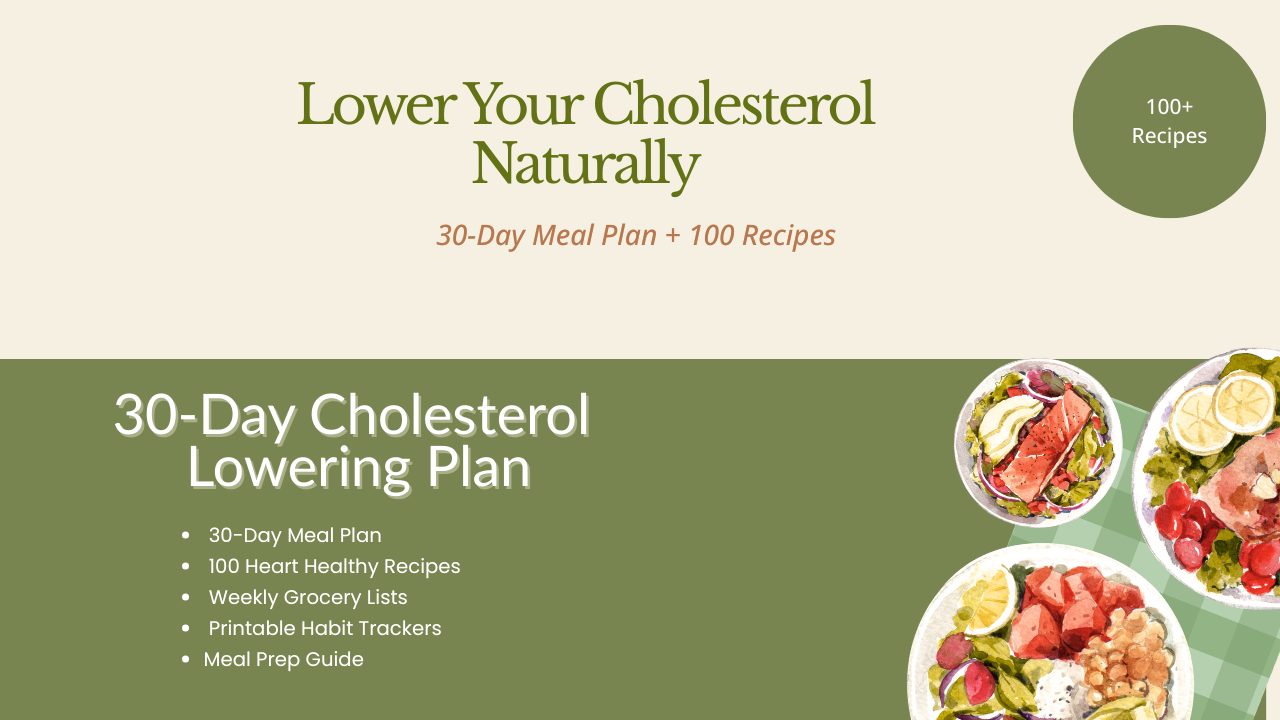
30-Day Cholesterol Reset System
A simple done-for-you plan to help you eat heart-healthy every day without confusion.
Over 1,000 people downloaded this guide
✔ 100 Easy Recipes
✔ Grocery Lists + Meal Prep Guide
🎁 FREE BONUSES:
✔ 7-Day Quick Start Plan
✔ Printable Grocery List
$29 $9
Get Instant AccessThink about Mediterranean cuisine—it’s been the gold standard for heart health for decades, and nobody’s sitting around complaining about how bland their food tastes. Those folks know what they’re doing.
Understanding the Basics: What Actually Lowers Cholesterol
Before we get into the recipes, you need to understand what you’re working with here. Not all fats are created equal, and your body treats them very differently.
The Good Fats vs. The Bad Fats
Saturated fats are the ones you want to limit—think fatty red meat, full-fat dairy, and anything that’s solid at room temperature like butter or lard. Your liver uses these to make more cholesterol, which is exactly what you don’t need right now.
Unsaturated fats, on the other hand, are your friends. These include olive oil, avocados, nuts, and fatty fish like salmon. They can actually help lower your LDL (that’s the bad cholesterol) while maintaining or even raising your HDL (the good kind).
Soluble Fiber Is Your Secret Weapon
Here’s something most people don’t know: soluble fiber acts like a sponge in your digestive system, literally binding to cholesterol and helping your body eliminate it before it enters your bloodstream. We’re talking about foods like oats, beans, lentils, apples, and Brussels sprouts.
Research shows that adding just 5-10 grams of soluble fiber daily can drop your LDL cholesterol by 5-11 points. That’s significant. And the best part? These foods are incredibly versatile and actually taste good when you know how to cook them properly.
I keep this airtight glass container set stocked with dried beans, lentils, and oats. Makes meal prep so much easier when everything’s visible and organized.
The 21 Recipes That Changed How I Eat
Alright, let’s get into the actual food. These aren’t just recipes I found online and never made—these are dishes I cook regularly, some at least once a week. They’re organized loosely by meal type, but honestly, I’ve eaten the “breakfast” ones for dinner more times than I can count.
Morning Meals That Actually Stick With You
1. Steel-Cut Oats with Caramelized Bananas and Walnuts
Forget that instant oatmeal packet nonsense. Steel-cut oats have this incredible chewy texture that makes them feel substantial. I cook mine with a cinnamon stick in the water, then top with bananas that I’ve caramelized in a tiny bit of coconut oil and chopped walnuts. The omega-3s in the walnuts are clutch for heart health, and the whole thing tastes like dessert for breakfast.
For more ways to start your day right, check out these low-cholesterol breakfast ideas that keep your heart happy.
2. Veggie-Packed Chickpea Scramble
This one’s for when you’re craving something savory and eggy but want to skip the cholesterol that comes with actual eggs. Mashed chickpeas with turmeric (for that yellow color), nutritional yeast, and whatever vegetables need using up. Takes maybe ten minutes start to finish. Get Full Recipe
3. Overnight Oats Three Ways
The lazy person’s breakfast that’s actually good for you. I prep these in mason jars with these leak-proof lids on Sunday night, and boom—breakfast sorted for half the week. My go-to flavors: apple cinnamon, berry almond, and chocolate banana (yes, chocolate can be heart-healthy when you use dark cocoa powder). Get Full Recipe
Speaking of quick breakfast solutions, you’ll also love these breakfast options under 300 calories that don’t sacrifice flavor.
Midday Meals That Won’t Put You to Sleep
4. Mediterranean Quinoa Bowl
This is the lunch I probably make most often. Quinoa as the base, then load it up with cucumber, cherry tomatoes, kalamata olives, red onion, chickpeas, and a ridiculous amount of fresh parsley and mint. Dressing is just lemon juice, olive oil, and garlic. Simple, filling, and it actually tastes better after sitting in the fridge overnight. Get Full Recipe
5. Lentil and Vegetable Soup
Lentils are insanely underrated. They’re packed with soluble fiber, protein, and they cook faster than dried beans. My version uses red lentils, carrots, celery, tomatoes, and a ton of cumin and coriander. I make a huge batch in this 8-quart Dutch oven and freeze individual portions. Get Full Recipe
If you’re into batch cooking comfort foods, definitely explore these soups and stews that work year-round.
6. Smashed Chickpea Salad Sandwich
This is my answer to tuna or chicken salad, but without all the mayo and cholesterol. Mash chickpeas with a bit of tahini, lemon juice, diced celery, red onion, and whatever herbs you like. Stuff it in whole grain pita or between two slices of bread. Done. Get Full Recipe
For more quick midday solutions, browse through these lunches you can throw together in under 10 minutes.
Dinner Options That Feel Like Real Food
7. Baked Salmon with Roasted Vegetables
Salmon is one of the few fatty foods that’s actually encouraged on a low-cholesterol diet because of all those omega-3s. I season mine with just lemon, garlic, and dill, then roast it alongside whatever vegetables I have—Brussels sprouts, asparagus, bell peppers, you name it. Everything goes on one sheet pan, minimal cleanup, maximum flavor.
8. Vegetarian Chili with Black Beans
This chili is so hearty that nobody misses the meat. Black beans, kidney beans, tons of vegetables, crushed tomatoes, and enough chili powder and cumin to make it interesting. I serve it with a dollop of avocado instead of sour cream. Get Full Recipe
9. Stuffed Bell Peppers
Bell peppers stuffed with brown rice, black beans, corn, tomatoes, and spices. Bake until the peppers are tender. These look fancy enough for company but are stupid easy to make. I usually make extra and have them for lunch the next day. Get Full Recipe
When you’re looking for more satisfying evening meals, check out these dinners you’ll actually want to make repeatedly.
One-Pan Wonders for Busy Weeknights
10. Sheet Pan Chicken and Vegetables
Boneless, skinless chicken breast (the boring one becomes interesting with the right treatment) with broccoli, carrots, and red potatoes. Everything gets tossed with olive oil, garlic, rosemary, and lemon. One pan, 30 minutes, done. Get Full Recipe
11. Stir-Fry with Tofu and Mixed Vegetables
Tofu is another one of those foods people love to hate, but when you press it properly and get it crispy? Game changer. I use this tofu press to get all the water out, then cube it and pan-fry until golden. Toss with whatever vegetables and a simple sauce of low-sodium soy sauce, ginger, and a touch of maple syrup. Serve over brown rice.
12. Turkey and Vegetable Skillet
Ground turkey (the leanest kind you can find), zucchini, bell peppers, onions, and tomatoes all cooked together in one skillet. Season it like you would taco filling and eat it in lettuce wraps or over cauliflower rice. Get Full Recipe
If one-pan dinners are your thing, you’ve got to see these one-pan recipes that make cleanup a breeze.
Comfort Foods That Got a Healthy Makeover
13. Cauliflower “Mac” and Cheese
Okay, hear me out. I know cauliflower isn’t macaroni, but when you make a cheese sauce with nutritional yeast, cashews (soaked and blended), and some spices, then pour it over roasted cauliflower? It scratches that mac and cheese itch without all the saturated fat and cholesterol from heavy cream and cheddar.
14. Lentil “Meatballs” with Marinara
These are made from cooked lentils, oats, flaxseed, and Italian seasonings. Form them into balls, bake until they hold together, then simmer in your favorite marinara sauce. Serve over whole wheat pasta or zucchini noodles. I make these with this small cookie scoop to keep them all the same size. Get Full Recipe
15. Mushroom and Barley Risotto
Traditional risotto is loaded with butter and parmesan. This version uses barley instead of arborio rice (more fiber), vegetable broth, a small amount of olive oil, and nutritional yeast for that umami flavor. The mushrooms make it feel rich and earthy. Get Full Recipe
For more creative takes on classic comfort foods, explore these comfort food recipes with a healthy twist.
Snacks and Sides That Round Out Your Meals
16. Roasted Chickpeas
These are dangerously addictive. Drain and dry canned chickpeas, toss with olive oil and your choice of seasonings (I rotate between paprika, curry powder, and garlic-herb), then roast at 400°F until crispy. They’re crunchy, protein-packed, and way better than chips. Get Full Recipe
17. Hummus with Vegetable Sticks
Making your own hummus is ridiculously easy and tastes so much better than store-bought. Chickpeas, tahini, lemon juice, garlic, olive oil, blend until smooth. That’s it. I keep cut vegetables in these glass meal prep containers so I’m always ready to snack smart.
18. Sweet Potato Fries
Cut sweet potatoes into wedges, toss with just a little olive oil and paprika, spread on a baking sheet, and roast. They come out crispy on the outside and creamy inside. So much better than regular fries and packed with fiber and vitamins. Get Full Recipe
When you need more snacking inspiration that won’t derail your progress, check out these heart-healthy snacks that actually satisfy.
Sweet Treats That Won’t Spike Your Cholesterol
19. Dark Chocolate Avocado Mousse
This sounds weird until you try it. Ripe avocados, dark cocoa powder, maple syrup, and vanilla extract blended until smooth. The avocado makes it creamy without cream, and the healthy fats are actually good for you. Plus, dark chocolate has antioxidants that support heart health.
20. Baked Apples with Oats and Cinnamon
Core some apples, stuff them with a mixture of rolled oats, cinnamon, nutmeg, and a tiny drizzle of maple syrup, then bake until the apples are tender. It tastes like apple pie without all the butter and sugar in a crust. Serve warm. Get Full Recipe
21. Berry Chia Pudding
Mix chia seeds with almond milk (or any plant-based milk), a touch of vanilla, and let it sit in the fridge overnight. The chia seeds absorb the liquid and create this pudding-like texture. Top with fresh berries in the morning. The omega-3s in chia seeds are fantastic for heart health, and this feels like dessert for breakfast. Get Full Recipe
If you’ve got a sweet tooth that needs managing, definitely browse these guilt-free desserts that don’t compromise on taste.
Kitchen Tools That Make This Whole Thing Easier
Look, you don’t need a ton of fancy equipment to cook low-cholesterol meals, but a few strategic purchases made my life significantly easier.
First, get yourself a high-quality non-stick skillet. You’ll use way less oil when your food isn’t sticking to the pan. I also can’t recommend a food processor enough—it makes quick work of chopping vegetables, blending hummus, and making things like those lentil meatballs.
And honestly? A good set of measuring cups and spoons helps you stay consistent with portions, which matters more than people think when you’re watching your cholesterol.
Meal Prep Strategy: Setting Yourself Up for Success
The biggest obstacle to eating well isn’t usually knowledge—it’s time and convenience. When you’re tired and hungry, you make bad decisions. That’s just how humans work.
Here’s what works for me: I spend about two hours on Sunday afternoon cooking a few big-batch items. Usually a soup or stew, a grain salad, and either roasted vegetables or baked chicken. Everything goes into individual containers in the fridge or freezer.
During the week, I’m just assembling meals from components I’ve already prepped. It’s not glamorous, but it’s the difference between eating well and grabbing takeout for the fourth night in a row.
For more structured approaches to meal planning, you’ll find these weekly meal prep ideas incredibly helpful.
What About Dining Out?
Eating low-cholesterol doesn’t mean you can never go to restaurants again. You just need to know what to look for and what to avoid.
Safe bets: Grilled (not fried) fish or chicken, salads with dressing on the side, vegetable-based soups, steamed vegetables, brown rice or quinoa bowls. Mediterranean and Japanese restaurants are usually your best options.
Red flags: Anything described as “creamy,” fried foods, dishes swimming in butter or cheese, and most desserts (obviously).
Don’t be afraid to ask how things are prepared or request modifications. Most restaurants will accommodate reasonable requests, especially if you mention it’s for health reasons.
The Mental Game: Staying Consistent Without Feeling Deprived
Real talk for a second. The hardest part of changing how you eat isn’t the cooking—it’s the psychological adjustment of giving up foods you’ve loved your whole life.
I’m not going to lie and say I never miss a greasy cheeseburger or a bowl of fettuccine alfredo. But you know what? I feel so much better eating this way that the trade-off is worth it. My energy’s better, I’m sleeping better, and I don’t get that sluggish feeling after meals anymore.
The key is not thinking of it as deprivation. You’re not taking things away—you’re choosing to eat foods that make you feel good. Subtle mindset shift, huge difference in how sustainable it becomes.
Plus, when you do occasionally indulge (because let’s be realistic, you will), it doesn’t derail everything if your baseline is solid.
Ingredients to Keep Stocked
Having a well-stocked pantry makes throwing together these recipes infinitely easier. Here’s what I always keep on hand:
- Grains: Brown rice, quinoa, steel-cut oats, whole wheat pasta, barley
- Legumes: Canned chickpeas, black beans, lentils (red and green), white beans
- Healthy fats: Extra virgin olive oil, avocado oil, tahini, raw nuts and seeds
- Flavor makers: Fresh garlic, fresh ginger, lemons, low-sodium soy sauce, vegetable broth, balsamic vinegar
- Spices: Cumin, paprika, turmeric, cinnamon, Italian seasoning, curry powder
- Protein: Frozen skinless chicken breast, canned wild-caught salmon, firm tofu
- Vegetables: Whatever’s fresh, plus frozen broccoli, spinach, and mixed vegetables for emergencies
When your pantry looks like this, you’re never more than 20 minutes away from a solid low-cholesterol meal.
Reading Labels: What to Actually Look For
If you’re buying packaged foods (and let’s be honest, sometimes you have to), you need to know how to read nutrition labels properly.
Saturated fat should be as low as possible—ideally less than 5% of the daily value per serving. Trans fats should be zero, though foods can claim zero if they have less than 0.5g per serving, so check the ingredients list for “partially hydrogenated oils.”
Cholesterol content matters too, obviously. Try to keep it under 200mg per day total, which means most single items should have minimal cholesterol.
Fiber is what you want to see high numbers for—the more, the better. And don’t forget to check the sodium, because many low-fat products compensate with excessive salt.
Frequently Asked Questions
Can I really lower my cholesterol just by changing what I eat?
Absolutely. Diet changes can have a significant impact on your cholesterol levels—in many cases, they’re the first line of treatment before medication. Studies show that reducing saturated fat and adding more soluble fiber can lower LDL cholesterol by 5-20% depending on how strict you are. That said, genetics play a role too, so some people need medication in addition to dietary changes.
How long does it take to see results from eating low-cholesterol?
Most people start seeing changes in their cholesterol levels within 4-6 weeks of consistently eating a low-cholesterol diet. However, the most dramatic results usually show up after 3 months. The key word here is “consistently”—occasional healthy meals won’t move the needle, but making it your default way of eating will.
Do I have to give up all meat and dairy forever?
Not necessarily. You don’t need to go full vegetarian or vegan unless you want to. Focus on lean proteins like skinless chicken, turkey, and fish, and choose low-fat or fat-free dairy products. The goal is limiting saturated fat and dietary cholesterol, not eliminating all animal products. That said, plant-based proteins like beans and lentils are excellent options that happen to be cholesterol-free.
What’s the difference between soluble and insoluble fiber, and why does it matter?
Soluble fiber dissolves in water and forms a gel in your digestive tract, which binds to cholesterol and helps remove it from your body. Insoluble fiber doesn’t dissolve but helps move food through your digestive system. For cholesterol management, you want to prioritize soluble fiber from foods like oats, beans, apples, and Brussels sprouts, but both types are important for overall health.
Can I still eat eggs if I’m watching my cholesterol?
This one’s debated, but current guidelines suggest that dietary cholesterol (like what’s in eggs) has less impact on blood cholesterol than previously thought—for most people. The bigger culprit is saturated fat. That said, if your doctor has advised you to limit eggs, listen to them. Otherwise, a few whole eggs per week is usually fine, and egg whites are essentially unlimited since all the cholesterol is in the yolk.
The Bottom Line
Living with high cholesterol—or trying to prevent it—doesn’t have to feel like punishment. Yeah, you need to make some changes, but those changes don’t have to mean eating food you hate or spending three hours in the kitchen every night.
These 21 recipes are proof that you can eat well, feel satisfied, and actually enjoy what’s on your plate while taking care of your heart. The trick is finding what works for you, stocking your kitchen with the right ingredients, and giving yourself permission to experiment.
Some of these recipes you’ll love immediately. Others might need some tweaking to match your taste preferences. That’s fine. The goal isn’t perfection—it’s building a sustainable way of eating that supports your health without making you miserable.
Start with one or two recipes that sound appealing, make them a few times until they become second nature, then add a couple more. Before you know it, you’ll have a solid rotation of go-to meals that happen to be good for your cholesterol levels. And honestly? That’s better than any restrictive diet plan you could ever follow.
Your heart will thank you, your energy levels will improve, and you might even find that you prefer eating this way once you get past the initial adjustment period. I know I did.
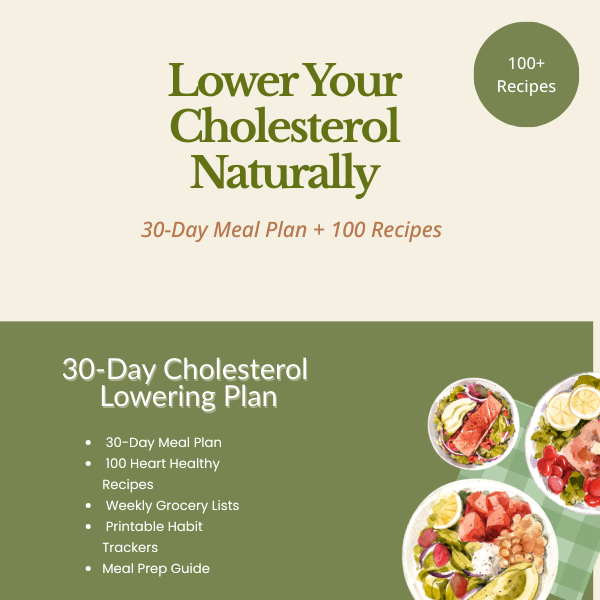
30-Day Cholesterol-Lowering Meal Plan
A simple step-by-step system to help you eat heart-healthy every day without stress.
Over 1,000 people downloaded this guide
$29$9
Get Instant Access


