
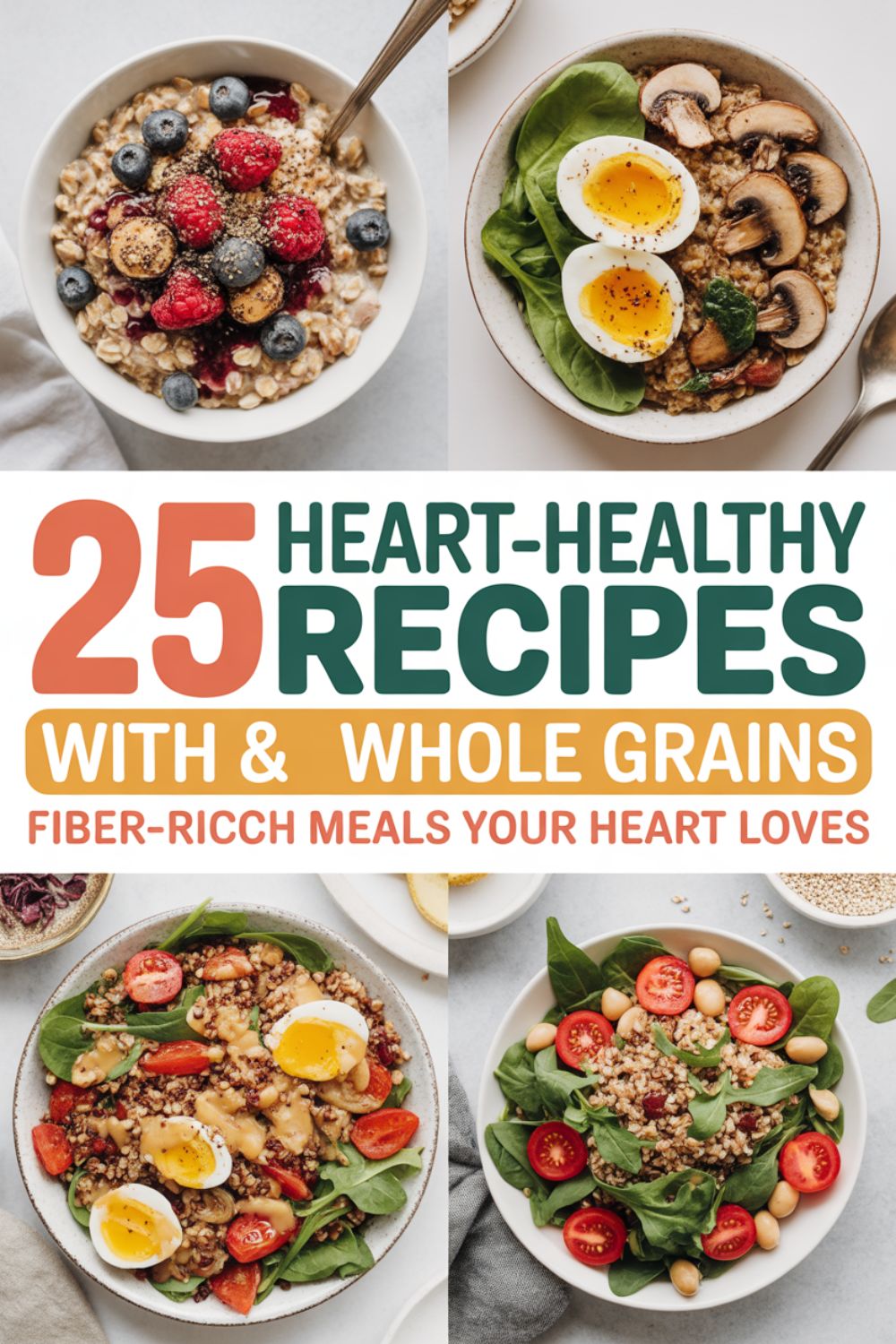
25 Heart-Healthy Recipes with Oats & Whole Grains
Delicious, filling, actually-good-for-your-heart meals that will make your cardiologist proud and your taste buds happy.
Let me guess: your doctor said “eat more whole grains” and you immediately pictured a bowl of sad, beige mush with exactly zero enjoyment in sight. Been there. But here’s the thing nobody tells you — oats and whole grains are genuinely one of the most versatile groups of ingredients in your kitchen, and once you figure out how to use them properly, they stop feeling like a punishment and start tasting like actual food you want to eat.
This collection of 25 heart-healthy recipes with oats and whole grains covers everything from make-ahead breakfasts to savory dinners to snacks you will actually reach for. No cardboard texture, no sad salads, no flavor sacrifices. Just real, satisfying food that happens to be doing your heart a serious favor while you eat it.
Whether you are newly focused on lowering LDL cholesterol, building a heart-smart weekly meal prep routine, or just curious about getting more whole grains into your daily life without making mealtimes miserable, you are in exactly the right place. Let’s get into it.
Why Oats and Whole Grains Deserve a Permanent Spot in Your Kitchen
Before we get into the recipes, let’s talk briefly about why this matters. Oats contain a specific type of soluble fiber called beta-glucan, and the research on this stuff is genuinely impressive. According to Harvard’s T.H. Chan School of Public Health, eating around three grams of beta-glucan daily from whole oats can modestly but meaningfully decrease blood cholesterol levels — specifically the harmful LDL cholesterol that your doctor is watching. Beta-glucan works by forming a gel-like substance in your digestive tract that binds to cholesterol-rich bile acids and carries them out of your body before they can be reabsorbed. Which is, honestly, a pretty elegant system when you think about it.
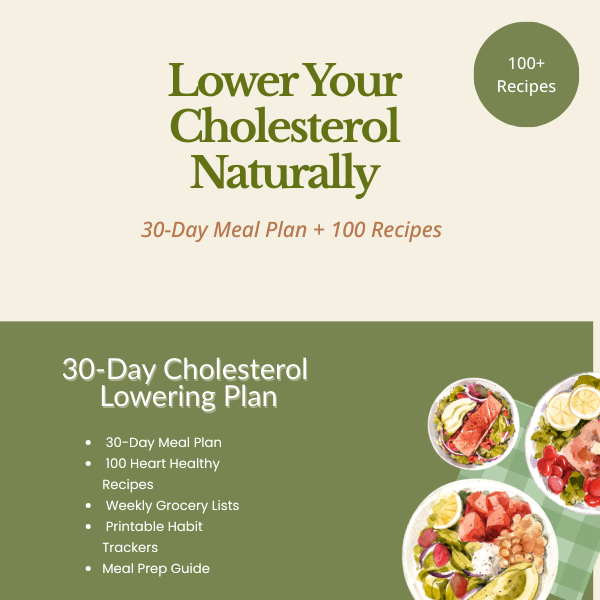
30-Day Cholesterol Reset System
A simple done-for-you plan to help you eat heart-healthy every day without confusion.
Over 1,000 people downloaded this guide
✔ 100 Easy Recipes
✔ Grocery Lists + Meal Prep Guide
🎁 FREE BONUSES:
✔ 7-Day Quick Start Plan
✔ Printable Grocery List
$29 $9
Get Instant AccessWhole grains beyond oats — barley, farro, bulgur, brown rice, quinoa — bring similar benefits. They deliver fiber, antioxidants, B vitamins, and minerals your heart needs to function well over the long haul. People who regularly eat three or more servings of whole grains a day show measurably better cardiovascular markers over time. That is not a marketing claim. That is decades of longitudinal research.
The practical upshot: you do not need to overhaul your entire diet. You just need to start swapping and adding in smart ways. These 25 recipes show you exactly how.
Steel-cut oats take longer to cook but have a lower glycemic index than instant oats — meaning they keep blood sugar steadier and hunger quieter for longer. Make a big batch on Sunday and reheat portions all week. Your Tuesday-morning self will be grateful.
The Breakfast Line-Up: Oat Recipes That Actually Get You Out of Bed
Morning is where oats shine, and not just because tradition says so. A bowl of something warm and filling before 9 a.m. sets your blood sugar on a stable track for the rest of the day. These breakfast recipes range from five-minute solutions to Sunday bakes you can portion out for the whole week.
Overnight Oats, Done Right
Overnight oats are basically the meal prep gift nobody asked for but everyone eventually loves. You put things in a jar the night before, go to sleep, and wake up to breakfast already handled. The base is simple: rolled oats, your choice of milk (oat milk if you want to really lean into the theme), and a touch of maple syrup. The magic is in how you build on that base. Try layering in chia seeds — another beta-glucan and omega-3 source — along with sliced banana and a tablespoon of almond butter for healthy fat and staying power. Get Full Recipe.
If classic overnight oats feel too plain for you, try folding in mashed raspberries and a pinch of cardamom. The berries add natural sweetness and a dose of pectin, another soluble fiber that lowers LDL on its own. This is one of those breakfast recipes that sounds fancier than it is, which is always the goal. For even more morning options, check out these 25 low-cholesterol breakfast ideas for heart health — several of them feature whole grains in delicious ways you might not expect.
Baked Oatmeal for the Week
Baked oatmeal changed everything for me. You mix it once, pour it into a baking dish, and bake it — and suddenly you have something that holds together in slices, reheats beautifully, and feels more like dessert than breakfast. Blueberry lemon baked oatmeal is a crowd-pleaser: toss in two cups of fresh or frozen blueberries, a bit of lemon zest, and a handful of walnuts for crunch and omega-3s. The walnuts also happen to have their own cholesterol-lowering effect, so you are stacking benefits here. Get Full Recipe.
I use a good ceramic baking dish for this because the oats cook more evenly than they do in metal pans, and cleanup is about a thousand times easier. Worth every penny for something you will make weekly.
Savory Oatmeal: Yes, It Is a Thing
Before you close the tab, hear me out. Savory oatmeal is genuinely good. Think of it as a porridge base — something along the lines of congee or grits — and build from there. A soft-cooked egg, sauteed spinach, a sprinkle of everything-bagel seasoning, and a drizzle of good olive oil on top of plain steel-cut oats. It is warming, filling, and takes under ten minutes if your oats are already prepped. This is also a great way to use up whatever vegetables you have lingering in the fridge, which feels oddly satisfying.
All 25 Heart-Healthy Oat and Whole Grain Recipes at a Glance
Here is the full collection, organized so you can grab what you need fast. Each one is built around oats, whole grains, or both, and every single recipe is designed to actually taste like something you would choose — not just something you feel obligated to eat.
Lunch and Dinner: Whole Grains Beyond the Breakfast Bowl
This is where a lot of people get stuck. Oats for breakfast, sure, everyone knows that. But farro in a dinner bowl? Barley in your soup? Quinoa stuffed into peppers? Once you start cooking with the full range of whole grains, meal planning becomes dramatically less repetitive. And the benefit for your heart compounds across every single meal, not just the first one of the day.
Farro: The Underrated Grain Worth Knowing
Farro has a nutty, slightly chewy texture that holds up really well in grain bowls and salads. It does not go mushy the way rice can, which means it meal preps like a dream. Try it roasted: cook your farro, spread it on a sheet pan with olive oil, and let it crisp up slightly in the oven. Then toss it with roasted beets, peppery arugula, crumbled goat cheese, and a simple lemon vinaigrette. The result is a lunch that looks like it came from a restaurant. If you love the bowl format, these 25 low-cholesterol spring bowls are worth bookmarking for the whole season.
Barley Soup That Actually Fills You Up
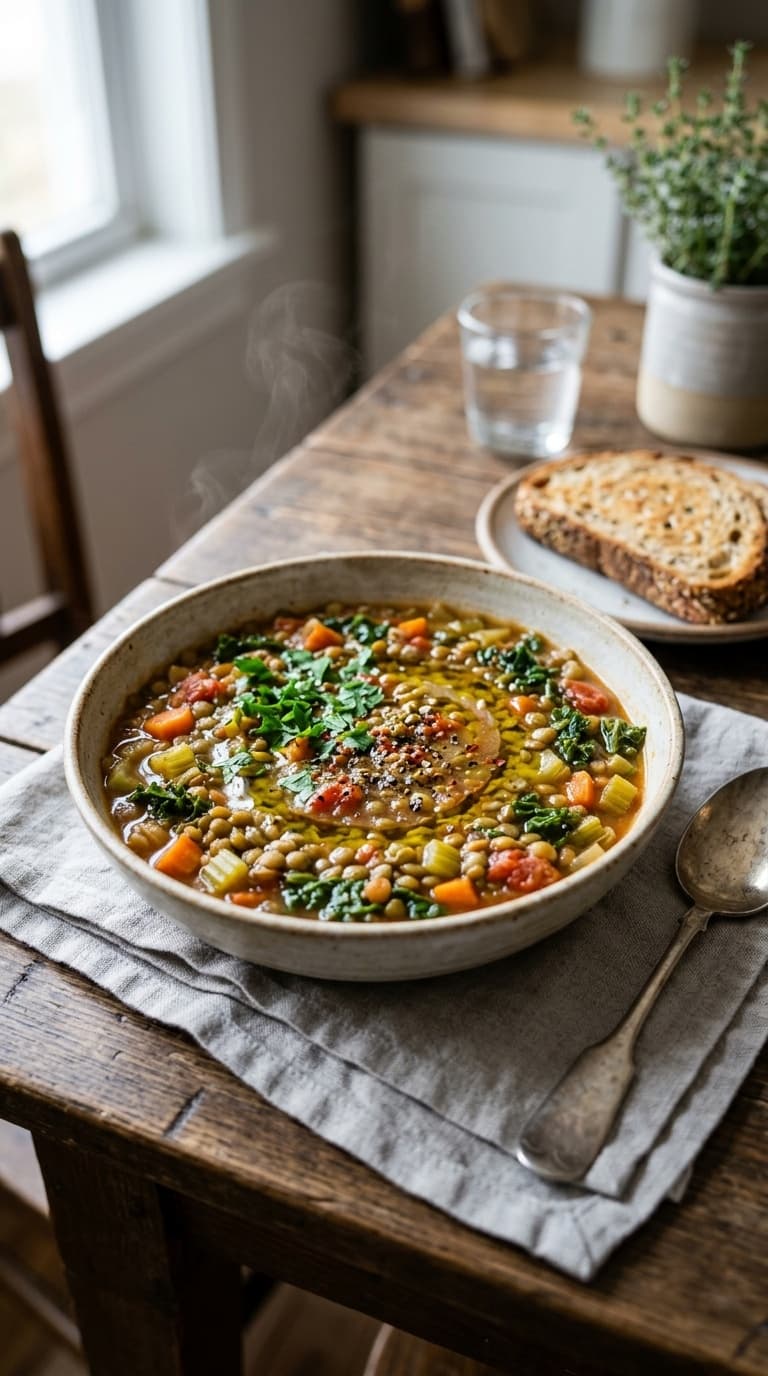
Barley is a secret weapon in soups. It releases starch slowly as it cooks, giving broths a silky, slightly thickened body without adding cream or flour. A simple mushroom barley soup takes about 40 minutes start to finish: saute onions, garlic, and cremini mushrooms in olive oil, add vegetable broth, pearl barley, a bay leaf, and thyme, then let it simmer until everything is tender and the broth smells incredible. This is comfort food that genuinely comforts. IMO, it beats any cream-based soup for sheer satisfaction.
For more warming, satisfying options that will not spike your cholesterol, browse these 21 low-cholesterol soups and stews that work across every season.
Oat-Crusted Baked Salmon
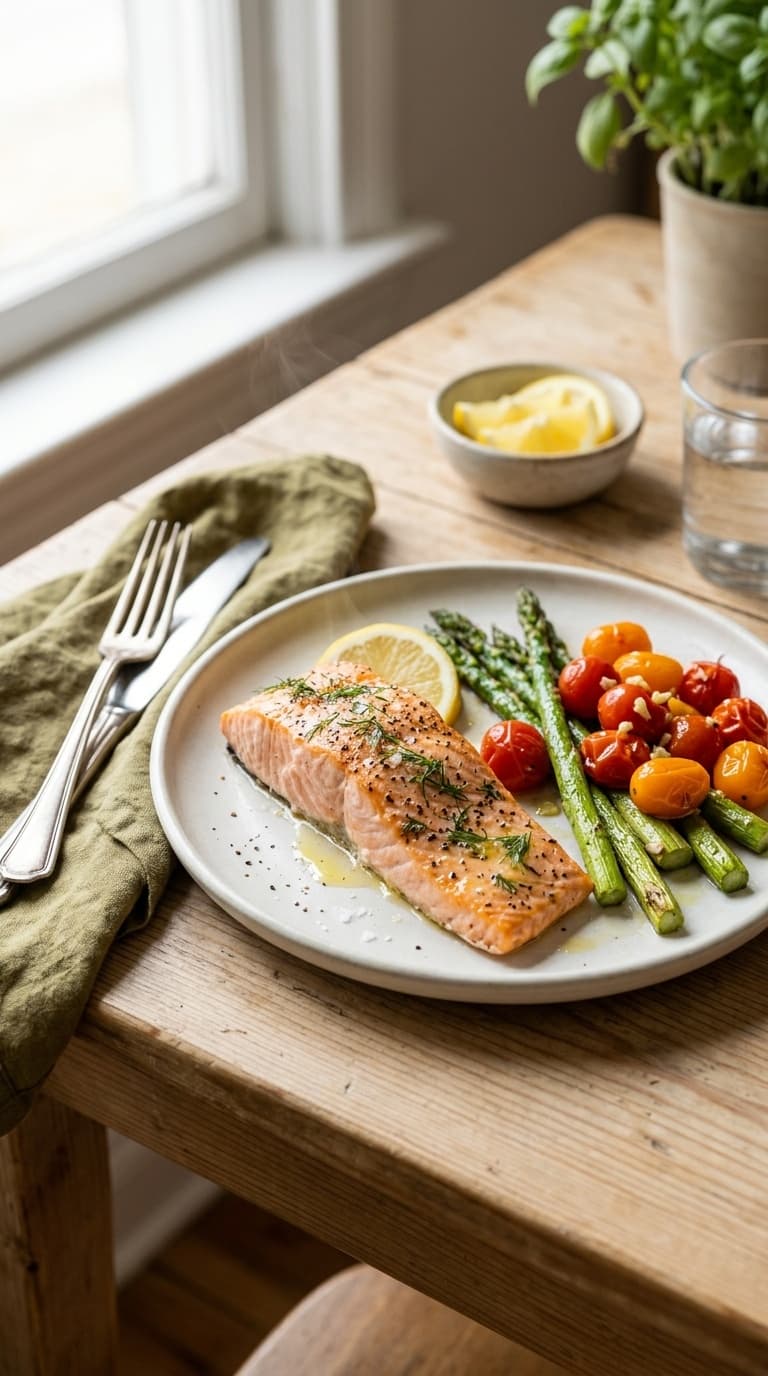
Here is one that sounds more impressive than it actually is. Take a fillet of wild salmon, press a crust made from rolled oats, lemon zest, fresh dill, and a touch of olive oil onto the top, then bake it at 400 degrees for about 14 minutes. The oat crust goes golden and slightly crisp, the salmon stays silky underneath, and you have a dinner that stacks multiple heart-healthy elements on one plate: omega-3s from the fish, beta-glucan from the oats, and anti-inflammatory compounds from the herbs. If you want a full dinner round-up with similar energy, these 18 heart-healthy dinners that do not taste like diet food are a strong starting point.
Cook a double batch of whole grains every Sunday. Farro, quinoa, and barley all refrigerate well for five days and reheat in under two minutes. Having cooked grains already waiting cuts weeknight dinner prep nearly in half.
I started adding barley to everything — my soups, my grain bowls, even mixed into ground turkey for burgers. Six weeks later at my checkup, my LDL had dropped 14 points without changing anything else. My doctor literally asked what I had been eating differently.
— Marcus T., community memberSnacks and Lighter Bites That Keep Your Heart in Mind
Snacks tend to be where heart-healthy eating falls apart. It is three o’clock, you are tired, and the easiest thing is whatever is in the vending machine or the pantry cabinet. Having a few make-ahead oat-based snacks ready to go closes that gap entirely. And these are the kind of snacks that are actually satisfying, not just a handful of rice cakes that leave you hungrier than before.
No-Bake Oat Energy Balls
These are my most-made snack recipe by a significant margin. Rolled oats, natural peanut butter (or almond butter if you prefer), honey, dark chocolate chips, and ground flaxseed — mix, roll, refrigerate. Done. They take about ten minutes and last all week in the fridge. The flaxseed adds plant-based omega-3s and additional soluble fiber, making these way more than just a tasty snack. You can swap the peanut butter for almond butter depending on what you have — both bring healthy fats and a slightly different flavor profile, though almond butter tends to have a milder taste that lets the oats come through more clearly.
I store mine in a glass meal prep container because they stay fresher longer than in plastic, and honestly the clear container makes me more likely to actually reach for them. Visibility is everything with healthy snacking. For even more snack ideas built around the same philosophy, check out 25 low-cholesterol snacks that support heart health.
Homemade Oat Granola
Store-bought granola is almost always loaded with sugar and refined oils, which is a shame because homemade granola is genuinely easy and tastes significantly better. Toss rolled oats with a bit of maple syrup, coconut oil, cinnamon, sliced almonds, and dried cherries. Spread it on a silicone-lined baking sheet and bake at 325 degrees, stirring once, until golden. Let it cool completely and it will cluster up perfectly. Keep a jar of it on the counter for yogurt bowls, quick breakfasts, or just eating by the handful on a tired afternoon.
Oat and Veggie Fritters
These fritters are a great savory snack option that also works as a light lunch. Grate zucchini and carrot, squeeze out the moisture, and mix with rolled oats, an egg, garlic, and whatever herbs you have. Pan-fry in a little olive oil until crisp on both sides. They come out golden, hearty, and satisfying in a way that fruit-forward snacks sometimes are not. Serve with a simple yogurt and herb dip. FYI, these also freeze beautifully — just reheat in a toaster oven and they crisp back up like they were just made.
Yes, There Are Desserts. Heart-Healthy Ones, at That.
Let’s address the elephant in the room: eating for heart health does not mean giving up dessert. It means being smarter about how you build it. Oats make an excellent foundation for sweet baked goods because they add texture, fiber, and a mild nuttiness that plays extremely well with fruit, chocolate, and warm spices.
Oat-Topped Berry Crumble
This is the dessert I make when I want something that feels indulgent but genuinely is not. Toss mixed berries — blueberries, raspberries, blackberries — with a bit of maple syrup and lemon juice in a baking dish. Top with a crumble made from rolled oats, almond flour, cinnamon, and a tablespoon of melted coconut oil. Bake at 375 until bubbling and golden. The pectin in the berries thickens the filling naturally, and the oat crumble gives you that satisfying crispy contrast without any refined flour or butter. Serve it warm with a spoonful of plain Greek yogurt if you want to push the protein and cut the sweetness a touch.
Banana Oat Cookies (Two Ingredients, Seriously)
Two ripe bananas, one cup of rolled oats. Mash, mix, shape into cookies, bake at 350 for 12 minutes. That is the entire recipe. Are they going to win any awards at a French patisserie? No. Are they genuinely sweet, chewy, satisfying, and made from exactly two ingredients that are actively good for your cardiovascular system? Absolutely yes. Add dark chocolate chips or a spoonful of peanut butter if you want to make them feel a little more special. These also pair well alongside one of these 18 low-cholesterol desserts you’ll love guilt-free for a full treat spread that does not undo your progress.
Swap refined flour for oat flour in nearly any baking recipe at a 1:1 ratio. Just blend rolled oats in a blender until fine. You add fiber, keep the texture remarkably similar, and no one will notice unless you tell them.
The oat berry crumble has become my go-to dinner party dessert. I have served it to people who had no idea it was heart-healthy — they just thought it was delicious and asked for the recipe every single time.
— Priya M., reader and registered nurseKitchen Tools & Resources That Make These Recipes Easier
A few things that genuinely help when you are cooking whole grains regularly. No fluff, just honest picks from someone who actually makes these recipes.
Making It All Work: Meal Prep Strategies for Whole Grains
The biggest obstacle to eating more whole grains is not taste — it is time. Brown rice takes 45 minutes. Steel-cut oats take 30. Farro takes 35. If you are trying to cook these from scratch on a Tuesday night after a full workday, it is not going to happen reliably. The solution is simple: batch cooking on the weekend.
Pick two or three grains at the start of each week, cook a generous amount of each, and store them in separate containers in the fridge. Then, during the week, assembly takes five to ten minutes instead of 40. A scoop of pre-cooked farro, some roasted vegetables, a protein, a drizzle of olive oil, and you have a complete meal without any actual cooking. This is the system that makes heart-healthy eating sustainable rather than aspirational. For a full week’s worth of ideas built around this approach, these 25 low-cholesterol meal prep ideas for the week walk you through exactly how to set it up.
A good set of airtight meal prep containers makes a real difference here. Cooked grains stay fresher longer when properly sealed, and having them portioned and visible in the fridge means you actually use them rather than forgetting they exist. Also, a quality fine-mesh strainer is worth having if you cook grains regularly — rinsing quinoa before cooking removes the slightly bitter coating, and it takes ten seconds if you have the right tool.
The American Heart Association recommends making oats a regular part of a heart-healthy dietary pattern — not just an occasional effort. The key word there is regular. Batch prepping is the practical mechanism that makes regular actually achievable.
Which Grains Reheat Best?
Not all whole grains are equal when it comes to reheating. Here is a quick breakdown of what works best for meal prep purposes:
- Farro — holds its texture exceptionally well cold or reheated. Great for grain bowls and salads all week.
- Quinoa — reheats beautifully and also works cold in salads. The most versatile of the bunch.
- Brown rice — best reheated with a small splash of water or broth. Dries out if you just microwave it plain.
- Steel-cut oats — reheat with a bit of milk and a stir. Can feel slightly gluey if you overheat, so go low and slow.
- Barley — great cold in salads, great warm in soups. Holds up to reheating better than most grains.
- Bulgur wheat — already pre-cooked to some extent, so it reheats faster than other grains. Excellent for quick tabbouleh.
Frequently Asked Questions
Do oats actually lower cholesterol, or is that just marketing?
The evidence is real and well-established. The FDA approved a health claim for oat-based foods and cholesterol reduction back in 1997, and the research behind it has only grown since. The active component is beta-glucan, a soluble fiber that binds cholesterol in your digestive tract and removes it before absorption. You need roughly three grams of beta-glucan per day to see a meaningful effect — that is about one and a half cups of cooked oatmeal or three cups of cooked oat-based cereal.
What is the difference between rolled oats, steel-cut oats, and instant oats for heart health?
All three come from the same grain, but processing changes their glycemic impact and nutrient density. Steel-cut oats are the least processed — they have the lowest glycemic index and keep you full the longest. Rolled oats are steamed and flattened, slightly more processed but still excellent for heart health. Instant oats are the most processed, often with added sugar in flavored packets, and have a higher glycemic index. For heart health, steel-cut or rolled oats are your best bet. Instant plain oats are an acceptable substitute if time is genuinely limited.
Can I eat oats every day without getting bored?
Yes, but only if you rotate how you use them. The people who get bored with oats are the ones eating the same plain bowl every morning. Once you start using oats as a crust for baked fish, a base for energy balls, a topping for fruit crumbles, a mix-in for veggie fritters, and a flour substitute in baking, they stop being a monotonous breakfast ingredient and become a genuinely versatile pantry staple. Variety in preparation is the only thing standing between you and oat fatigue.
Are whole grain recipes suitable for weight loss alongside cholesterol management?
Absolutely. Whole grains are high in fiber, which increases satiety and slows digestion, meaning you feel full longer and are less likely to overeat at the next meal. Many people find that eating more whole grains actually makes calorie management easier, not harder, because hunger is more controlled throughout the day. For recipes specifically designed to support both goals, the 25 low-cholesterol high-protein meals for weight loss collection is a useful resource.
How long do cooked whole grains keep in the refrigerator?
Most cooked whole grains — farro, quinoa, barley, brown rice, bulgur — keep well in the refrigerator for four to five days when stored in an airtight container. Cooked oatmeal keeps for three to four days and is best reheated with a splash of liquid. If you want to extend your prep even further, most cooked grains freeze well for up to three months. Portion them into individual freezer bags before freezing so you can thaw exactly what you need.
The Bottom Line on Oats, Whole Grains, and Your Heart
Eating for cardiovascular health does not require misery, deprivation, or any kind of relationship with cardboard-flavored crackers. Oats and whole grains give you an incredibly versatile toolkit for building meals that are filling, genuinely delicious, and actively working in your body’s favor every single time you eat them.
Start with one or two of these recipes this week. Build a batch of overnight oats on Sunday night. Make the barley mushroom soup on a Tuesday when you need something warm and low-effort. Bake the berry crumble on a Friday and feel zero guilt about eating it for breakfast on Saturday. The cumulative effect of those small, consistent choices is exactly what your heart is after — and your taste buds do not have to suffer a single bit to get there.
Pick one recipe, make it this week, and see how it feels. That is the whole plan. Everything else follows from there.
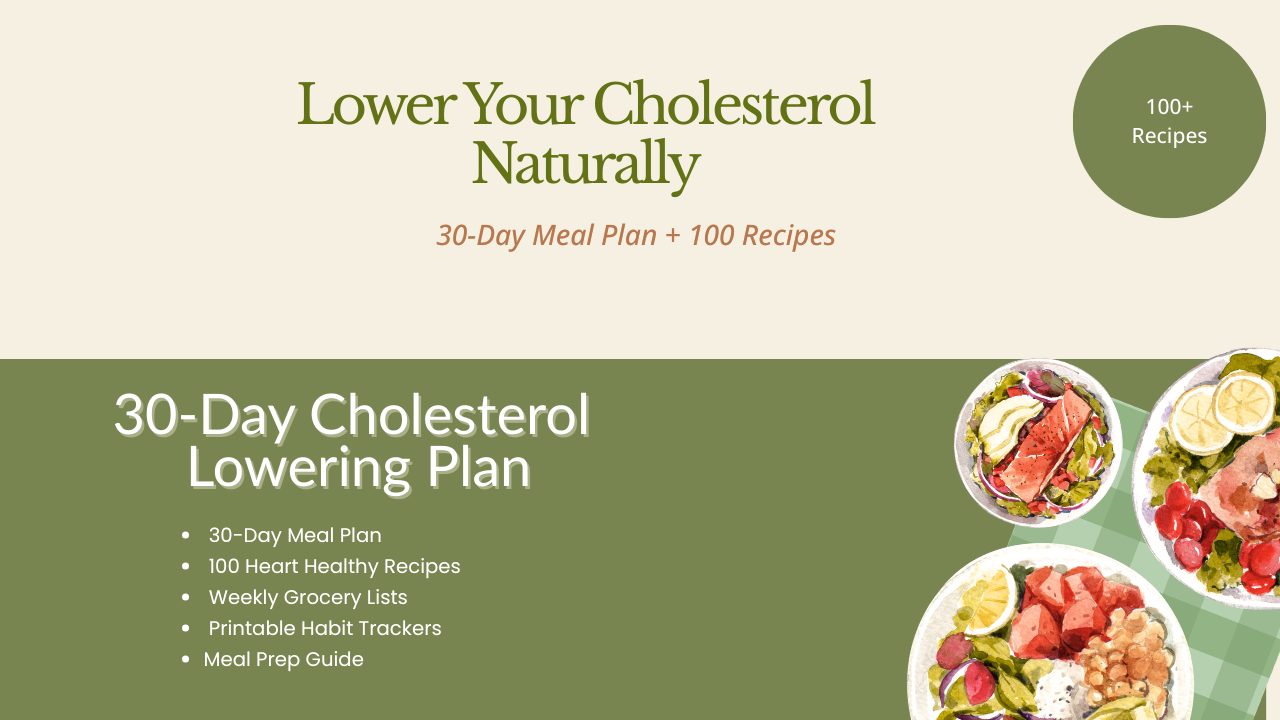
30-Day Cholesterol-Lowering Meal Plan
A simple step-by-step system to help you eat heart-healthy every day without stress.
Over 1,000 people downloaded this guide
$29$9
Get Instant Access