
27 Heart Healthy Recipes for Everyday Life
Look, I’m not going to sugarcoat it—eating for your heart sounds about as exciting as watching paint dry. But here’s the thing: heart-healthy eating doesn’t have to mean choking down bland chicken breast and steamed broccoli for the rest of your life. I’ve spent years figuring out how to make recipes that actually taste good while keeping my cholesterol in check, and I’m here to tell you it’s totally doable.
The truth is, your heart is basically a high-performance engine, and what you feed it matters. According to the American Heart Association, a heart-healthy eating plan can significantly manage your blood cholesterol levels and reduce your risk of heart disease and stroke. And honestly? Once you know which ingredients to reach for, the whole thing becomes second nature.
These 27 recipes aren’t going to ask you to hunt down weird ingredients at specialty stores or spend three hours in the kitchen. They’re the kind of meals I actually make on weeknights when I’m tired and hungry—real food that happens to love your heart back.

Why Heart-Healthy Eating Actually Matters
Before we dive into recipes, let me give you the quick science rundown without making your eyes glaze over. Your body produces cholesterol naturally because it needs some to function—but too much of the bad kind (LDL) can build up in your arteries and cause serious problems down the line.
Research from Mayo Clinic shows that certain foods can actually improve your cholesterol numbers. We’re talking about stuff like oats, fatty fish rich in omega-3 fatty acids, and even avocados. Yeah, avocados—the same ones you’re already putting on toast.
The key is knowing which fats are your friends. Omega-3s from fish can reduce triglycerides and protect your heart from irregular rhythms. Monounsaturated fats from olive oil and nuts? They’re basically heart superstars. Meanwhile, saturated fats from red meat and full-fat dairy are the ones you want to watch out for.
The Building Blocks of Heart-Healthy Meals
Here’s what I always keep stocked in my kitchen, and honestly, if you have these basics on hand, you’re already halfway to a heart-healthy meal.
30-Day Cholesterol Reset System
A simple done-for-you plan to help you eat heart-healthy every day without confusion.
Over 1,000 people downloaded this guide
✔ 100 Easy Recipes
✔ Grocery Lists + Meal Prep Guide
🎁 FREE BONUSES:
✔ 7-Day Quick Start Plan
✔ Printable Grocery List
$29 $9
Get Instant AccessPantry Staples That Pull Their Weight
Extra virgin olive oil is non-negotiable in my house. I use this cold-pressed variety because the flavor is actually worth it, and it doesn’t turn bitter when you cook with it. According to research, extra virgin olive oil can reduce the risk of heart attacks thanks to its high content of heart-healthy monounsaturated fats.
Whole grains like quinoa, brown rice, and oats are loaded with soluble fiber, which basically acts like a sponge for cholesterol in your digestive system. I grab these quick-cooking steel-cut oats for busy mornings—they’re ready in about 5 minutes and taste way better than the instant packets.
Don’t sleep on beans and lentils, either. They’re cheap, they last forever in the pantry, and they’re packed with protein and fiber. Studies show that people who eat more beans tend to have better cholesterol levels overall. I always have canned versions on hand because, let’s be real, soaking dried beans overnight is not happening on a Tuesday.
Fresh Ingredients Worth the Trip
I hit up the grocery store twice a week for fresh stuff, and here’s what always makes it into my cart: leafy greens (spinach, kale, arugula), fatty fish (salmon, mackerel, sardines), and whatever seasonal vegetables look good. The colorful ones are usually your best bet—think bell peppers, tomatoes, carrots, and beets.
For protein, I stick mostly to chicken breast and fish, but I’m not some kind of purist about it. If you want a steak once in a while, go for leaner cuts like sirloin or tenderloin. Just maybe don’t have it every night, you know?
Speaking of fish, if you’re eating it two or three times a week, you’re lowering your LDL cholesterol by replacing meat that has LDL-boosting saturated fats while also getting those omega-3s that your heart loves. For more ideas, check out these low cholesterol chicken recipes packed with flavor.
Breakfast Recipes That Don’t Bore You to Tears
I used to think heart-healthy breakfasts meant sad egg white omelets and dry toast, but I was so wrong. These recipes actually get me excited to wake up in the morning.
Overnight Oats, But Make Them Interesting
Overnight oats are my weekday savior because they require literally zero effort in the morning. I mix rolled oats with unsweetened almond milk, throw in some chia seeds for extra omega-3s, and add whatever fruit I have lying around. My go-to combination is banana, walnuts, and a drizzle of honey.
The beauty of overnight oats is you can prep five jars on Sunday and grab one each morning. I use these 16-ounce mason jars because they’re the perfect size and I can literally eat straight from them. No dishes, no fuss.
For more morning inspiration and ideas that’ll keep your cholesterol in check, browse these low cholesterol breakfast ideas for heart health.
Veggie-Loaded Scrambles
Eggs are back on the heart-healthy menu, by the way. The whole “eggs will kill you” thing has been debunked. I usually do two whole eggs with a bunch of vegetables—spinach, tomatoes, mushrooms, bell peppers, whatever’s in the fridge. Cook them in a little olive oil, season with herbs instead of salt, and you’re golden.
If you’re worried about cholesterol, you can do one whole egg plus two egg whites. But honestly, most research now shows that dietary cholesterol doesn’t affect blood cholesterol as much as we once thought. It’s the saturated fat that’s the real troublemaker. Get Full Recipe.
Smoothie Bowls That Actually Fill You Up
I was skeptical about smoothie bowls for a long time—they seemed like Instagram food that wouldn’t keep me full past 10 a.m. But if you do them right with enough protein and healthy fats, they’re legit.
My formula: frozen berries, half a banana, a scoop of protein powder, a tablespoon of almond butter, and unsweetened almond milk. Blend until thick, pour into a bowl, and top with more berries, nuts, and a sprinkle of chia seeds. The thickness is key—you want it more like soft-serve ice cream than a drinkable smoothie.
If you’re into the smoothie life, you’ll want to check out these low cholesterol smoothies and juices for a healthy heart.
Lunch Ideas That Won’t Put You in a Food Coma
Lunch is where things can go sideways real fast if you’re not prepared. You get hungry, you order something terrible, and suddenly you’re in a carb coma at your desk wondering why you hate yourself.
The Perfect Grain Bowl Formula
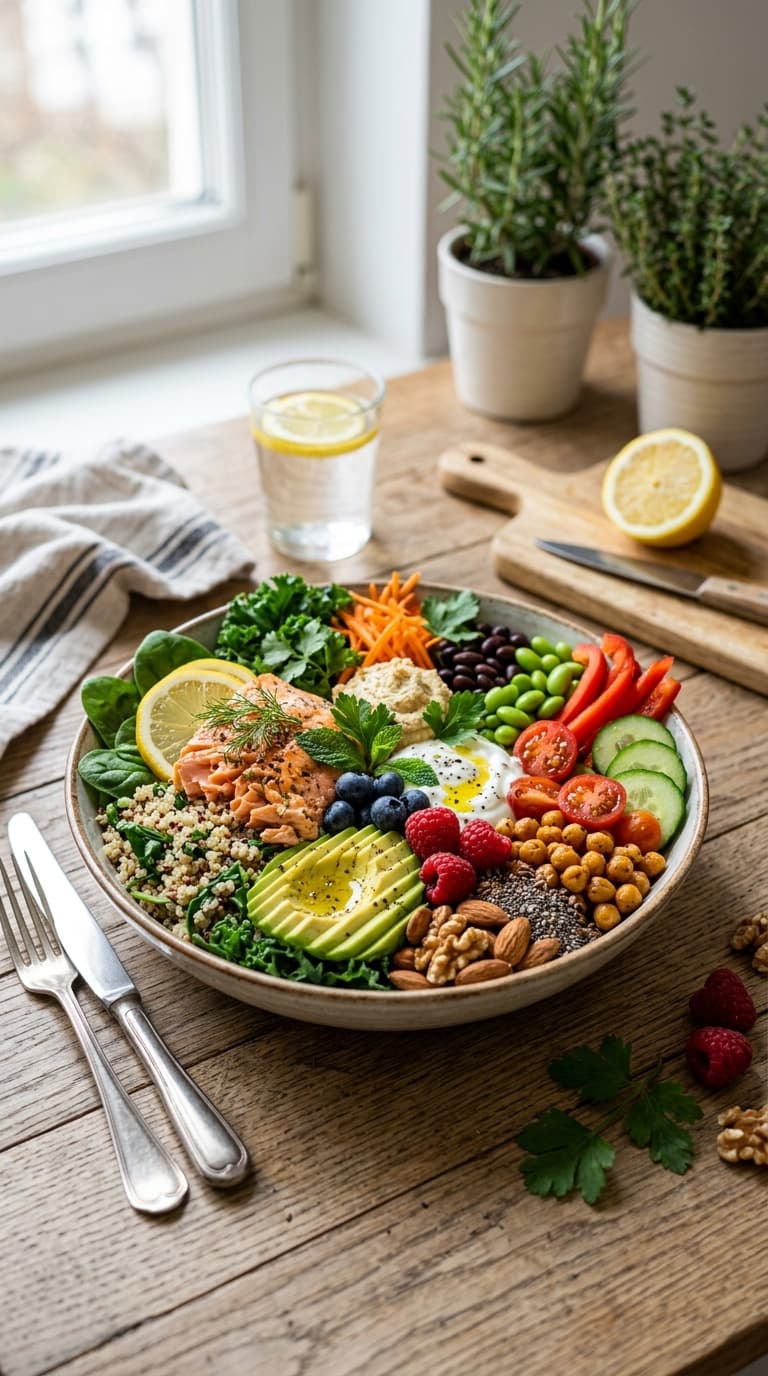
Grain bowls are my secret weapon for lunch because you can throw basically anything in a bowl and call it a meal. Start with a base of quinoa or brown rice, add some greens, throw in a protein (grilled chicken, baked salmon, chickpeas), pile on the vegetables, and drizzle with a simple dressing.
For the dressing, I mix olive oil, lemon juice, Dijon mustard, and a little garlic. That’s it. No sugar, no weird preservatives, and it tastes better than anything you’ll buy in a bottle. I keep a jar of it in the fridge all week.
Pro move: prep all your components on Sunday so you can just assemble bowls throughout the week. I roast a big batch of vegetables, cook a pot of quinoa, and grill some chicken. Then lunch is literally just combining things from containers. Looking for more ideas? These low cholesterol lunches that keep you full are solid options.
Soup That’s Actually Satisfying
I’m talking about hearty, stick-to-your-ribs soups loaded with vegetables and beans. Lentil soup, minestrone, white bean and kale soup—these are the kinds of soups that make you forget you’re eating healthy food.
The key is building flavor without relying on heavy cream or butter. I start by sautéing onions, carrots, and celery in olive oil until they’re caramelized. Then I add garlic, herbs, and tomato paste to create a flavor base before adding broth and whatever else is going in the soup.
A good immersion blender changes the game here. You can blend part of your soup to make it creamy without adding any dairy. Works like a charm for tomato soup, white bean soup, or anything you want a little thicker. Also check out these heart-healthy soups for lowering cholesterol naturally.
Dinner Recipes You’ll Actually Want to Eat
Dinner is where most people struggle because you’re tired, you’re hungry, and the last thing you want to do is spend an hour cooking something complicated. These recipes are designed for real life, not Instagram.
Sheet Pan Meals Are Your Friend
Sheet pan dinners are possibly the greatest invention of modern cooking. You throw everything on a baking sheet, roast it all together, and dinner is done. My go-to is salmon with vegetables—salmon fillets, broccoli, cherry tomatoes, and sliced bell peppers all roasted with olive oil, garlic, and lemon.
I use these rimmed baking sheets for everything because they’re heavy enough not to warp in the oven and big enough to fit a whole dinner for two people. The salmon comes out perfect every time—crispy on the outside, tender on the inside. Get Full Recipe.
For more quick dinner wins that won’t wreck your cholesterol numbers, browse these low cholesterol one-pan dinners for easy nights.
Stir-Fries That Beat Takeout
Once you get the hang of a basic stir-fry, you’ll wonder why you ever ordered Chinese food. The key is having all your ingredients prepped before you start cooking because things move fast once that wok heats up.
I do chicken or shrimp with a ton of vegetables—snap peas, bell peppers, broccoli, carrots, whatever needs to be used up. The sauce is simple: low-sodium soy sauce, rice vinegar, fresh ginger, garlic, and a tiny bit of honey. That’s it. No MSG, no weird ingredients you can’t pronounce.
A proper carbon steel wok makes all the difference here. It gets screaming hot and cooks everything evenly without sticking. If you don’t have one, a large skillet works fine, but there’s something about a real wok that just makes stir-fry taste better.
Mediterranean-Style Everything
Mediterranean food is basically designed to be heart-healthy, which is convenient because it also happens to be delicious. Think grilled fish, roasted vegetables, olive oil, lemon, garlic, and fresh herbs.
One of my favorite easy dinners is grilled chicken with roasted vegetables and a big salad. I marinate the chicken in olive oil, lemon juice, garlic, and oregano for 30 minutes, then grill it while the vegetables roast in the oven. The whole thing takes maybe 45 minutes start to finish, and most of that is hands-off time.
The Mediterranean approach to eating isn’t really a “diet” in the restrictive sense—it’s more about focusing on whole foods, good fats, and lots of plants. Research consistently shows it’s one of the best eating patterns for heart health. If you want more ideas in this vein, check out these low cholesterol dinners you’ll want to make again.
Kitchen Tools That Make Heart-Healthy Cooking Actually Easy
Look, you don’t need a million gadgets to eat well, but a few key tools make the whole process way less painful. Here’s what I actually use constantly:
Digital Kitchen Scale
Game-changer for portion control and recipe accuracy. Way more reliable than measuring cups for things like oats and quinoa.
Cast Iron Skillet
This thing will outlive you. Perfect for searing salmon, roasting vegetables, and basically everything except acidic tomato sauces.
High-Speed Blender
For smoothies, soup pureeing, and making your own nut butters. Worth every penny if you use it regularly.
Meal Prep Container Set
Glass containers with snap lids. Microwave safe, dishwasher safe, and they don’t stain or hold smells like plastic ones do.
Vegetable Chopper
Reduces chopping time by about 75%. Not essential, but if you hate prep work as much as I do, it’s a lifesaver.
Instant-Read Thermometer
Takes the guesswork out of cooking fish and chicken. No more dry, overcooked protein or scary undercooked situations.
Snacks That Won’t Derail Your Progress
The 3 p.m. slump is real, and it’s when bad snack decisions happen. Having some go-to options that are actually good for your heart makes all the difference.
Nuts Are Basically Perfect
A handful of almonds or walnuts is probably the easiest heart-healthy snack on the planet. Walnuts are especially good because they’re loaded with omega-3s. Just watch your portions because nuts are calorie-dense—about a quarter cup is a serving.
I keep these raw mixed nuts in my desk drawer at work. No salt, no oil, just straight-up nuts. They’re weirdly satisfying and keep me full until dinner without making me feel like I need a nap.
Hummus and Veggies Never Gets Old
Well, okay, sometimes it gets old. But hummus is made from chickpeas, which are great for cholesterol, and raw vegetables are basically free nutritionally speaking. I like carrots, bell peppers, and cucumber because they’re crunchy and don’t require any prep beyond washing and cutting.
Making your own hummus is stupid easy if you have a food processor—just chickpeas, tahini, lemon juice, garlic, and olive oil. But store-bought is fine too. Just check the label and avoid ones with a ton of added oils or preservatives.
For more snacking ideas that won’t mess with your numbers, these low cholesterol snacks that support heart health are solid choices.
Greek Yogurt Bowls
Plain Greek yogurt (not the sweetened kind) with berries, a drizzle of honey, and some chopped nuts is basically dessert that’s good for you. The protein in Greek yogurt keeps you full, and berries are loaded with antioxidants that help protect your heart.
I go for the full-fat version because it tastes better and the fat helps you absorb vitamins from the berries. Yeah, I said full-fat. The idea that all fat is bad has been thoroughly debunked at this point. It’s the type of fat that matters.
Yes, You Can Still Have Dessert
I’m not going to tell you to never eat dessert again because that’s not realistic and it’s not fun. But there are ways to satisfy your sweet tooth without completely sabotaging your heart health goals.
Dark Chocolate Is Actually on the List
Dark chocolate (70% cacao or higher) contains flavonoids that may help lower blood pressure and improve blood flow. The key word here is “dark”—milk chocolate doesn’t count because it’s mostly sugar and milk fat.
I keep these dark chocolate squares in the pantry and have one or two after dinner. They’re portioned individually so you’re not staring down a whole bar wondering where your willpower went. Each square is about 50 calories and scratches the chocolate itch without going overboard.
Fruit-Based Everything
Baked apples with cinnamon, grilled peaches, berry crumbles made with oats instead of butter-heavy toppings—these are desserts that feel indulgent but are mostly fruit with some smart additions.
My favorite is baked pears. Core them, stuff them with a mixture of chopped walnuts and a tiny bit of honey, and bake until they’re soft. The natural sugars in the pears caramelize and it tastes like you spent way more effort than you actually did. Get Full Recipe.
Want more sweet options that won’t wreck your progress? Check out these low cholesterol desserts you’ll love guilt-free.
Meal Prep Strategies That Don’t Make You Want to Scream
Meal prep sounds great in theory until you realize it means spending your entire Sunday in the kitchen. Here’s how I do it without losing my mind.
The Two-Hour Sunday Strategy
I don’t prep every single meal for the week because that’s exhausting and everything gets boring by Wednesday. Instead, I prep components that can be mixed and matched throughout the week.
In two hours, I can usually: cook a big batch of quinoa or brown rice, roast a bunch of vegetables, grill some chicken, make a batch of soup, and prep some overnight oats. That gives me options for the whole week without committing to eating the exact same thing five days in a row.
A slow cooker is clutch here. I can throw in chicken breasts with some broth and seasonings in the morning, and by the time I get home, I have perfectly cooked shredded chicken for the week. Zero effort, maximum payoff.
For specific weekly game plans, these low cholesterol meal prep ideas for the week break it down step by step.
Batch Cooking Without Losing Your Soul
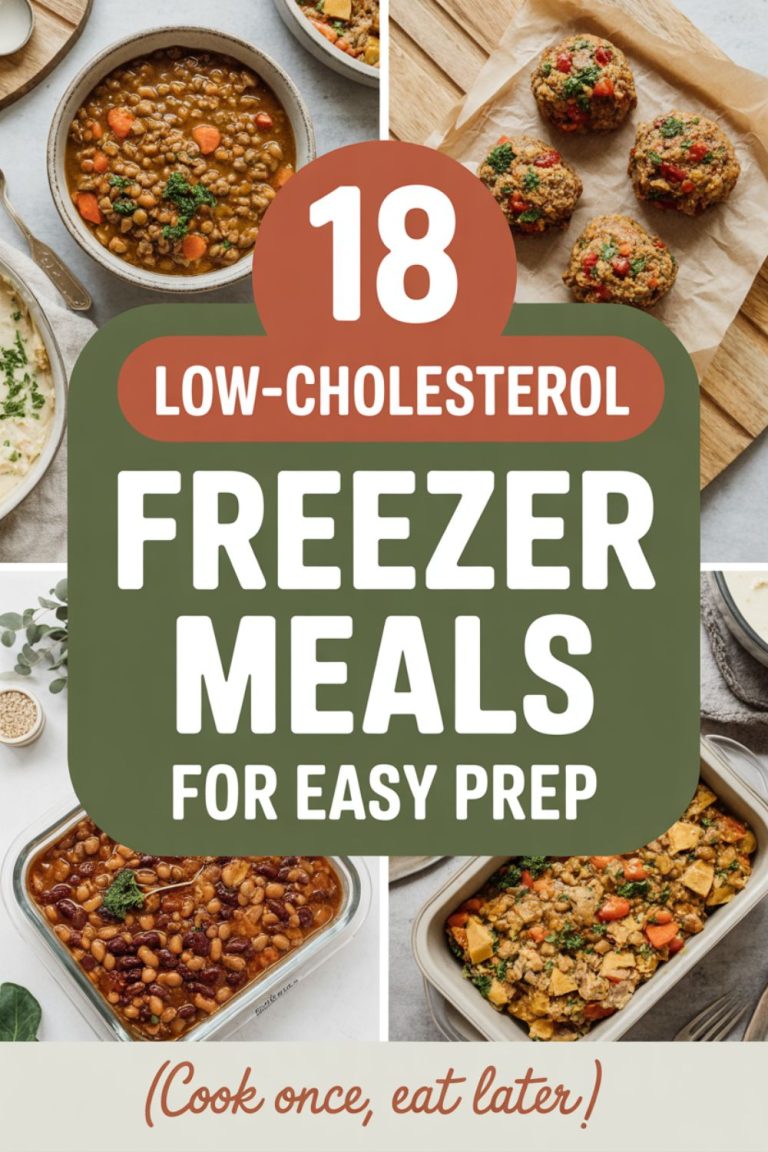
The trick to batch cooking is making things that freeze well and that you actually want to eat later. Soups, stews, chili, pasta sauce—these all freeze beautifully and taste just as good reheated.
I use these freezer-safe containers in individual serving sizes. On lazy nights, I just pull one out in the morning to thaw, and dinner is basically done. It’s like having a personal chef except the chef is past-you who had their life together for once.
Eating Out Without Completely Derailing
You’re not going to cook every single meal for the rest of your life, and that’s fine. Here’s how to make decent choices when you’re eating out.
Restaurant Survival Guide
Most restaurants will accommodate simple requests—grilled instead of fried, dressing on the side, extra vegetables instead of fries. Don’t be shy about asking. Your heart health is more important than worrying about being annoying.
I usually go for grilled fish or chicken with vegetables and a side salad. Mediterranean, Japanese, and Vietnamese restaurants tend to have lots of naturally heart-healthy options. Meanwhile, steakhouses and Italian places require a little more strategy.
FYI, you can still enjoy food when you’re out. Split a dessert with someone, have a glass of wine if you want one, order the thing that sounds good. Just maybe don’t do it at every meal, and balance it out with the choices you’re making the rest of the week.
Fast Casual Can Be Your Friend
Bowl places like Chipotle or any of the Mediterranean fast-casual chains are actually pretty easy to navigate. Build-your-own-bowl formats let you control what goes in there—load up on vegetables and lean proteins, go easy on cheese and sour cream, and you’re usually in good shape.
Salad bars are another solid option if you skip the creamy dressings and fried toppings. The key is thinking about what you’re adding to your meal, not just what you’re avoiding. More vegetables, whole grains, and lean proteins mean you’re naturally eating less of the stuff you want to limit anyway.
The Truth About Supplements and Heart Health
Real quick—should you be taking supplements for heart health? The honest answer is: maybe, but talk to your doctor first.
Research on omega-3 supplements is mixed. Some studies show benefits, others don’t, and a few even suggest potential risks at high doses. The consensus seems to be that getting omega-3s from food is better than popping pills.
Same goes for plant sterol supplements and other “heart health” products you see advertised. They might help some people, but they’re not magic bullets. Your best bet is focusing on your overall eating pattern rather than trying to supplement your way to a healthy heart.
That said, if your doctor recommends specific supplements based on your individual health situation, obviously listen to them over me. I’m just a person who cooks, not a cardiologist.
Making It Stick Long-Term
Look, the biggest challenge with any kind of dietary change isn’t knowing what to do—it’s actually doing it consistently over time. Here’s what’s helped me make this a permanent thing rather than another failed attempt.
The 80/20 Rule Actually Works
If you eat heart-healthy meals 80% of the time, the other 20% doesn’t matter that much. This isn’t about being perfect. It’s about making better choices most of the time and not completely spiraling when you have pizza on Friday night.
I track my meals loosely just to stay aware, but I don’t stress about every single thing that goes in my mouth. Did I have salmon with vegetables for dinner? Great. Did I also eat three cookies later? Also fine. Life is long, and one day or one meal doesn’t define your overall health.
Find Foods You Actually Like
This is maybe the most important point: if you hate what you’re eating, you’re not going to stick with it. Period. There are dozens of heart-healthy foods out there, and I guarantee you don’t hate all of them.
Don’t like salmon? Try other fatty fish like mackerel or sardines. Can’t stand oatmeal? Eat whole grain toast or quinoa bowls for breakfast instead. Hate salads? Fine, roast your vegetables or put them in soup. There are always options.
The recipes I’ve shared here are ones I genuinely enjoy eating. They’re not punishment food or something I choke down because it’s “good for me.” They’re meals I look forward to, and that makes all the difference in whether you can sustain this long-term.
Looking for even more variety? These heart-healthy recipes you’ll want to make again are worth bookmarking. Or if you want something comprehensive, these low cholesterol recipes that support heart health cover all the bases.
Frequently Asked Questions
How quickly will eating heart-healthy meals lower my cholesterol?
Most people see changes in their cholesterol levels within 3-6 months of consistently following a heart-healthy eating pattern. But everyone’s different—factors like genetics, activity level, and starting cholesterol levels all play a role. Don’t expect overnight miracles, but stick with it and you should see improvement when you get your next blood work done.
Do I have to give up all red meat forever?
Not necessarily. The key is choosing leaner cuts, eating smaller portions, and not having it at every meal. A 3-4 ounce serving of sirloin or tenderloin once or twice a week probably isn’t going to wreck your cholesterol. Just balance it out with plenty of fish, chicken, and plant-based meals throughout the week.
Are eggs really okay for heart health now?
Yeah, the science has evolved on this one. For most people, eating eggs in moderation doesn’t significantly impact cholesterol levels. The bigger issue is saturated fat, not dietary cholesterol itself. That said, if you have diabetes or existing heart disease, talk to your doctor about what’s right for your specific situation.
Can I eat heart-healthy on a tight budget?
Absolutely. Beans, lentils, oats, frozen vegetables, and canned fish are all cheap and heart-healthy. You don’t need expensive superfoods or fancy ingredients. Some of the best heart-healthy foods—like cabbage, carrots, and dried beans—are literally the cheapest things in the grocery store.
What’s the single most important change I can make?
If I had to pick just one thing? Replace saturated fats with unsaturated fats. Swap butter for olive oil, choose fatty fish over red meat a few times a week, snack on nuts instead of chips. That one shift addresses the biggest dietary factor affecting your cholesterol levels.
The Bottom Line
Here’s what it comes down to: taking care of your heart through food doesn’t have to be complicated or miserable. You don’t need to count every calorie, memorize nutrition labels, or eat foods you hate.
The 27 recipes and strategies I’ve shared here are about making heart-healthy eating sustainable and enjoyable. Focus on adding good stuff—more vegetables, fatty fish, whole grains, nuts, olive oil—and the less healthy stuff naturally gets crowded out. Cook at home when you can, but don’t stress when you can’t. Use tools and shortcuts that make your life easier, not harder.
Your heart is literally working every second to keep you alive. Feeding it well is one of the most straightforward ways to say thanks. And if the food happens to taste great too? Even better.
Start with one or two recipes that sound good to you. Get comfortable with those. Then add a few more. Before you know it, this way of eating will feel totally normal—not like a diet, just like… eating. And that’s exactly the point.
30-Day Cholesterol-Lowering Meal Plan
A simple step-by-step system to help you eat heart-healthy every day without stress.
Over 1,000 people downloaded this guide
$29$9
Get Instant Access