
Heart-Healthy Eating
17 Low-Cholesterol Breakfast Recipes
That Actually Taste Good
No sad oatmeal. No dry toast. Just real, satisfying morning food your heart will genuinely thank you for.

Why Breakfast Actually Matters for Cholesterol
Here’s something a lot of people don’t realize: what you eat in the morning has an outsized effect on your cholesterol profile for the rest of the day. Research reviewed by Healthline confirms that a fiber-rich morning meal helps bind LDL cholesterol in the digestive tract and actively assists the body in clearing it out before it gets into circulation. That’s not just breakfast — that’s a first line of defense.
The two big players at breakfast are soluble fiber and heart-healthy fats. Soluble fiber (found in oats, chia seeds, berries, and flaxseed) forms a gel-like substance in your gut that physically grabs onto cholesterol particles and drags them out. Meanwhile, swapping saturated fats — your bacon, full-fat cheese, and butter — for unsaturated fats from avocados, nuts, and olive oil actively improves your LDL-to-HDL ratio.
30-Day Cholesterol Reset System
A simple done-for-you plan to help you eat heart-healthy every day without confusion.
Over 1,000 people downloaded this guide
✔ 100 Easy Recipes
✔ Grocery Lists + Meal Prep Guide
🎁 FREE BONUSES:
✔ 7-Day Quick Start Plan
✔ Printable Grocery List
$29 $9
Get Instant AccessAccording to Mayo Clinic’s guidance on cholesterol-lowering foods, getting five to ten grams of soluble fiber daily can meaningfully decrease LDL levels — and a single well-built breakfast can get you halfway there. That’s powerful leverage for a meal most of us make in under fifteen minutes.
Pro Tip
Add one tablespoon of ground flaxseed to any breakfast — oatmeal, yogurt, a smoothie, even toast with nut butter. It’s nearly flavorless, adds soluble fiber immediately, and costs almost nothing per serving.
The recipes below are built around these principles. You won’t find anything fried in butter, loaded with processed cheese, or sneaking in hidden saturated fats. What you will find is real, whole food that satisfies.
If you’re thinking bigger than just breakfast, check out these 25 low-cholesterol breakfast ideas for heart health or browse this complete guide to 25 foods that naturally lower cholesterol — both pair perfectly with what you’ll find here.
The 17 Recipes: Your New Morning Lineup
I’ve organized these from the quickest and simplest to the ones that reward a little weekend effort. Every single one keeps saturated fat low, leans into soluble fiber or healthy fats, and — this is the important part — actually tastes like something you’d want to eat.
The cholesterol-lowering breakfast everyone knows about, done properly. Steel-cut oats deliver beta-glucan fiber; berries add pectin and antioxidants. Get Full Recipe
Prep takes three minutes the night before. Wake up to a jar that’s creamy, cold, filling, and quietly doing excellent things for your LDL. Get Full Recipe
Yes, the internet cliche. But there’s a reason everyone won’t shut up about it — the monounsaturated fat in avocado genuinely improves your cholesterol profile. Add sliced tomato and a squeeze of lemon to make it feel like a meal. Get Full Recipe
Low-fat Greek yogurt brings protein without saturated fat. Walnuts add omega-3s. Berries deliver fiber and color. Layered in a glass, it looks like it belongs on a brunch menu. Get Full Recipe
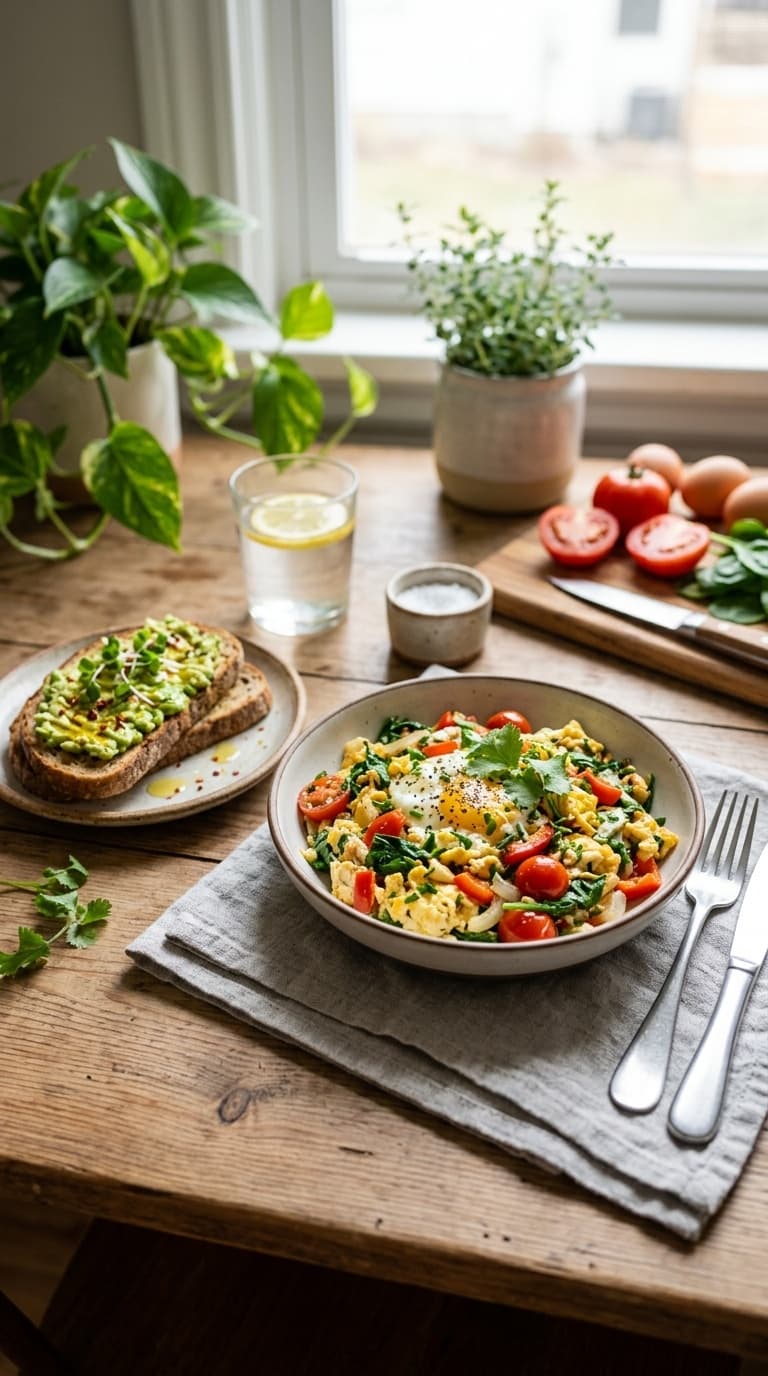
Egg whites are cholesterol-free and high in protein. Spinach adds iron, fiber, and a beautiful color. Cooking in extra virgin olive oil instead of butter is one of the simplest swaps with the biggest payoff. Get Full Recipe
Omega-3 fatty acids from salmon help raise HDL (good cholesterol) while reducing triglycerides. This is the breakfast you make when you want to feel like you’re eating at a proper cafe, not watching your numbers. Get Full Recipe
Two bananas, two eggs (or egg whites), and one cup of oats. That’s essentially the whole recipe. The bananas sweeten naturally and provide pectin; the oats deliver beta-glucan. Get Full Recipe
Chia seeds are tiny omega-3 powerhouses loaded with soluble fiber. Made with unsweetened almond milk and topped with fresh mango, this one feels like a tropical vacation and takes about five minutes to prep. Get Full Recipe
Oat bran is actually higher in soluble fiber per serving than rolled oats. Paired with pear (another pectin source) and warming cinnamon, this is a serious cholesterol-fighting bowl dressed up as comfort food. Get Full Recipe
Almond butter versus peanut butter? Almonds tend to have a slightly better fat profile for heart health, with more vitamin E and a lower saturated fat content per tablespoon. Either works, but almond butter is worth trying if you haven’t. Get Full Recipe
Meal prep six or twelve on Sunday; eat them all week. Bell peppers, spinach, mushrooms, and onion inside an egg white base baked in a muffin tin. High protein, zero saturated fat drama. Get Full Recipe
Soy protein has been shown to modestly reduce LDL cholesterol with consistent intake. Blended with frozen blueberries, ground flax, and a handful of spinach, this is the smoothie that earns its health claims. Get Full Recipe
Quinoa for breakfast is wildly underrated. It’s a complete protein, high in fiber, and has a slightly nutty flavor that pairs beautifully with toasted almonds and a thin drizzle of raw honey. Get Full Recipe
These use unsweetened applesauce and a touch of canola oil instead of butter. The bran and apple combination stacks soluble fiber from two different sources — pectin from the apple, bran fiber from the wheat. Get Full Recipe
This one surprises people. Lentils at breakfast sounds bold, but a quick hash with diced sweet potato, onion, and cumin is genuinely one of the most satisfying and fiber-dense breakfasts on this list. Get Full Recipe
Tahini (sesame paste) is rich in unsaturated fats and adds a lovely depth. Pomegranate seeds bring antioxidants and a burst of color. This bowl looks impressive enough to photograph, which, FYI, you will want to do. Get Full Recipe
Turmeric’s active compound curcumin has anti-inflammatory properties that complement a cholesterol-lowering diet. Cooked into creamy oats with a pinch of black pepper (which activates curcumin absorption) and topped with pistachios — this one is genuinely special. Get Full Recipe
Building Recipes Around the Right Ingredients
The seventeen recipes above aren’t random. They all pull from a short list of anchor ingredients that researchers and dietitians consistently point to when discussing dietary cholesterol management. Once you know what’s on that list, you’ll start spotting opportunities everywhere.
Soluble Fiber Sources
Oats and oat bran are the gold standard — their beta-glucan fiber has more clinical research behind it than almost any other breakfast food. But they’re not alone. Chia seeds, ground flaxseed, apples, pears, and berries all contribute soluble fiber that works through the same mechanism: binding to cholesterol in the digestive system and helping the body remove it before it enters circulation.
If you’re comparing oats to other grains, rolled oats and steel-cut oats offer similar fiber content, but steel-cut oats have a lower glycemic index — meaning slower digestion, longer satiety, and more stable blood sugar throughout the morning. Worth noting if you find yourself hungry by 10 AM after a bowl of instant oats.
Healthy Fats
Avocados and almonds are the two that come up most often, and for good reason. Avocados are rich in monounsaturated fatty acids (MUFAs), the same type of fat that makes olive oil so beneficial for heart health. Almonds provide vitamin E, fiber, and unsaturated fat in one package. Walnuts stand out among tree nuts for their alpha-linolenic acid (ALA) content — a plant-based omega-3 that supports cardiovascular health.
IMO, the easiest daily upgrade is switching from butter to a light drizzle of extra virgin olive oil when you cook eggs or toast bread. It’s a habit change that takes about zero willpower and has a real impact over time.
If you want to extend these ingredient principles beyond breakfast, the guide to 25 low-cholesterol high-protein meals for weight loss and this roundup of 21 easy low-cholesterol smoothie bowls are worth bookmarking.
Protein Without the Saturated Fat
Protein keeps you full and stabilizes blood sugar, but traditional breakfast proteins — bacon, sausage, full-fat cheese — are some of the worst offenders for LDL levels. The swap here is toward egg whites, low-fat Greek yogurt, smoked salmon, plant-based proteins like lentils and tofu, and soy milk in your smoothies and oatmeal.
This doesn’t mean never eating an egg yolk again. Modern nutrition guidance has softened considerably on dietary cholesterol from whole eggs for most people. But if you’re actively working to lower your LDL, replacing two or three full-egg breakfasts a week with egg-white versions or plant-based options gives you measurable gains without feeling deprived.
Quick Win
Prep overnight oats in five mason jars every Sunday evening. You’ll have a grab-and-go heart-healthy breakfast ready for the entire work week — zero morning effort required.
“I started making the overnight oats and the egg white scrambles from this list three weeks ago. At my last check-up, my LDL had dropped 14 points. My doctor actually asked what I’d changed.”— Michelle R., reader from our community
Meal Prep Strategy: Getting These Recipes Into Your Week
Here’s the honest truth about eating well for your heart: consistency matters way more than perfection. One perfect breakfast surrounded by six days of skipped mornings and drive-through coffee doesn’t move your cholesterol numbers. What does move them is repetition — the same handful of good breakfasts rotating through your week, week after week.
The good news is that most of these seventeen recipes either require almost no prep time, or they’re built for batch cooking. The egg white frittata muffins (Recipe 11) are the perfect example — make a batch of twelve on Sunday, refrigerate them, and you have breakfast handled for five or six days. Same with overnight oats: ten minutes of prep on Sunday evening produces five ready-to-eat jars. Check out this complete 25 low-cholesterol meal prep ideas for the week guide for a full system to build around.
The smoothies and chia puddings on this list are also natural meal-prep winners. Chia pudding actually needs to be made the night before — the chia seeds require several hours to absorb liquid and develop that pudding texture. This means your prep window and your eating window never overlap, which is a beautiful thing on a Tuesday morning.
For the cooking-averse, Recipes 2, 8, and 16 require zero heat. If your mornings feel chaotic, start there. You can build in the more involved recipes like the lentil hash or quinoa bowl on weekends when time isn’t the enemy.
For even faster options, browse these 20 low-cholesterol breakfasts under 300 calories or these 21 quick spring breakfasts for heart health — great for when you want variety without the planning overhead.
Curated Collection
Meal Prep Essentials for These Recipes
These are the things I actually use. Not a sponsored list — just the tools and resources that make eating this way feel effortless rather than effortful.
Kitchen Tools
Overnight oats, chia pudding, yogurt parfaits — these jars do everything. I store mine in the fridge door. The wide-mouth design means you can actually eat straight from the jar without contorting your spoon.
For smoothie bowls and morning smoothies, a proper blender matters. I use a compact countertop model that I can throw the cup straight into the dishwasher. Less cleanup, more mornings you’ll actually use it.
For the egg white scrambles and the lentil hash, a good non-stick pan means you can use just a teaspoon of olive oil rather than loading up with fat to prevent sticking. Mine has lasted years with basically zero wear.
Digital Resources
Tracks your soluble fiber intake automatically as you log meals. Genuinely useful if you’re actively monitoring your cholesterol diet and want to see whether you’re hitting your daily fiber targets.
A collection of 100+ recipes organized by meal type and ingredient — useful when you want variety beyond the 17 covered here and don’t want to spend an afternoon searching.
A downloadable planner with a dedicated breakfast prep section, shopping list template, and weekly overview grid. Simple, clean, and actually helpful for building the consistency habit.
What to Watch Out For at Breakfast
Just as important as what to eat is knowing what quietly works against you. A lot of “healthy-seeming” breakfast items are hiding ingredients that spike LDL or add unnecessary saturated fat. Here are the main ones worth scanning for.
Flavored instant oatmeals are the sneaky villain here. The plain version is excellent for your cholesterol. The “maple brown sugar” packet you’ve been eating since college, however, often contains more added sugar than a cookie and occasionally has palm oil or coconut oil as a flavoring agent — both saturated fats. Make plain oats and add your own fruit and a drizzle of raw honey. You’ll get better flavor and zero of the problematic additives.
Granola gets the same treatment. Store-bought granola often contains coconut oil, which is sky-high in saturated fat despite the “natural” branding it enjoys. If you want granola on your yogurt parfait, look for varieties made with oat bran and olive or canola oil, or make your own. Checking the label for saturated fat content per serving is genuinely worth sixty seconds of your time.
Dairy choices matter more at breakfast than at other meals because we tend to use more of it — milk in coffee, butter on toast, cheese in scrambled eggs. Switching to low-fat or non-dairy alternatives (unsweetened oat milk, almond milk, or soy milk) for cooking and hot drinks removes a consistent daily source of saturated fat. This is also relevant if you’re considering dairy-free alternatives for lactose intolerance — they happen to align well with low-cholesterol goals.
Pro Tip
Swap your morning butter for half an avocado mashed onto toast. Same creamy richness, dramatically different fat profile — monounsaturated instead of saturated, with a fiber bonus included.
“The biggest change for me was switching from flavored instant oats to plain rolled oats with my own toppings. My cholesterol improved and I actually like breakfast now. Sounds simple but it took reading an article like this to realize what the issue was.”— James T., community member
Making These Recipes Work for the Long Term
Here’s the part where I say something mildly unpopular: there’s no breakfast that will single-handedly fix your cholesterol. What will actually move your numbers is building a consistent pattern of low-saturated-fat, high-fiber mornings, and sticking with it for weeks and months, not days. The 17 recipes here are tools, not miracles.
That said, breakfast really is one of the highest-leverage meals for this kind of change. It sets the tone for the day. A morning that starts with a bowl of oats and berries tends to make you more likely to choose well at lunch. A morning that starts with a fast-food breakfast sandwich does the opposite. This isn’t moralizing — it’s just how food psychology works in practice.
The best strategy is to pick three or four of these recipes that genuinely appeal to you and rotate through them consistently. Don’t try to eat all seventeen in a week. Choose your favorites, make them well, and build the habit around those. You can always expand the rotation once the basics feel automatic.
For a complete picture of how breakfast fits into a broader low-cholesterol lifestyle, the 25 heart-healthy meals for long-term health guide is worth reading through — it covers the full day, not just mornings, and gives you a sense of how these breakfast wins compound over time.
Frequently Asked Questions
What is the single best breakfast food for lowering cholesterol?
Oatmeal consistently tops the list, and for good reason. The beta-glucan soluble fiber in oats directly reduces LDL absorption in the digestive system, with clinical evidence going back decades. That said, the most effective breakfast combines multiple cholesterol-lowering elements — oats with berries, ground flax, and a handful of walnuts is genuinely more powerful than plain oats alone.
Can I still eat eggs if I’m watching my cholesterol?
Current dietary guidance is more nuanced than the old “three eggs per week” limit. For most people, one whole egg per day fits into a heart-healthy diet — the real concern is what the egg is cooked in (butter versus olive oil) and what it’s served with. If your LDL is particularly high, leaning toward egg whites or using one yolk with two egg whites is a practical middle ground that keeps protein high while reducing dietary cholesterol.
How long does it take to see cholesterol improvements from diet changes?
Most people see measurable LDL reduction within four to six weeks of consistent dietary changes, though this varies by individual, starting cholesterol levels, and overall diet quality. Breakfast alone isn’t the whole picture — what you eat throughout the day matters — but starting mornings consistently with high-fiber, low-saturated-fat meals is one of the most reliable building blocks.
Are plant-based breakfasts better for cholesterol than ones with animal protein?
Plant-based breakfasts tend to be lower in saturated fat by default, which generally benefits LDL levels. Soy protein in particular has modest cholesterol-lowering properties of its own. That said, you don’t need to go fully plant-based — lean animal proteins like egg whites, low-fat Greek yogurt, and salmon provide cholesterol-friendly protein options when used in place of processed meats and full-fat dairy.
Can I meal prep these low-cholesterol breakfasts for the whole week?
Yes — and it’s the most effective way to stay consistent. Overnight oats, chia pudding, egg white frittata muffins, and yogurt parfait components all keep well in the refrigerator for four to five days. Smoothie ingredients can be pre-portioned into freezer bags. About twenty minutes of Sunday prep realistically covers you Monday through Friday, which removes the morning decision fatigue that often leads to less healthy choices.
The Bottom Line
Seventeen recipes is a solid rotation. You don’t need more variety than that to build a genuinely effective, enjoyable morning eating pattern. What you need is a few recipes you actually like, ingredients you’re comfortable buying regularly, and the habit of choosing fiber and healthy fats over saturated fat at that first meal of the day.
The overnight oats take three minutes on a Sunday night. The egg white scramble takes seven minutes on a Tuesday. The chia pudding is essentially hands-off. None of this requires culinary talent, elaborate shopping trips, or a complete overhaul of your life. It requires picking a starting point and making it non-negotiable for a few weeks until it becomes automatic.
Your cholesterol numbers respond to consistent inputs over time. Breakfast is a daily input you control completely. Start there, keep it simple, and let the compound effect do its work. Your morning routine is one of the most powerful tools you have for your long-term heart health — might as well make it delicious.
30-Day Cholesterol-Lowering Meal Plan
A simple step-by-step system to help you eat heart-healthy every day without stress.
Over 1,000 people downloaded this guide
$29$9
Get Instant Access