
27 Low-Cholesterol Recipes You Can Meal Prep
Look, I get it. You’ve been told you need to watch your cholesterol, and now you’re staring at your kitchen wondering how you’re supposed to eat healthy when you barely have time to breathe during the week. Here’s the thing though—meal prepping low-cholesterol recipes doesn’t have to be this elaborate Sunday ritual that takes half your weekend. I’ve spent the last few months testing recipes that actually work for real life, and I’m talking about meals you can prep in bulk without losing your mind or your taste buds.
The secret? Finding recipes that taste good on day four as they did on day one, require minimal fancy equipment, and don’t leave you feeling like you’re eating cardboard. Whether you’re dealing with high LDL numbers or just trying to be proactive about heart health, these 27 recipes are going to make your life significantly easier.

Why Meal Prepping Actually Matters for Cholesterol Management
Before we jump into recipes, let’s talk about why this whole meal prep thing isn’t just another wellness trend. When you’re trying to manage cholesterol, consistency matters way more than perfection. According to Mayo Clinic, making dietary changes is one of the most effective ways to lower cholesterol levels, but the real challenge isn’t knowing what to eat—it’s actually eating it when you’re tired, stressed, or running late.
Meal prepping removes the decision fatigue. When you’ve got healthy, cholesterol-friendly meals ready to go, you’re not standing in front of your fridge at 8 PM contemplating whether that frozen pizza really counts as dinner. You’re also way less likely to hit the drive-thru when you know you’ve got something delicious waiting at home.
The American Heart Association emphasizes focusing on dietary patterns rather than obsessing over individual nutrients. That means building meals around whole foods, plant proteins, healthy fats, and plenty of fiber. Meal prep makes this sustainable.
The Essential Tools You Actually Need
I’m not about to tell you to buy a bunch of expensive gadgets you’ll use once. But there are a few things that genuinely make meal prep easier. First, get yourself some quality glass meal prep containers—the kind with compartments are great because nobody wants their food swimming together by Wednesday.
30-Day Cholesterol Reset System
A simple done-for-you plan to help you eat heart-healthy every day without confusion.
Over 1,000 people downloaded this guide
✔ 100 Easy Recipes
✔ Grocery Lists + Meal Prep Guide
🎁 FREE BONUSES:
✔ 7-Day Quick Start Plan
✔ Printable Grocery List
$29 $9
Get Instant AccessA decent chef’s knife will save you so much time chopping vegetables. I resisted upgrading mine for way too long, and honestly, it was dumb. You don’t need to spend hundreds, but a sharp knife that feels good in your hand is worth it. For batch cooking grains and legumes, I swear by my Instant Pot—it’s genuinely one of those things that lives up to the hype.
A food scale might seem extra, but it’s actually helpful when you’re portioning out meals to make sure you’re getting balanced nutrition. And if you’re doing any roasting, grab some silicone baking mats—zero sticking, zero scrubbing, and your sheet pans will thank you.
Understanding the Low-Cholesterol Basics
Here’s what you need to know without getting too deep into the science lecture. LDL cholesterol (the “bad” kind) builds up in your arteries, which can lead to heart problems. HDL cholesterol (the “good” kind) actually helps remove LDL from your bloodstream. Your goal is to lower LDL while keeping HDL stable or even raising it.
Foods high in saturated fats and trans fats raise LDL cholesterol. That means limiting red meat, full-fat dairy, processed foods, and anything deep-fried. On the flip side, foods rich in soluble fiber, omega-3 fatty acids, and healthy unsaturated fats can help lower cholesterol naturally. We’re talking oats, beans, fatty fish, nuts, seeds, and olive oil.
The good news? You can absolutely make delicious food with these ingredients. In fact, some of the best cuisines in the world—Mediterranean, Japanese, plant-based—naturally align with heart-healthy eating patterns. You’re not resigning yourself to bland chicken breast and steamed broccoli. Far from it.
Breakfast Recipes That Actually Keep You Full
Overnight Oats Five Ways
Overnight oats are the ultimate lazy breakfast, and I mean that as the highest compliment. Mix oats with your choice of milk (I use unsweetened almond), add chia seeds for extra fiber and omega-3s, and let it sit overnight. In the morning, top with fresh berries, a handful of walnuts, and a drizzle of honey if you need sweetness.
The beauty of overnight oats is the versatility. You can do apple cinnamon with diced apples and a sprinkle of cinnamon. Chocolate peanut butter with a tablespoon of cocoa powder and natural peanut butter. Or go savory with mashed avocado and everything bagel seasoning (trust me on this one). Prep five jars on Sunday, grab and go all week. Get Full Recipe.
Veggie-Packed Egg Muffins
These are clutch for when you want something warm and protein-rich. Whisk together eggs (or egg whites if you’re watching cholesterol closely), add sautéed spinach, bell peppers, onions, and a bit of feta. Pour into a muffin tin, bake, and you’ve got a week’s worth of grab-and-go breakfasts.
I like to make a double batch because they freeze beautifully. Just pop them in the microwave for 45 seconds, and you’ve got a hot breakfast that didn’t require you to think at 6 AM. Pair with a piece of fruit and you’re solid. Get Full Recipe.
Speaking of morning options, if you’re looking for more variety, these low-cholesterol breakfast ideas and breakfasts under 300 calories are worth checking out when you want to mix things up.
Mediterranean Breakfast Bowls
This one’s inspired by shakshuka but way simpler for meal prep. Roast a bunch of cherry tomatoes, red peppers, and zucchini with garlic and olive oil. Portion into containers, and when you’re ready to eat, heat it up and top with a poached or fried egg (cooked in a tiny bit of olive oil). Add some crumbled feta and fresh parsley if you’re feeling fancy.
The roasted vegetables stay good for about five days, so you can prep them ahead but cook your eggs fresh each morning. It takes maybe five minutes and feels way more special than cereal. For similar Mediterranean-inspired morning meals, try these smoothie bowls.
Lunch Ideas That Travel Well
Mason Jar Salads
The trick with mason jar salads is layering. Dressing goes on the bottom (I make a big batch of lemon vinaigrette with olive oil, lemon juice, Dijon, and a tiny bit of maple syrup). Then add sturdy vegetables like cucumbers, bell peppers, and chickpeas. Grains like quinoa or farro come next. Leafy greens go on top. When you’re ready to eat, shake it up, dump it in a bowl, and you’ve got a restaurant-quality salad.
My go-to combo is chickpeas, roasted sweet potato, cucumber, red onion, spinach, and a sprinkle of sunflower seeds. The fiber from the chickpeas and sweet potato keeps you full for hours, plus chickpeas are excellent for cholesterol management. Seriously, legumes are your friend.
Cold Sesame Noodle Bowls
These are stupidly addictive. Cook soba noodles (they’re made from buckwheat and actually pretty nutritious), rinse under cold water, and toss with a sauce made from tahini, rice vinegar, low-sodium soy sauce, ginger, and a touch of sesame oil. Add shredded carrots, edamame, cucumber, and scallions.
The sauce thickens up in the fridge, so you might need to thin it with a splash of water when reheating. But honestly, I usually eat these cold straight from the container. They’re refreshing, satisfying, and packed with plant protein. Get Full Recipe.
If cold lunches aren’t your thing, you might want to explore these low-cholesterol lunches that keep you full or these quick lunches under 10 minutes for busy days.
Lentil and Vegetable Soup
Soup is peak meal prep material. This one uses red lentils, which cook faster than other varieties. Sauté onions, carrots, and celery in olive oil. Add vegetable broth, red lentils, diced tomatoes, and spices (cumin, turmeric, paprika). Simmer until the lentils are tender, maybe 25 minutes. Blend half of it if you want it creamier.
Portion into containers and freeze what you won’t eat in the next few days. The lentils provide tons of soluble fiber, which is exactly what you want for managing cholesterol. Plus, this soup costs practically nothing to make and yields enough for the entire week. For more soup inspiration, check out these low-cholesterol soups and stews.
Dinner Recipes Worth Making in Bulk
Sheet Pan Salmon with Roasted Vegetables
Salmon is rich in omega-3 fatty acids, which can help improve your cholesterol profile. Season salmon fillets with lemon, garlic, and dill. Arrange on a sheet pan with broccoli, asparagus, and cherry tomatoes. Drizzle everything with olive oil, season with salt and pepper, and roast at 400°F for about 15 minutes.
The salmon stays moist for a few days if you don’t overcook it. Pair with quinoa or brown rice that you’ve cooked in bulk. This is one of those meals that feels special even though it’s just leftovers. Get Full Recipe.
Chicken and Chickpea Stir-Fry
Cut chicken breast into bite-sized pieces and marinate in a mixture of low-sodium soy sauce, ginger, and garlic. Stir-fry in a large wok with bell peppers, snap peas, and cooked chickpeas. The chickpeas add bulk and fiber without adding cholesterol.
Serve over brown rice or cauliflower rice if you’re keeping carbs lower. The key is not overcooking the chicken—nobody wants rubbery meal prep chicken. High heat, quick cooking, and you’re golden. If you’re into chicken recipes, explore these low-cholesterol chicken recipes for more flavor-packed options.
Vegetarian Chili
This is comfort food that happens to be excellent for your heart. Use three types of beans (black, kidney, and pinto), plus diced tomatoes, bell peppers, onions, and a solid amount of chili powder and cumin. Let it simmer for at least 30 minutes so the flavors develop.
Top with a dollop of plain Greek yogurt instead of sour cream, add some diced avocado, and fresh cilantro. The beans provide both soluble fiber and plant protein, making this incredibly filling without any animal products. Freezes beautifully too. For more plant-based options, these vegetarian meals are seriously satisfying.
Baked Turkey Meatballs
Ground turkey is leaner than beef, making it a better choice for cholesterol management. Mix ground turkey with whole wheat breadcrumbs (or oats if you’re gluten-free), egg, minced garlic, Italian seasoning, and a bit of grated Parmesan. Form into meatballs and bake on a parchment-lined sheet pan.
These are insanely versatile. Serve with marinara and zucchini noodles. Toss with whole wheat pasta. Stuff into whole grain pitas with cucumber and tzatziki. Make a big batch and freeze half. Future you will be grateful. Get Full Recipe.
Snacks and Sides That Support Your Goals
Roasted Chickpeas
Drain and dry canned chickpeas, toss with olive oil and your favorite spices (I rotate between curry powder, smoked paprika, and everything bagel seasoning), and roast until crispy. These are dangerously addictive and way better for you than chips.
Store in an airtight container and eat as a snack or salad topper. The fiber and protein combo makes them surprisingly satisfying. Plus they’re cheap, which is always a win. For more snack ideas, browse these low-cholesterol snacks.
Hummus Three Ways
Homemade hummus is cheaper and tastier than store-bought. Blend chickpeas, tahini, lemon juice, garlic, and olive oil in a food processor. For variations, add roasted red peppers, sun-dried tomatoes, or fresh herbs.
Serve with carrot sticks, bell pepper strips, cucumber slices, or whole grain crackers. The combination of chickpeas and tahini gives you plant protein, healthy fats, and tons of fiber. It’s basically the perfect heart-healthy snack.
Smart Substitutions That Actually Work
Let’s talk about swaps because sometimes you want something creamy or rich without the cholesterol hit. Greek yogurt works brilliantly in place of sour cream and adds protein. Mashed avocado can replace butter in some baking recipes (weird but effective). Nutritional yeast gives you that savory, cheesy flavor without the saturated fat.
For cooking, always use olive oil or avocado oil instead of butter. If a recipe calls for cream, try cashew cream (soaked cashews blended with water until smooth). The texture is remarkably similar. And honestly, once you get used to these swaps, you won’t miss the original versions. Your taste buds adapt faster than you’d think.
When baking, applesauce or mashed banana can replace some of the oil or butter. I’m not saying your brownies will taste identical, but they’ll still be good, and your arteries will appreciate the effort. Sometimes good enough is actually great when you factor in the health benefits.
For complete meal prep strategies and more recipe ideas, check out these meal prep ideas for the week. And if you’re looking for comfort food versions, these healthier comfort foods are legitimately satisfying.
One-Pan Wonders for Minimal Cleanup
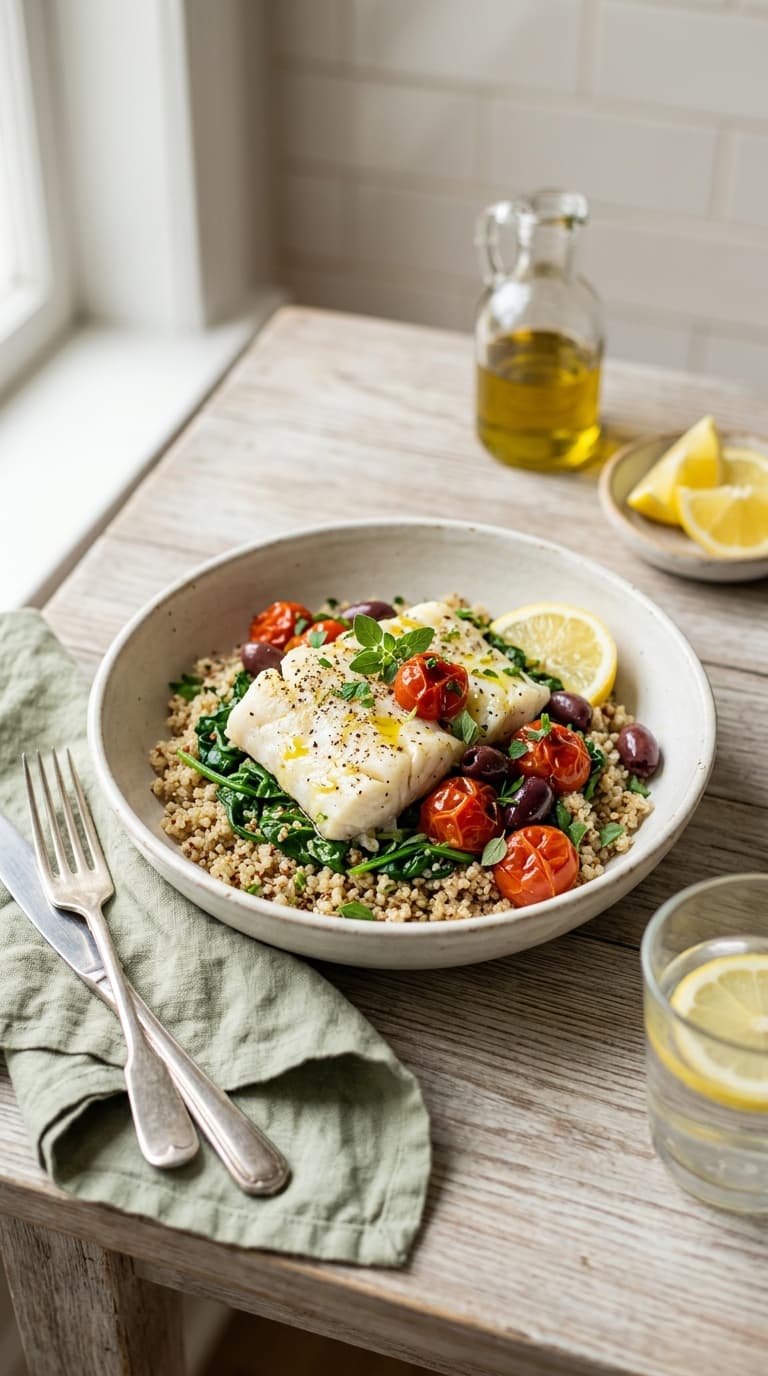
Mediterranean Baked Cod
Place cod fillets in a baking dish, top with sliced tomatoes, Kalamata olives, capers, and a drizzle of olive oil. Bake until the fish flakes easily. Serve with a side of pre-cooked quinoa and steamed green beans.
The briny olives and capers give this so much flavor that you won’t miss butter or heavy sauces. Cod is a lean fish that’s affordable and mild enough that even picky eaters usually like it. Plus, one pan means one thing to wash, and I’m always here for that. Explore more one-pan dinners if this is your vibe.
Chicken Fajita Bowls
Season chicken strips with cumin, chili powder, and garlic powder. Cook in a large skillet with sliced bell peppers and onions. Serve over brown rice or cauliflower rice with black beans, salsa, and a bit of guacamole.
The trick is cooking everything in the same pan, which not only saves time but allows the flavors to meld together. This reheats beautifully and feels like something you’d order at a restaurant. For more family-friendly options, these family dinners are crowd-pleasers.
Grain Bowls That Never Get Boring
Grain bowls are the ultimate meal prep hack because you can mix and match components all week. Cook a big batch of quinoa, brown rice, or farro on Sunday. Roast a bunch of vegetables (sweet potato, Brussels sprouts, cauliflower). Prep a protein (grilled chicken, baked tofu, canned beans). Make a sauce or two (tahini dressing, lemon vinaigrette).
Then throughout the week, you can build different bowls using the same components. Monday might be quinoa with roasted sweet potato, chickpeas, spinach, and tahini. Wednesday could be brown rice with baked tofu, steamed broccoli, edamame, and ginger dressing. Same ingredients, different vibes.
The key is having flavor variety in your sauces. A good sauce can make the same base ingredients taste completely different. I always have lemon tahini, balsamic vinaigrette, and a ginger-soy dressing in my fridge. Takes maybe 10 minutes to make all three, and they keep for a week or more.
Slow Cooker and Instant Pot Favorites
White Bean and Vegetable Stew
Dump everything in your slow cooker in the morning: white beans, diced tomatoes, vegetable broth, chopped kale, carrots, celery, onions, garlic, and Italian herbs. Come home to a house that smells amazing and a meal that’s ready to eat. This is stupidly easy and genuinely delicious.
White beans are fantastic for cholesterol management because they’re packed with soluble fiber. Plus this stew is filling without being heavy. Serve with crusty whole grain bread for dipping. Leftovers get even better as the flavors develop. Check out more comfort soups for similar cozy meals.
Instant Pot Pulled BBQ Chicken
This isn’t your traditional BBQ because we’re skipping the sugar-loaded sauce, but it’s still incredibly good. Season chicken breasts with smoked paprika, garlic powder, onion powder, and a bit of cayenne. Cook in the Instant Pot with a bit of low-sodium chicken broth. Shred the chicken and mix with your favorite low-sugar BBQ sauce.
Serve on whole wheat buns with coleslaw, or skip the bun and serve over a salad or sweet potato. The Instant Pot makes the chicken insanely tender, and you can prep enough for the entire week in under 30 minutes. For more quick cooking methods, try these Instant Pot and air fryer recipes.
Make-Ahead Breakfast Burritos
These are absolutely clutch for busy mornings. Scramble eggs with black beans, bell peppers, and onions. Spoon onto whole wheat tortillas, add a bit of salsa and avocado, wrap tightly in foil, and freeze. When you need breakfast, unwrap the foil, wrap in a damp paper towel, and microwave for two minutes.
The key is not overfilling them, which makes them soggy. You want enough filling to be satisfying but not so much that it’s exploding everywhere. I make a dozen at a time and it takes maybe 45 minutes start to finish. Then you’ve got two weeks of breakfast sorted.
The Freezer-Friendly Options
Not everything meal preps well for a week in the fridge, but tons of things freeze beautifully. Soups, stews, chili, meatballs, burritos, and most cooked grains freeze and reheat like champions. I keep a running list of what’s in my freezer so I don’t forget about things and end up with mystery meals from three months ago.
Use freezer-safe containers or heavy-duty freezer bags. Label everything with the date and contents. When you’re freezing soup or stew, leave some room at the top because liquids expand when frozen. And always let food cool completely before freezing to prevent ice crystals from forming.
The beauty of having a freezer stash is that you’ve always got a backup plan. Rough day? There’s soup in the freezer. Too tired to cook? Grab those meatballs you made last month. It’s like having a drive-thru in your freezer, except it’s actually healthy and way cheaper. For more freezer-friendly ideas, explore these freezer meals.
Realistic Meal Prep Schedule
Here’s what actually works for me: Sunday afternoon, I spend about two hours cooking. That’s it. I’m not in the kitchen all day, and I’m definitely not following some elaborate color-coded system. I pick 2-3 main dishes, cook a big batch of grains, prep some vegetables, and make a couple of sauces.
For example: make a big pot of lentil soup, grill some chicken, roast vegetables, cook quinoa and brown rice, make a tahini dressing and a balsamic vinaigrette. That gives me enough variety to build different meals all week without eating the exact same thing five days in a row.
Wednesday or Thursday, I might do a mini prep session—maybe cook another protein or make a fresh salad. This keeps things from getting boring and means I’m not eating Friday’s lunch that’s been sitting in my fridge since Sunday. Two smaller prep sessions beat one massive one where you burn out halfway through.
Frequently Asked Questions
How long do meal prepped low-cholesterol recipes stay fresh?
Most cooked meals stay good in the fridge for 3-4 days, which is why I recommend doing a mid-week mini prep if you’re planning for the full week. Soups and stews typically last a bit longer, up to 5 days. If you’re prepping for longer than that, freeze portions instead. Salads with dressing separate can last up to 5 days using the mason jar method, but add proteins fresh for best results.
Can I still eat eggs if I’m watching my cholesterol?
This is actually less clear-cut than it used to be. Recent research suggests that for most people, dietary cholesterol has less impact on blood cholesterol than previously thought. The bigger culprits are saturated and trans fats. That said, if your doctor has specifically told you to limit eggs, listen to them. Otherwise, using whole eggs in moderation or relying more on egg whites is generally fine for most people managing cholesterol.
What’s the best way to add flavor without adding unhealthy fats?
Herbs and spices are your best friends here. Fresh garlic, ginger, cilantro, basil, and rosemary add tons of flavor without any cholesterol or saturated fat. Citrus juice and zest brighten up dishes beautifully. Vinegars (balsamic, red wine, apple cider) add acidity and depth. And don’t sleep on nutritional yeast—it gives you that savory, almost cheesy flavor that makes food feel more indulgent.
Is meal prepping more expensive than cooking fresh every day?
Actually, it’s usually cheaper. When you meal prep, you buy ingredients in larger quantities, which typically costs less per serving. You’re also way less likely to waste food because you’ve planned exactly what you’re making. Plus, having meals ready means you’re not tempted by expensive takeout or restaurant meals. The initial grocery bill might feel bigger, but you’re buying for the whole week at once.
What if I get bored eating the same meals all week?
This is why I recommend the mix-and-match approach with grain bowls and having variety in your sauces. You can eat the same base components but change up the combinations and flavors. Also, doing two smaller prep sessions (Sunday and Wednesday) instead of one massive one keeps things fresher and more interesting. And honestly, having a couple of reliable freezer meals as backups gives you options when you need a break from the weekly rotation.
Making It Work in Real Life
Look, I’m not going to pretend that meal prepping is some magical solution that makes healthy eating effortless. It still requires planning and a chunk of time on the weekend. But here’s what I’ve learned: the effort you put in on Sunday saves you way more time and stress during the week than it costs.
Start small if this feels overwhelming. Prep just breakfasts for the first week. Or just lunches. You don’t have to meal prep every single meal to see benefits. Even having a few healthy options ready to go makes a massive difference in your ability to stick with cholesterol-friendly eating.
And remember, the goal isn’t perfection. Some weeks you’ll crush it and have seven beautiful meals ready to go. Other weeks you’ll manage to make one pot of soup and call it a win. Both are fine. Progress over perfection, always. Your heart doesn’t need you to be perfect—it just needs you to be consistent enough that healthy eating becomes the path of least resistance.
The recipes in this list are all ones I’ve actually made multiple times and that hold up well throughout the week. They’re tested, they work, and most importantly, they taste good enough that you’ll actually eat them. Because the best low-cholesterol recipe in the world is useless if it’s still sitting in your fridge on Friday untouched.
Managing cholesterol through diet is completely doable, but it requires having systems that work with your life, not against it. Meal prep is one of those systems. It removes friction, saves time, and makes the healthy choice the easy choice. And honestly, once you get into a rhythm with it, it becomes kind of enjoyable. There’s something satisfying about opening your fridge and seeing a week’s worth of good decisions already made.
For more nutritional guidance on specific ingredients and their impact on cholesterol, the American Heart Association’s meal prep essentials offers detailed information about building a heart-healthy pantry. And if you want to understand more about how different foods affect cholesterol levels, check out this guide to foods that naturally lower cholesterol.
30-Day Cholesterol-Lowering Meal Plan
A simple step-by-step system to help you eat heart-healthy every day without stress.
Over 1,000 people downloaded this guide
$29$9
Get Instant Access